


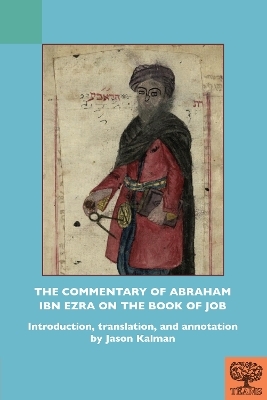
The Commentary of Abraham ibn Ezra on the Book of Job
Seiten
2025
Medieval Institute Publications (Verlag)
978-1-58044-701-0 (ISBN)
Medieval Institute Publications (Verlag)
978-1-58044-701-0 (ISBN)
The book of Job was among the most popular books of study for Jewish scholars in the Middle Ages. Abraham ibn Ezra (1089-1164), born in Muslim Spain, composed his commentaries while living in Christian Europe. By writing in Hebrew, rather than Arabic, he also transmitted the intellectual life of the Jews of the Muslim world to new audiences.
The book of Job was among the most popular books of study for Jewish scholars in the Middle Ages. With its themes of suffering, providence, and theodicy it attracted much attention despite the difficulty of its language.
Abraham ibn Ezra (1089-1164) was born in Muslim Spain, but composed his commentaries while residing in Christian Europe. His commentaries meld what was the most advanced thinking of his day to identify the distinction between biblical genres, to show sensitivity to rhetoric and poetry, to establish a model for defining hapax legomena, and to bring scientific and astrological knowledge to the reading of the Bible. By innovatively composing the commentary in Hebrew, rather than Arabic, he also transmitted the intellectual life of the Jews of the Muslim world North, making it available to new audiences.
The book of Job was among the most popular books of study for Jewish scholars in the Middle Ages. With its themes of suffering, providence, and theodicy it attracted much attention despite the difficulty of its language.
Abraham ibn Ezra (1089-1164) was born in Muslim Spain, but composed his commentaries while residing in Christian Europe. His commentaries meld what was the most advanced thinking of his day to identify the distinction between biblical genres, to show sensitivity to rhetoric and poetry, to establish a model for defining hapax legomena, and to bring scientific and astrological knowledge to the reading of the Bible. By innovatively composing the commentary in Hebrew, rather than Arabic, he also transmitted the intellectual life of the Jews of the Muslim world North, making it available to new audiences.
Jason Kalman is Professor of Classical Hebrew Literature and Interpretation at HUC-JIR, Cincinnati and a research fellow in the Department of Old and New Testament Studies, Faculty of Theology and Religion, University of the Free State, South Africa. He is the author of Hebrew Union College and the Dead Sea Scrolls (HUC, 2012), The Book of Job in Jewish Life and Thought: Critical Essays (HUCP, 2021), and co-author with Jaqueline S. Du Toit of Canada's Big Biblical Bargain: How McGill University Bought the Dead Sea Scrolls (MQUP, 2010).
Introduction
Annotated Commentary
Explanation of Ideas
Bibliography
Indices
| Erscheinungsdatum | 23.11.2024 |
|---|---|
| Reihe/Serie | TEAMS Commentary Series |
| Übersetzer | Jason Kalman |
| Sprache | englisch |
| Maße | 156 x 234 mm |
| Gewicht | 590 g |
| Themenwelt | Geschichte ► Allgemeine Geschichte ► Mittelalter |
| Religion / Theologie ► Christentum ► Bibelausgaben / Bibelkommentare | |
| Religion / Theologie ► Christentum ► Kirchengeschichte | |
| Geisteswissenschaften ► Sprach- / Literaturwissenschaft ► Anglistik / Amerikanistik | |
| Geisteswissenschaften ► Sprach- / Literaturwissenschaft ► Literaturwissenschaft | |
| ISBN-10 | 1-58044-701-5 / 1580447015 |
| ISBN-13 | 978-1-58044-701-0 / 9781580447010 |
| Zustand | Neuware |
| Informationen gemäß Produktsicherheitsverordnung (GPSR) | |
| Haben Sie eine Frage zum Produkt? |
Mehr entdecken
aus dem Bereich


aus dem Bereich
Geschichte einer Augsburger Familie (1367-1650)
Buch | Softcover (2024)
Kohlhammer (Verlag)
CHF 47,60


