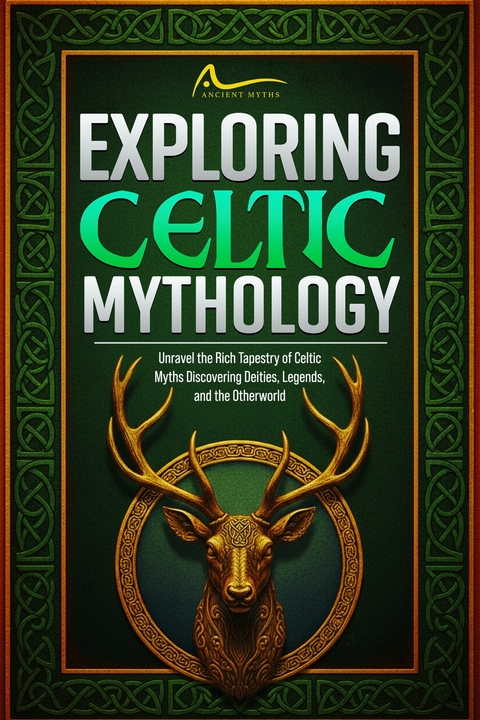
Exploring Celtic Mythology (eBook)
99 Seiten
Ancient Myths Publishing (Verlag)
978-0-00-066401-3 (ISBN)
Immerse Yourself in the Enchanting World of Celtic Mythology: Unveil the Secrets of Deities, Legends, and the Otherworld!
Have you ever felt drawn to the allure of Celtic mythology but found it difficult to navigate through the vast and often fragmented collection of stories and legends?
The complex web of Celtic myths, with their intricate genealogies and regional variations, can be a daunting challenge to unravel.
Fear not! This comprehensive book understands your desire for clarity and provides the perfect solution.
Inside this captivating exploration of Celtic mythology, you will:
✅ Discover the pantheon of Celtic deities and their roles in the natural and supernatural realms
✅ Unearth the captivating legends of heroic figures such as Cú Chulainn and the legendary King Arthur
✅ Encounter mystical creatures and beings like the elusive faeries, shape-shifters, and magical spirits
✅ Explore the concept of the Otherworld and its significance in Celtic mythology
✅ Dive into the rich symbolism and mythology behind sacred sites and monuments, including Stonehenge and Newgrange
✅ Delve into the ancient Celtic festivals and their connections to the cycles of nature
✅ Uncover the influence of Celtic mythology on literature, art, and contemporary culture
✅ Understand the intertwining of Celtic myths with the natural landscape and its spiritual significance
✅ Explore the themes of honor, heroism, love, and loyalty woven throughout Celtic mythology
✅ Gain insights into the enduring legacy of Celtic mythology and its relevance in today's world
Now, you might be wondering how to approach the complexity of Celtic mythology or how to navigate through its diverse regional variations.
Rest assured, 'Exploring Celtic Mythology' provides a comprehensive and cohesive narrative, unraveling the intricate threads of the myths and offering insightful interpretations.
This guide will be your trusted companion, shedding light on the profound symbolism, cultural significance, and timeless wisdom embedded within Celtic myths.
Don't miss out on the opportunity to unravel the secrets and mysteries of Celtic mythology.
Scroll back up and get your copy to embark on an extraordinary journey through the enchanting world of Celtic folklore!
CHAPTER 2
THE GODS AND GODDESSES
OF CELTIC MYTHOLOGY
In this second chapter, we go further into the world of Celtic mythology, studying the fascinating pantheon of gods and goddesses who shaped and defined the beliefs and ideals of the ancient Celts. In particular, we focus on the gods and goddesses known as the Tuatha de Danaan. These divine creatures not only stand for the powers of nature and the human experience, but they also serve as everlasting emblems of the knowledge and power that are latent inside each one of us. They symbolize both of these things. Therefore, we invite you, dear reader, to accompany us as we set off on an adventure into the magical realm of Celtic deities in search of the deep truths and ageless teachings that these beings have to impart.
Overview of Celtic Deities
The gods and goddesses of Celtic mythology come together to create a pantheon that is varied and intricate. Each deity in this pantheon represents a different set of qualities and characteristics of both the natural world and the human experience. Others, such as Brigid and Lugh, are worshipped for their specialized domains and areas of skill, in contrast to certain deities, like the Dagda and the Morrigan, who are venerated as supreme beings with extensive powers and influence. Many of the gods and goddesses in the pantheon of Celtic deities have the power to shape-shift, take on numerous roles, and create alliances and rivalries with other supernatural beings. This is another way in which the pantheon of Celtic deities is distinct from other religions' pantheons. This dynamic and ever-changing aspect of the Celtic pantheon reflects the Celts' profound regard for the interconnection of all things and their belief in the perpetual interaction of opposing forces. Additionally, this nature of the pantheon represents the Celts' deep love for the interconnectedness of all things.
The Dagda and the Morrigan
One of the most adored and powerful gods in Celtic mythology is the Dagda, who is also known as Eochaid Ollathair, which literally translates to "All-Father." As the progenitor of the gods and the supreme master of all arts, he presides over the cosmos with enormous power and authority, controlling the life, death, and rebirth cycles that occur throughout the universe. He is often shown as a powerful, bearded person who wears a simple robe and carries a mystical club that has the ability to slaughter his foes and bring the dead back to life. This image is common in art and literature. The Morrigan, a goddess who symbolizes the twin qualities of life and death, creation and destruction, is the primary consort of the Dagda. This goddess is mysterious and difficult to understand. She is often shown as a shape-shifting character, capable of changing herself into different animals and taking on many guises, such as that of a lovely maiden, a ferocious warrior, and a wise crone. She may even assume several forms at the same time. The Morrigan has immense influence over the course of human events due to her status as the goddess of battle, fate, and sovereignty. She has the ability to guide and inspire those who seek her favor while instilling terror in the minds of those who oppose her.
One of the most important motifs in Celtic mythology is the connection between the Dagda and the Morrigan. This partnership serves as a metaphor for the never-ending dance of opposites as well as the delicate balance of the forces that rule the cosmos. Their marriage, which was characterized by both passion and struggle, serves as a potent reminder of the inextricable connection between life and death, love and loss, and the transformational force of the divine. Both passion and conflict characterized their union.
Brigid and Lugh
In Celtic mythology, Brigid is a revered goddess who presides over the domains of healing, poetry, and smithcraft. She is also known as Bride and Brighid. She is the daughter of the Dagda, and she is often linked to the holy fire, which stands for the divine spark that ignites creativity and inspiration. Brigid, who is revered for her insight, compassion, and limitless generosity, is a source of strength and consolation for people who seek her guidance and protection since she is said to be both compassionate and wise. Lugh, also known as Lugh Lamhfada or "Lugh of the Long Arm," is a deity who is proficient in a broad variety of arts and crafts. He is famed for his long arm, hence his name. He is the offspring of Cian and Ethniu, and he is often shown as a luminous young man with golden hair who is equipped with a magical spear that never misses its aim. Lugh, the god of light, embodies the victory of knowledge, skill, and tenacity over ignorance and darkness in that he is the god of light. Because of his wide range of skills and achievements, people refer to him as a "Samildánach," which literally translates to "master of all arts."
The Celtic worldview places a strong emphasis on originality, inventiveness, and mastery of one's craft; the legends of Brigid and Lugh bring this theme to light. These gods, via the spheres of influence that are uniquely theirs, motivate and enable their devotees to develop their abilities and make the most of their potential for the benefit of society as a whole. We are reminded of the limitless possibilities that lie within us as well as the transformational potential of our own creative activities, when we invoke the divine direction of Brigid and Lugh.
Nuada and Arianrhod
In Celtic mythology, Nuada is a mythological monarch who is also regarded as a warrior deity. He is also known by the names Nuada Airgetlam and "Nuada of the Silver Hand." He is the most powerful member of the Tuatha Dé Danann, a race of celestial beings that live on the island of Ireland in Irish mythology. Nuada is both a role model for leadership and an embodiment of the virtues that characterize a real hero. He is a symbol of power, courage, and knowledge, and he serves in these capacities admirably. Arianrhod, whose name means "silver wheel," is a mysterious and powerful goddess who is connected with the moon, the stars, and the realms of the heavens. Her name comes from the Greek word for a wheel made of silver. She is the daughter of the sea deity Manannán mac Lir, and she is often shown as a lovely lady with silver hair who is sitting on a shimmering, spinning wheel. This wheel is meant to reflect the cycles of time as well as the ever-changing aspects of the universe.
The stories of Nuada and Arianrhod delve into topics like sovereignty, destiny, and the inevitable march of time, among other things. It is through their narratives that we are prompted to reflect on the ephemeral quality of our lives as well as the unending cycles of birth, death, and rebirth that serve as the governing principles of the cosmos. We learn to embrace the impermanence of our own lives and the inevitability of change by embracing the wisdom of Nuada and Arianrhod. We take peace in the knowledge that we are just a little part of a vast and interwoven cosmic tapestry. Embracing the wisdom of Nuada and Arianrhod teaches us to accept the impermanence of our own lives.
Cernunnos and Epona
Cernunnos, also known as the "Horned God" or the "Lord of the Wild," is a mysterious and enigmatic god who is linked with nature, fertility, and the wild powers of the earth. He is also known as the "Horned God." Cernunnos is a figure that represents the most basic impulses and the unbridled force of the natural world. He is sometimes shown as having the head of a deer or horns. His presence acts as a useful reminder of the interconnection of all living things and the significance of striking a balance between the energies that are associated with civilization and those associated with the natural world. Epona, the goddess of horses, fertility, and sovereignty, is a significant figure in Celtic mythology. She maintains a major position in the pantheon. She is often shown as a beautiful lady who is astride a regal horse, which is meant to stand for her dominance over the animal world and her function as a protector of the land. Epona is associated with horses because of the pivotal role that horses played in Celtic civilization. Horses were indispensable helpers in many aspects of daily life, including transportation, agriculture, and warfare. Her worship was prevalent among the Celts, and her influence reached as far as the Roman world, where she was worshiped as a patroness of cavalry and a defender of travelers. In Roman times, she was considered a goddess.
The myths of Cernunnos and Epona shed light on the complex connection that exists between people and the natural world. These tales also underscore the need for maintaining peace, showing respect, and acting as stewards in our dealings with the natural world. We are urged to establish a deeper connection with the earth and to understand our shared duty in the preservation of its delicate balance when we invoke the wisdom and direction of these deities. This helps us keep in mind that we have a role to play in this. By doing so, we acknowledge our position within the complex fabric of life and open ourselves up to the transformational power of the divine in all of its various manifestations.
Belenus and Danu
In Celtic mythology, Belenus is a luminous and good-natured person who is known as the god of light as well as healing and rejuvenation. Belenus is a Roman god who personifies the regeneration elements of nature as well as the promise of rebirth that comes after the dormancy of winter. He is often...
| Erscheint lt. Verlag | 30.10.2024 |
|---|---|
| Sprache | englisch |
| Themenwelt | Geschichte ► Allgemeine Geschichte ► Vor- und Frühgeschichte |
| ISBN-10 | 0-00-066401-4 / 0000664014 |
| ISBN-13 | 978-0-00-066401-3 / 9780000664013 |
| Informationen gemäß Produktsicherheitsverordnung (GPSR) | |
| Haben Sie eine Frage zum Produkt? |
 EPUB (Adobe DRM)
Größe: 4,1 MB
Kopierschutz: Adobe-DRM
Adobe-DRM ist ein Kopierschutz, der das eBook vor Mißbrauch schützen soll. Dabei wird das eBook bereits beim Download auf Ihre persönliche Adobe-ID autorisiert. Lesen können Sie das eBook dann nur auf den Geräten, welche ebenfalls auf Ihre Adobe-ID registriert sind.
Details zum Adobe-DRM
Dateiformat: EPUB (Electronic Publication)
EPUB ist ein offener Standard für eBooks und eignet sich besonders zur Darstellung von Belletristik und Sachbüchern. Der Fließtext wird dynamisch an die Display- und Schriftgröße angepasst. Auch für mobile Lesegeräte ist EPUB daher gut geeignet.
Systemvoraussetzungen:
PC/Mac: Mit einem PC oder Mac können Sie dieses eBook lesen. Sie benötigen eine
eReader: Dieses eBook kann mit (fast) allen eBook-Readern gelesen werden. Mit dem amazon-Kindle ist es aber nicht kompatibel.
Smartphone/Tablet: Egal ob Apple oder Android, dieses eBook können Sie lesen. Sie benötigen eine
Geräteliste und zusätzliche Hinweise
Buying eBooks from abroad
For tax law reasons we can sell eBooks just within Germany and Switzerland. Regrettably we cannot fulfill eBook-orders from other countries.
aus dem Bereich