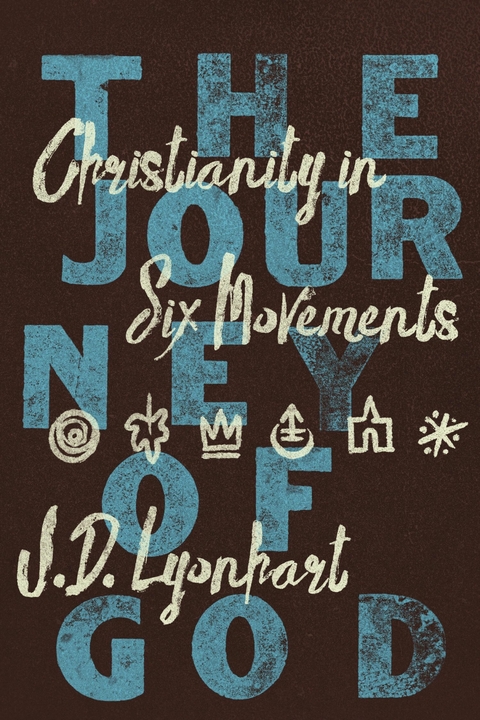
The Journey of God (eBook)
272 Seiten
IVP Academic (Verlag)
978-1-5140-0925-3 (ISBN)
ONE
Creation Begins
“In the beginning . . .”
WITH THESE FIRST THREE WORDS, the Bible already puts its foot in it.1 For the Greek philosopher Aristotle had argued that the universe never began to exist but stretched back and back into infinity, without any first moment or beginning. And since Aristotle was a big deal, it seemed for a while like all the smart folks thought the Bible was wrong from the get-go. There was no in the beginning—the universe had always existed. And if the universe has always existed, then why, you might wonder, would we need a God to bring it into existence? If there is no first moment of creation, what need have we of a Creator?2
Fast-forward to 1929. American Astronomer Edwin Hubble has made some fascinating observations about the universe. Hubble expected all the galaxies to be unmoving and fixed in space. He anticipated that one galaxy would be a set distance from another galaxy and that the distance between them wouldn’t change over time, any more than the distance between Paris and Berlin changes over time. Yet when Hubble actually looked through his telescope, it was as if every galaxy was moving away from every other galaxy. No matter what angle Hubble looked at it from, everything seemed to be shooting away from everything else. The universe was like a polka-dot balloon being blown up, with every dot expanding away from every other dot.
But then something even more radical happened. Astronomer and Catholic priest George Lemaître (you don’t need to remember all these names) asked: What would happen if we reversed the expansion? What if we played the tape backward and watched the cosmic balloon shrink instead of expand? The universe would shrink and shrink until it was nothing but a one-dimensional dot, which could shrink no further. If going forward in time blows the cosmos up, going back in time shrivels it back to barely anything at all. (When I give this talk, I usually blow up an actual balloon, and at this point I’d slowly let the air flatulate out to illustrate the reversal.)
Lemaître realized that if we imagined going back in time—if we played the expansion of the universe in reverse—eventually there would have been a first moment of creation, when the entire universe ballooned into being. And so the universe must have a beginning. Picture a grenade exploding in a war movie, all the fragments blowing up in every direction, expanding outward in a great circle. But then play it in reverse and see all the fragments coming back together until they meet again in the middle, at the first instant of the explosion. At the first instant of the Big Bang.
Usually when we speak of something beginning to exist, we mean the beginning of a particular thing within time and space: The beginning of spring. The beginning of puberty. The beginning of a weeklong vacation. The beginning of some event within time. But the Big Bang is not the expansion of matter outward into space and time. Rather, the Big Bang is the expansion of space and time itself. The Big Bang is not just the beginning of our universe within time; no, it is the beginning of time itself. It is the beginning of spacetime, the beginning of there being beginnings, the very first beginning. Ours is a tale older than time. The universe may end with a whimper but it began—like all of us—with a bang.
Now, a young-earth creationist might be tempted to put the book down at this point (though there are creationists who believe in the Big Bang; they just think it happened more recently than mainstream science does). However, I’m not talking about the Big Bang to try to get you to believe in it. Rather, I’m trying to help you enter a conversation—one that has been going on for thousands of years. Since at least Aristotle in the fourth century BC, many of the brightest minds assumed that the universe was not created but had always existed from infinity past. But in the early twentieth century, mainstream science began embracing the Big Bang, and suddenly everyone was saying what Jews and Christians had said all along: that the universe had a beginning. It has not always existed but was created at some point in the past. And if it was created, then what created it? Who is the cosmic balloon artist?*1
“In the beginning God created . . .” (Genesis 1:1).
So after the Big Bang, mainstream science says the universe burst outward, like a grenade exploding. Yet if everything is flying away from everything else, how did enough pieces come together to form stars and galaxies? How can you stop the force of the grenade and bring some of the fragments back together again? What force brought together enough exploding chunks of the universe so that there was sufficient matter clumped together to create stars, galaxies, planets, humans, and Mark Zuckerberg?
Gravity, that’s what. The pull of gravity was just enough that some of the exploding chunks of the universe began to draw close to one another again, like gravity drawing our feet back down to earth. Gravity means that mass draws mass to it; that’s why we stand on the earth’s surface instead of bouncing about like moonwalking Teletubbies. The Big Bang explodes the fragments of the universe away from each other, but then gravity draws some of them near again. These clumps of matter are gravitationally drawn to one another, snowballing until they become big enough to form stars, galaxies, and planets, which eventually allow for intelligent life.
But for this to happen, the force of gravity had to be just right. If it were even slightly weaker, the outward push from the Big Bang would have been too strong for gravity to counteract it, and everything would have kept flying away from everything else forever. But if the force of gravity were slightly stronger, then it would have been too powerful, and all the bits of the universe would have slammed back together again with a giant crunch, like the Hulk crushing someone’s skull in his fist. And so, again, no stars, galaxies, or planets could have formed. Thus, the force of gravity had to be just right. In fact, if it had deviated in just one part out of 1059, then we wouldn’t exist at all. When I give this talk, I usually make the audience watch while I write out fifty-nine zeros on the board. It takes a bit, and I have to switch writing hands halfway through. Thankfully, I now have a computer (and an overindulgent editor):
1 out of 100000000000000000000000000000000000000000000000000000000000
That’s how big an improbability—how perfectly precise—the gravitational rate is. And gravity is merely one of dozens of such perfect conditions that had to be just right. The expansion rate of the universe could not have deviated one part in 1055 or else we wouldn’t exist. The proportion of energy released when helium is created had to be exactly 0.007—if it were even 0.006 or 0.008, we wouldn’t exist. The ratio of electrons to protons couldn’t have deviated one part in 1037 or else—you guessed it—we wouldn’t exist. Sir Martin Rees, a professor at Cambridge and the former president of the Royal Society, lists six such factors that had to be just right in the early universe for us to exist.3
Recognizing such statistics, Sir Roger Penrose, a Nobel Prize–winning mathematician and physicist at the University of Oxford, calculated that the odds of our universe randomly bringing together all these factors in just the right way are one out of 1010(123). I would have typed that number out for kicks as well, but if I typed at a rate of one digit per second I’d still be typing when our galaxy crashes into the Andromeda galaxy five billion years from now. There are more zeros in that number than there are atoms in the universe, so even if we had forever to write it, there wouldn’t be enough ink or paper to write it upon. That’s how precisely tuned the universe is for life.
Now, I don’t think that this magically proves God exists. In fact, it’s probably better that you don’t suddenly change your whole belief system just because I threw some random statistics at you. Especially because there are many different ways to try and make sense of those statistics. For example, Rees, the guy who came up with those six numbers above, is actually an atheist. Rees admits that the scientific evidence makes it look like the universe is perfectly designed; he just disagrees on how to interpret that evidence. Rees takes a multiverse approach, according to which there are potentially an infinite numbers of universes, and so one (or more) would eventually get it right by chance, no matter how insane the odds. We just so happen to be that lucky one. If you have an infinite number of lottery tickets, you will strike it rich eventually.
Perhaps Rees’s thesis is right. Probability is an odd and wonderful thing—you’re only here because you were the one blessed spermatozoa out of one hundred million who won the lottery. Crazy stuff happens; maybe our universe just got lucky. Or maybe, just maybe, it wasn’t sheer dumb luck. Perhaps the initial conditions of the universe seem perfectly crafted precisely because there was a perfect craftsman. Perhaps, even if the odds of there being a God are only one in twenty, that’s still preferable to the one in a trillion million billion Brazilian reptilian odds that we just got lucky. Perhaps, “In the beginning, God created . . .”
(P.S. You might have wanted a stronger start to the book and to the...
| Erscheint lt. Verlag | 24.6.2025 |
|---|---|
| Verlagsort | Lisle |
| Sprache | englisch |
| Themenwelt | Religion / Theologie ► Christentum ► Kirchengeschichte |
| Schlagworte | Apologetics • Atonement • Bible • Biblical • College • Comedy • Creation • Creative • Dialogue • Drama • Exposition • Faith • Fall • Introduction • Israel • Jesus • Memoir • Moses • Philosophy • Poetry • Post-modern • Religion • Science • Sin • Story • Student • Survey • undergrad • Worldview • Writing |
| ISBN-10 | 1-5140-0925-0 / 1514009250 |
| ISBN-13 | 978-1-5140-0925-3 / 9781514009253 |
| Informationen gemäß Produktsicherheitsverordnung (GPSR) | |
| Haben Sie eine Frage zum Produkt? |
 EPUB (Wasserzeichen)
DRM: Digitales Wasserzeichen
Dieses eBook enthält ein digitales Wasserzeichen und ist damit für Sie personalisiert. Bei einer missbräuchlichen Weitergabe des eBooks an Dritte ist eine Rückverfolgung an die Quelle möglich.
Dateiformat: EPUB (Electronic Publication)
EPUB ist ein offener Standard für eBooks und eignet sich besonders zur Darstellung von Belletristik und Sachbüchern. Der Fließtext wird dynamisch an die Display- und Schriftgröße angepasst. Auch für mobile Lesegeräte ist EPUB daher gut geeignet.
Systemvoraussetzungen:
PC/Mac: Mit einem PC oder Mac können Sie dieses eBook lesen. Sie benötigen dafür die kostenlose Software Adobe Digital Editions.
eReader: Dieses eBook kann mit (fast) allen eBook-Readern gelesen werden. Mit dem amazon-Kindle ist es aber nicht kompatibel.
Smartphone/Tablet: Egal ob Apple oder Android, dieses eBook können Sie lesen. Sie benötigen dafür eine kostenlose App.
Geräteliste und zusätzliche Hinweise
Buying eBooks from abroad
For tax law reasons we can sell eBooks just within Germany and Switzerland. Regrettably we cannot fulfill eBook-orders from other countries.
aus dem Bereich