


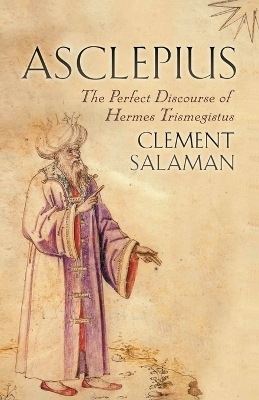
Asclepius
A Secret Discourse of Hermes Trismegistus
Seiten
2007
Bristol Classical Press (Verlag)
978-0-7156-3564-3 (ISBN)
Bristol Classical Press (Verlag)
978-0-7156-3564-3 (ISBN)
Describes the profound philosophical questions in the form of a conversation about secrets: the nature of the One, the role of the gods, and the stature of the human being. This philosophical work aims to offer spiritual guidance, and insight into the minds and emotions of the Egyptians in ancient and classical times.
"The Asclepius" is one of two philosophical books ascribed to the legendary sage of Ancient Egypt, Hermes Trismegistus, who was believed in classical and renaissance times to have lived shortly after Moses. The Greek original, lost since classical times, is thought to date from the 2nd or 3rd century AD. However, a Latin version survived, of which this volume is a translation. Like its companion, the "Corpus Hermeticum" (also published by Duckworth as "The Way of Hermes"), the "Asclepius" describes the most profound philosophical questions in the form of a conversation about secrets: the nature of the One, the role of the gods, and the stature of the human being. Not only does this work offer spiritual guidance, but it is also a valuable insight into the minds and emotions of the Egyptians in ancient and classical times. Many of the views expressed also reflect Gnostic beliefs which passed into early Christianity.
"The Asclepius" is one of two philosophical books ascribed to the legendary sage of Ancient Egypt, Hermes Trismegistus, who was believed in classical and renaissance times to have lived shortly after Moses. The Greek original, lost since classical times, is thought to date from the 2nd or 3rd century AD. However, a Latin version survived, of which this volume is a translation. Like its companion, the "Corpus Hermeticum" (also published by Duckworth as "The Way of Hermes"), the "Asclepius" describes the most profound philosophical questions in the form of a conversation about secrets: the nature of the One, the role of the gods, and the stature of the human being. Not only does this work offer spiritual guidance, but it is also a valuable insight into the minds and emotions of the Egyptians in ancient and classical times. Many of the views expressed also reflect Gnostic beliefs which passed into early Christianity.
Clement Salaman is a lecturer and retired teacher, and editor of a 7-volume translation of the letters of Marsilio Ficino.
| Erscheint lt. Verlag | 22.3.2007 |
|---|---|
| Zusatzinfo | 1, black & white illustrations |
| Verlagsort | London |
| Sprache | englisch |
| Maße | 140 x 216 mm |
| Gewicht | 133 g |
| Themenwelt | Geisteswissenschaften ► Philosophie ► Philosophie Altertum / Antike |
| ISBN-10 | 0-7156-3564-6 / 0715635646 |
| ISBN-13 | 978-0-7156-3564-3 / 9780715635643 |
| Zustand | Neuware |
| Informationen gemäß Produktsicherheitsverordnung (GPSR) | |
| Haben Sie eine Frage zum Produkt? |
Mehr entdecken
aus dem Bereich

aus dem Bereich
Anleitung zu einer Lektüre Mark Aurels
Buch | Hardcover (2025)
FinanzBuch Verlag
CHF 27,95
Die Philosophie der Antike als Lebensweise in der modernen Welt
Buch | Hardcover (2025)
FinanzBuch Verlag
CHF 25,20


