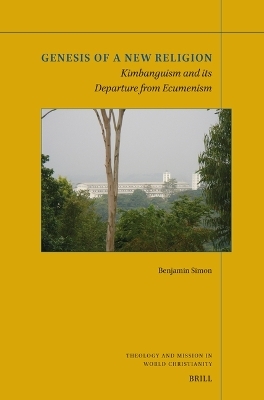
Genesis of a New Religion
Brill (Verlag)
978-90-04-71401-4 (ISBN)
Benjamin Simon, Dr. theol. habil., Professor and Academic Dean at the Ecumenical Institute at Bossey and Director for the World Council of Churches´ program on Ecumenical Formation. He has published monographs and many articles, and edited several books.
Preface
Narrative-Theological Preliminary Remarks
1 Formation of a Religion – The Era of Simon Kimbangu
Phase 1: Charismatic Leader
1 The Spiritual Sources of Simon Kimbangu
2 Christianity among the Bakongo – Social and Political Situation
2.1 Religious Vocation of Simon Kimbangu
2.2 Assessment of the Religious Vocation by Léon Morel
3 Kimbanguist Songs
4 Intercultural Realities
5 Religious Change Processes through Non-violence
2 Hidden and Official Kimbanguism – The Era of Diangienda
Phase 2: The Replacement Process
1 Diangienda’s Vocation
2 Kimbanguist Worship and Its Theology
3 Community and Identity
4 Socio-Cultural Diversity in the African Context
4.1 Taking Off the Shoes
4.2 The Kneeling
4.3 Green and White – Two Colours of Symbolic Meaning
4.4 The Flag
4.5 The Star
4.6 The Dove
4.7 The Sacred Rod “mvuala”
4.8 The Steps in Nkamba
5 The Importance of the Catechisms
6 Suppressed Popular Faith and Its Stages of Revelation
3 The Hidden Belief Becomes Official Doctrine – The Era of Dialungana
Phase 3: Securing Future Capability
1 Political Turmoil of the 1990s
2 Religious Education Strategies
2.1 The Kimbanguist School System
2.2 The Nkamba Bible School
4 The Social Order Acquires a Cosmic Dimension – The Era of Simon Kimbangu Kiangani
Phase 4: Stabilisation of the New Teaching
1 Ritual Factors
1.1 The Sprinkling of Water
1.2 Blessing of the Children
1.3 The Rite of Baptism
1.4 The Holy Communion
1.5 Bathing in the Holy Springs of Nkamba
1.6 Funeral Rite
1.7 The Mausoleum
1.8 The Temple of Nkamba
2 Theological Factors
2.1 Holy Family
2.2 Tata Elimu Santu
2.3 Ba Nzambe
3 Social and Political Factors
3.1 The Attitude towards Politics
3.2 Political Changes under Mobutu
3.3 La Conférence Souveraine Nationale (CSN)
3.4 Attitude of the Kimbanguists
3.5 Pan-Africanism
5 Kimbanguism and its Ecumenical Relations
Phase 5: Termination of Previous Contacts and Networks
1 The Application for Membership
1.1 Report
1.2 Decision-Making
1.3 The Report by William H. Crane
2 The 1970s and 1980s
3 The Demise of Papa Diangienda
4 Papa Dialungana and His Ecumenical Contacts
4.1 An Attempt to Re-establish Relations
4.2 Collège International
4.3 WCC-Assembly in Harare
4.4 The Rescheduling of Christmas
4.5 Critical Questions to the WCC
5 Relationships in the New Millennium
5.1 Power Claims of the Grandchildren
5.2 Requests through the WCC
5.3 Journées Scientifiques
5.4 Dialogue Meeting between Kimbanguists and WCC
5.5 The Position of the Kimbanguists
5.6 Catholic Dissociation
6 Rollercoaster Ride of Ecumenical Relations
6.1 Another Delegation Trip to the Congo
6.2 Dissolution of the Commission de Théologie Kimbanguiste (COTHEKI)
6.3 “One more step … ”
6.4 Meeting in Busan
6.5 Joint Consultation in 2014
7 Critical Review
6 Theological Tightrope Walks
Phase 6: Consolidation of the New Faith
1 Complexity of Faiths
1.1 Primary and Secondary Religious Experience – The Traditional Culture and Religion of the Bakongo (TRB) and Simon Kimbangu
2 Inculturation and Its “limits” or Criteria
2.1 “Limits” of Inculturation?
2.2 Convergence Method and the Development of Criteria
3 Modalist-Kimbanguist Monarchianism
3.1 Modes of Trinitarian Faith in Kimbanguism
3.2 Inconsistencies in Kimbanguism: the Apostles’ Creed
3.3 Modalist-Kimbanguist Monarchianism and Its Incompatibility with the Ecumenical Formula of the WCC
4 Genesis of a New Religion
4.1 Charismatic Leader
4.2 Detachment Process
4.3 Securing the Future Viability
4.4 Stabilisation of the New Teaching
4.5 Termination of Previous Contacts and Networks
4.6 Consolidation of the New Faith
Bibliography
Index
| Erscheinungsdatum | 10.04.2025 |
|---|---|
| Reihe/Serie | Theology and Mission in World Christianity ; 35 |
| Verlagsort | Leiden |
| Sprache | englisch |
| Maße | 155 x 235 mm |
| Gewicht | 535 g |
| Themenwelt | Geisteswissenschaften ► Religion / Theologie ► Christentum |
| ISBN-10 | 90-04-71401-4 / 9004714014 |
| ISBN-13 | 978-90-04-71401-4 / 9789004714014 |
| Zustand | Neuware |
| Informationen gemäß Produktsicherheitsverordnung (GPSR) | |
| Haben Sie eine Frage zum Produkt? |
aus dem Bereich