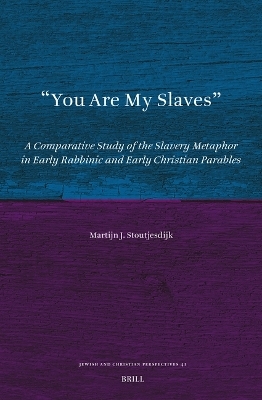
You Are My Slaves
Brill (Verlag)
978-90-04-71309-3 (ISBN)
Some of the slavery parables in the New Testament have been called “texts of terror,” as the slaves who are portrayed in them are beaten or even cut in two. Despite – or because – their violence, slavery parables are often used in early Christian and early rabbinic literature to illustrate the unique relationship between God and his people. This study investigates the reasons for and meaning of using the master-slave metaphor in the parables: what does it tell us about early Christian and early rabbinic theology, including possibilities for critique and resistance vis-à-vis the divine, and what does it say about slavery in the ancient world?
Martijn J. Stoutjesdijk, Ph.D. (2021), is currently working as a postdoctoral researcher at the Protestant Theological University in Utrecht (the Netherlands) on the role of the Bible in Dutch colonial slavery debates. He obtained his PhD degree with a study on slavery in early rabbinic and early Christian parables.
Acknowledgments
Note to the Reader
List of Figures, Tables, and Bildfelder
1 Introduction: a Comparative Study of Slavery Parables
1 Slavery Parables in Early Christianity and Early Rabbinic Judaism
2 Comparison on Four Levels
3 Outline of the Study
2 Theory and Methodology
1 Delimitations: Chronology, Topography and Terminology
2 What Are Slavery Parables?
3 Previous Research on Slavery Parables
4 How to Analyze Slavery Parables
3 Selling and Buying Slaves: Going from One Master to Another
1 Same Day Delivery
2 Debt-Slavery or Debt and Slavery?
3 Slave or Free, Slave and Free?
4 Reflection and Bildfeld
4 When the Master Is Away: Obeying the Master’s Orders
1 Receiving Assignments
2 Absente Ero
3 Going the Extra Mile?
4 Reflection and Bildfeld
5 Disciplining the Slave: the Threat of the Master
1 Punishments
2 Using Food as Carrot and Stick
3 Serving for Rewards?
4 Fleeing from the Master
5 Reflection and Bildfeld
6 Slaves and Meals: Elevation and Reversal
1 Reversal and Elevation in the New Testament
2 Reversal and Elevation in Early Rabbinic Parables
3 Reflection and Bildfeld
7 Conclusion: Working Out a Way of Living with the Heavenly Master
1 Slavery Parables: Some Conclusions
2 A Book about Comparison
3 New Research Possibilities
4 Final Remarks
Bibliography
Index of Slavery Parables
Index of Subjects
| Erscheinungsdatum | 05.03.2025 |
|---|---|
| Reihe/Serie | Jewish and Christian Perspectives Series ; 41 |
| Verlagsort | Leiden |
| Sprache | englisch |
| Maße | 155 x 235 mm |
| Gewicht | 824 g |
| Themenwelt | Geisteswissenschaften ► Religion / Theologie ► Judentum |
| ISBN-10 | 90-04-71309-3 / 9004713093 |
| ISBN-13 | 978-90-04-71309-3 / 9789004713093 |
| Zustand | Neuware |
| Informationen gemäß Produktsicherheitsverordnung (GPSR) | |
| Haben Sie eine Frage zum Produkt? |
aus dem Bereich