


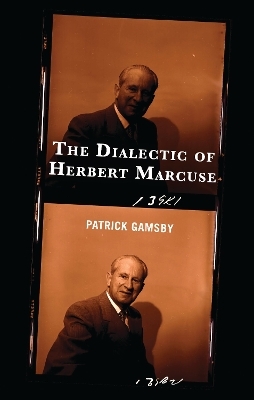
The Dialectic of Herbert Marcuse
Seiten
2024
Lexington Books (Verlag)
978-1-6669-3638-4 (ISBN)
Lexington Books (Verlag)
978-1-6669-3638-4 (ISBN)
The Dialectic of Herbert Marcuse offers a re-evaluation of Herbert Marcuse’s Critical Theory and argues for its continued relevance in the twenty-first century.
Herbert Marcuse (1898–1979) was one of the most recognizable and controversial public intellectuals throughout the 1960s until his death in the late 1970s, but today Marcuse’s work largely stands in the shadows of other Frankfurt School members and critical thinkers. Despite having once held a prominent and influential position amongst scholars, activists, and readers in the twentieth century, it is argued that Marcuse’s work nevertheless remains largely misunderstood. The Dialectic of Herbert Marcuse offers a new interpretation of Marcuse, one that attempts to show how Marcuse’s work has so often been turned into something else—into its opposite. In shining a light on parts of the unknown Marcuse, through the use of archival material and published works, this book reveals Marcuse’s Critical Theory to be one of hope, not one of pessimism, as it is so often portrayed to be. Ultimately, it is argued that Marcuse’s Critical Theory remains a vital and important body of work for present-day society and ought to be revisited.
Herbert Marcuse (1898–1979) was one of the most recognizable and controversial public intellectuals throughout the 1960s until his death in the late 1970s, but today Marcuse’s work largely stands in the shadows of other Frankfurt School members and critical thinkers. Despite having once held a prominent and influential position amongst scholars, activists, and readers in the twentieth century, it is argued that Marcuse’s work nevertheless remains largely misunderstood. The Dialectic of Herbert Marcuse offers a new interpretation of Marcuse, one that attempts to show how Marcuse’s work has so often been turned into something else—into its opposite. In shining a light on parts of the unknown Marcuse, through the use of archival material and published works, this book reveals Marcuse’s Critical Theory to be one of hope, not one of pessimism, as it is so often portrayed to be. Ultimately, it is argued that Marcuse’s Critical Theory remains a vital and important body of work for present-day society and ought to be revisited.
Patrick Gamsby is scholarly communications librarian and cross appointed to the Department of Sociology at Memorial University of Newfoundland.
Preface
Acknowledgments
Introduction: Forgetting Marcuse
Chapter 1: The Long Dialogue of the Frankfurt School
Chapter 2: The Camouflage of Critical Theory
Chapter 3: Hope in One-Dimensional Man
Chapter 4: Beyond One-Dimension
Conclusion: Remembering Marcuse
Bibliography
About the Author
| Erscheinungsdatum | 23.08.2024 |
|---|---|
| Reihe/Serie | The Frankfurt School in New Times |
| Sprache | englisch |
| Maße | 158 x 237 mm |
| Gewicht | 417 g |
| Themenwelt | Geisteswissenschaften ► Philosophie |
| Sozialwissenschaften ► Soziologie ► Allgemeines / Lexika | |
| ISBN-10 | 1-6669-3638-3 / 1666936383 |
| ISBN-13 | 978-1-6669-3638-4 / 9781666936384 |
| Zustand | Neuware |
| Informationen gemäß Produktsicherheitsverordnung (GPSR) | |
| Haben Sie eine Frage zum Produkt? |
Mehr entdecken
aus dem Bereich


aus dem Bereich
Gebundene Ausgabe 2025
Buch | Hardcover (2025)
C.H.Beck (Verlag)
CHF 68,60
Buch | Softcover (2024)
Phillip Reclam (Verlag)
CHF 17,90


