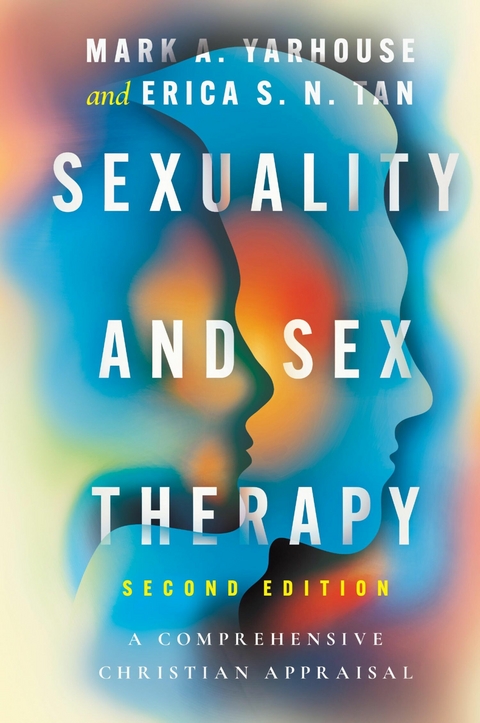
Sexuality and Sex Therapy (eBook)
384 Seiten
IVP Academic (Verlag)
978-1-5140-1098-3 (ISBN)

Mark A. Yarhouse (PsyD, Wheaton College) is the Dr. Arthur P. Rech and Mrs. Jean May Rech Professor of Psychology at Wheaton College, where he directs the Sexual and Gender Identity Institute and serves as a core faculty member in the doctoral program in clinical psychology.
Erica Tan (PsyD, Regent University) is a licensed psychologist in Oregon and an adolescent and family team member at Portland DBT Institute. In addition, she provides training and consultation in DBT nationally with PDBTI. Mark A. Yarhouse (PsyD, Wheaton College) is the Dr. Arthur P. Rech and Mrs. Jean May Rech professor of psychology at Wheaton College, where he directs the Sexual and Gender Identity Institute and serves as a core faculty member in the doctoral program in clinical psychology. His books include Understanding Gender Dysphoria, Modern Psychopathologies, and Family Therapies.
Two
Sexuality in Sociocultural
Perspective
Sexuality is a big issue, but there are others—how much you commit to
a relationship, to social obligation, to honesty and being honest with yourself.
Sexuality is a private matter; some believe that broadcasting
it destroys the very things that make it sacred.
THE LEE AND LOUD QUOTES in this chapter’s epigraphs suggest that there is variability regarding the issue of sexuality in terms of how it is viewed, how it may be approached as a topic of discussion, and how it may be presented from one individual to another. While some individuals may believe that sexuality is a matter of individual concern, others may believe that it is a significant cultural and communal experience. For example, in Real Sex, Lauren Winner posits that it is important to consider the communal nature of sexuality because it manifests in the presentation of gender, male versus female, and how we interact on the topic affects how we think and feel about it, and how we act on it.
An individual’s sexuality is not developed in a vacuum apart from influences. Various aspects of one’s sexuality are affected by the culture we grew up in. For example, the perception of gender, gender roles, values related to sexual behavior and sexual identity, communication from family members and peers about sexuality and sexual behaviors (both content and presentation), exposure to media, and education about sexuality may all weigh in on an individual’s experience of his or her sexuality. This section examines several contributions to the development of sexuality from a sociocultural perspective.
In recognition of the complexity of sexuality, the following was described in a call to action to promote sexual health and responsible sexual behavior (Satcher, 2001):
We must understand that sexuality encompasses more than sexual behavior, that the many aspects of sexuality include not only the physical, but the mental and spiritual as well, and that sexuality is a core component of personality. Sexuality is a fundamental part of human life. While the problems usually associated with sexual behavior are real and need to be addressed, human sexuality also has significant meaning and value in each individual’s life. This call, and the discussion it is meant to generate, is not just intended for health care professionals or policy makers. It is intended for parents, teachers, clergy, social service professionals—all of us. (p. 2)
As such, sexuality is much more than just a biological thing. As humans, we interact daily out of our sexuality, whether it is conscious or not. Our sexuality manifests in our behaviors, thoughts, attitudes, values, and speech.
HOW DO SOCIETY AND CULTURE CONTRIBUTE TO VIEWS OF SEX?
Society’s and culture’s views of sex are generally derived from anthropological studies. Surveys are common methods of data collection that can elucidate differences from one culture to another. From a global perspective Laumann et al. (2006) conducted a global assessment of sexual satisfaction with a survey of 27,500 men and women between the ages of forty and eighty in twenty-nine countries. Citizens of Austria, Canada, France, Mexico, Sweden, and the United States reported the highest level of sexual satisfaction. Citizens in Brazil, Israel, Italy, and Turkey reported a medium level of satisfaction. Those who resided in Japan and Taiwan were found to report the lowest level of satisfaction.
Among those surveyed (Laumann et al., 2006), two-thirds of people in Western countries reported physical and emotional satisfaction regarding their sexual life. Half of the men and a third of the women stated that sex was extremely important in their lives. The portion of the population reporting this was smaller in the Middle East, where 50% of men and 38% of women stated their sex lives were satisfying. Sixty percent of men and 37% of women identified sex as being important in their lives. In East Asian countries, one-fourth of men and women reported satisfying sex lives. Twenty-eight percent of men and 12% of women reported sex as being important in their lives.
In spite of differences in culture and tradition, monogamy and commitment were reported as valued and cherished across the world. In all countries surveyed (Laumann et al., 2006), women had positive associations with foreplay. One in three women reported sexual problems affecting her happiness. As such, sexual well-being was correlated with happiness for both men and women.
In addition to positive emotions, Laumann et al. (2006) found that couples who resided in countries where men and women held equal status were more likely to report physically and emotionally satisfying sex lives. In more patriarchal countries, where men tend to be more dominant, older couples reported less satisfying sex, particularly in East Asia. As such, relationships that are based on equality are more likely to support interactions and behaviors where both partners’ needs are met. Establishment of these patterns of interaction may be due to cultural scripts (McMinn, 2004), which are learned ways of relating that reinforce men and women for behaviors that are pertinent to their cultural context. As such, these scripts tend to vary between cultures and geographic locations, and from one time period in history to another.
SEXUAL ATTITUDES AND BEHAVIORS IN THE UNITED STATES
Every few years the Centers for Disease Control and Prevention (CDC) conducts the Youth Risk Behavior Surveillance Survey (YRBS) to capture trends among adolescents with respect to risky behaviors and physical health. Among high school students surveyed in 2021, the CDC continues to report a decline in sexual behavior among adolescents.
-
30% have had sexual intercourse
-
21% had had sexual intercourse during the previous three months, and of these 48% did not use a condom the last time they had sex; 67% did not use birth control pills or Depo-Provera to prevent pregnancy the last time they had sex
-
6% had had sex with four or more people during their life
-
3% of teens have had sex prior to the age of thirteen
It is encouraging to see a steady decline in sexual behavior among adolescents. Teens who are sexually active put themselves at risk for HIV infection, other sexually transmitted infections (STIs), and unintended pregnancy. According to the CDC (2023), “annual HIV infections dropped from 9,300 in 2017 to 6,100 in 2021 among 13- to 24-year-olds.” Much of the decline is apparently due to reductions in infections among young gay and bisexual males, which is encouraging.
Although we see a reduction in teen sexual activity, it is still important to be familiar with factors that increase the likelihood of teen sexual activity (see Inanc et al., 2020). These include the following:
-
early pubertal development
-
being born to teen parents
-
insecure attachment to parents
-
history of abuse or neglect
-
alcohol and drug use
-
living in a single-parent household
-
having an older, influential sibling
-
perceiving that “everyone” is engaging in sexual activity
-
impulsive personality
-
deviant peer group
In spite of the consequences of teen sexual activity, which include STIs, pregnancy, and early parenting, teens report positive motivations for sex, such as pursuit of intimacy, sexual pleasure, and social status. Co-occurring issues that facilitate risky sexual behaviors include alcohol consumption and illicit drug use. According to the CDC, of the 30% of adolescents who reported they are currently sexually active, 21% reported having consumed alcohol or having taken some drug prior to their last sexual intercourse (CDC, 2021).
According to the Guttmacher Institute, “rates of adolescent pregnancies, births and abortions have all been plummeting for decades, mostly as the direct result of improved contraceptive use. Likewise, for the population overall, there is no evidence that sexual activity has increased—and pregnancy, birth and abortion rates have been declining” (Dreweke, 2019).
The data on sexuality and sexual behavior in the United States actually reflect a trend toward more conservative attitudes for older adolescents and young adults compared to the previous generation. Any movement toward sexual restraint is quite remarkable when we consider the sociocultural context of sexualization of young people that is so apparent in the media and entertainment.
In a study (Lastoria & Association for Christians in Student Development, 2011) of over 2,300 Christian college students, there was...
| Erscheint lt. Verlag | 25.2.2025 |
|---|---|
| Reihe/Serie | Christian Association for Psychological Studies Books |
| Verlagsort | Lisle |
| Sprache | englisch |
| Themenwelt | Geisteswissenschaften ► Religion / Theologie ► Christentum |
| Schlagworte | accessible • addiction • Biblical • Christian counseling • christianity and sexuality • Christian psychologist • Christian Psychology • Christian sexual psychology • Client • Counselor • Critical • culture war • disorder • DSM-5 • Dysfunction • Dysphoria • Framework • Gender identity • Gender nonconformity • God • graduate • Human sexuality • Integration • Mental Health • Pastor • Professional • Professor • Psychiatry • Psychology • psychotherapy • resource • Scientific • Sexual Dysfunction • Student • Therapist • youth leader |
| ISBN-10 | 1-5140-1098-4 / 1514010984 |
| ISBN-13 | 978-1-5140-1098-3 / 9781514010983 |
| Informationen gemäß Produktsicherheitsverordnung (GPSR) | |
| Haben Sie eine Frage zum Produkt? |
 EPUB (Wasserzeichen)
DRM: Digitales Wasserzeichen
Dieses eBook enthält ein digitales Wasserzeichen und ist damit für Sie personalisiert. Bei einer missbräuchlichen Weitergabe des eBooks an Dritte ist eine Rückverfolgung an die Quelle möglich.
Dateiformat: EPUB (Electronic Publication)
EPUB ist ein offener Standard für eBooks und eignet sich besonders zur Darstellung von Belletristik und Sachbüchern. Der Fließtext wird dynamisch an die Display- und Schriftgröße angepasst. Auch für mobile Lesegeräte ist EPUB daher gut geeignet.
Systemvoraussetzungen:
PC/Mac: Mit einem PC oder Mac können Sie dieses eBook lesen. Sie benötigen dafür die kostenlose Software Adobe Digital Editions.
eReader: Dieses eBook kann mit (fast) allen eBook-Readern gelesen werden. Mit dem amazon-Kindle ist es aber nicht kompatibel.
Smartphone/Tablet: Egal ob Apple oder Android, dieses eBook können Sie lesen. Sie benötigen dafür eine kostenlose App.
Geräteliste und zusätzliche Hinweise
Buying eBooks from abroad
For tax law reasons we can sell eBooks just within Germany and Switzerland. Regrettably we cannot fulfill eBook-orders from other countries.
aus dem Bereich