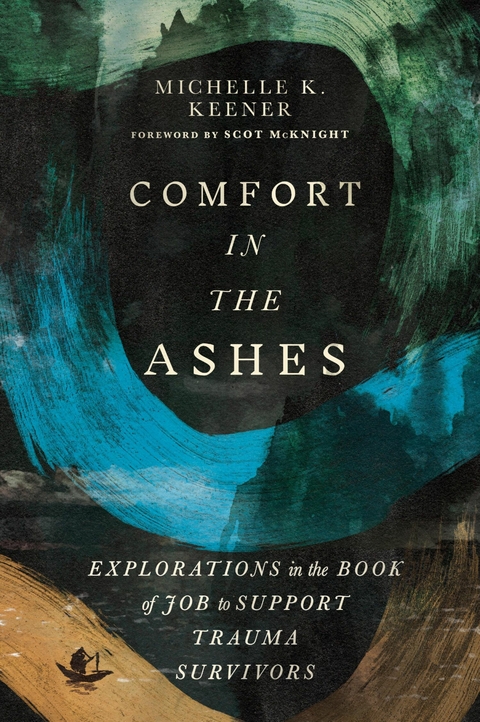
Comfort in the Ashes (eBook)
208 Seiten
IVP Academic (Verlag)
978-1-5140-1035-8 (ISBN)

Michelle K. Keener (PhD, Liberty) is an associate research fellow with the Kirby-Laing Centre for Public Theology and the director of discipleship for a growing church in Las Vegas. She is an award-winning novelist and devotional author. Keener and her family live in beautiful southern Nevada.
Michelle K. Keener (PhD, Liberty) is an associate research fellow with the Kirby-Laing Centre for Public Theology and the director of discipleship for a growing church in Las Vegas. She is an award-winning novelist and devotional author. Keener and her family live in beautiful southern Nevada.
Introduction
TRAUMA ISN’T JUST SADNESS ON STEROIDS. It is not stepping on a Lego twice or forgetting to record your favorite show. Trauma is an event that goes beyond our ordinary capacity for coping and functioning. Trauma devastates. It dismantles. It goes to the heart of our most deeply held beliefs about God, the world, and our place in it. It hits us at the very core of who we are and what we believe and leaves us forever changed.
And so often the church is unprepared for it.
I never intended to write a book about trauma and the Bible. When I started my PhD program, I wanted to research and write about discipleship, but when I walked through a season of intense personal suffering, I came face-to-face with trauma in all of its brutal, lonely, confusing pain. I don’t recommend the experience, but the truth is, trauma and suffering are a part of the world we live in. No one is immune from wounding and sorrow—it finds us all. For many of us as New Testament believers, the church is where we turn for comfort, for support, for answers. When our world falls apart, we go to the church looking for the glue that will keep it together. We turn to our pastors and elders, our leaders, and our friends in the hope that they will have the words we need to hear. That somehow these men and women of God, men and women we trust, will know what to say to make it better. Unfortunately, many times the response that trauma survivors1 receive from our church community makes things worse. Not because our leaders and friends are uncaring or unconcerned, but simply because most of us in the church are not prepared to deal with the reality of trauma and respond in a healthy, life-giving way.
As pastors, church leaders, and believers, we know we live in a broken world filled with broken people. And let’s be honest, those of us who lead in the church can be just as wounded and broken as the people we minister to. We know hurt and loss and sorrow will come, and we are often prepared with neat and tidy Christian responses for when bad things happen. We have Bible verses at the ready to repeat when someone comes to us with a broken heart or a terrifying diagnosis. We rely on those verses because we believe them, and we know that God’s promises are true. We know God restores and redeems. We know God forgives and comforts. We know God is with us in our darkest times. But in our hurry to provide a quick Christian answer, to rush people from sorrow to joy, to jump ahead to the happily ever after testimony that we believe is coming, we may be unintentionally making the situation worse. As counterintuitive as it may feel, sometimes we need to stop trying to provide an answer and provide our presence instead. For many of us, when we’re in the midst of trauma and suffering we don’t need a lecture on theology and we don’t need answers we’ve heard a thousand times; we need to know we are not alone. When we’re in the ashes of our trauma, we need someone who is willing to sit in the dirt with us.
We can see this play out in the book of Job. It is a story that has so much to teach all of us, survivors and comforters alike, about trauma. Job was a righteous man. A man who did all the right things, who followed the rules, who lived his life well. He was a man with wealth, reputation, family, and a deep devotion to God. Then, one day, it’s all ripped away. In a series of terrible calamities Job loses his children, his wealth, his reputation and status in the community, even his health. One loss after another piles up until he has nothing left. He is exiled to the town garbage dump, sitting in the ashes of shame, loss, and physical pain, his body covered with oozing sores, with no explanation for why this has happened. Why him? Why his children? Why his family? Why God?
Haven’t we all been there at some point? Why God? Why me? Why now? Where are you? Please make it stop. Trauma upends our life, shatters everything we know about the world, and leaves us in chaos and confusion. And when we turn to the people we think have all the answers, when we turn to our church or to trusted Christian friends, we are all too often met with a pat on the back, a Bible verse, and a promise that they’ll pray for us in their next quiet time moment. Or we’re told to forgive and move on, to let go and let God, to stop dwelling on it and think of better things. We’re expected to pick up the fragments of our life, wrap them in Bible verses, and get on with it.
But what if we can’t?
What if the trauma is too big, too hard, too disorienting?
Left alone in our sorrow, we may start to wonder if the flaw is in us. Maybe my faith isn’t strong enough. Maybe I did something wrong. Maybe God is mad at me. And down the road to a secondary trauma we go. The trauma of not being heard, of not being seen, of being brushed aside because our pain is too much. Because we are too much.
But here’s the thing about trauma . . . it’s not your fault. Maybe I should say that again. Trauma is not your fault. You are not weak or defective. Your faith is not too small, and your sin is not too great. Trauma is a category 5 hurricane and no amount of plywood on the windows can stop it. Trauma overwhelms our brains and our bodies in a way we can’t control. That’s what makes it trauma. If we could cope with it and figure it out and pick ourselves up and dust ourselves off without much work, it wouldn’t be trauma. It might be sadness or grief or anger, but it’s not trauma. Trauma breaks through our coping skills like a tidal wave crashing through a dam. There is no way to prepare for it, there is nothing you could have done. Trauma takes over. What we need is a church that knows how to recognize the signs of trauma and how to respond to it in a way that leads to healing, not more wounding. I’ve experienced that kind of wounding by the people I turned to for help. Maybe you have too. And if you have, I’m sorry. I’m sorry for the betrayal and the abandonment. I’m sorry you weren’t supported and cared for. Please know, that is not the heart of God. You have never been forgotten by him, and he has never turned his back on you.
Job experienced it, too. In his trauma, in his hurting, he was met with those same rehearsed answers. He was blamed for his situation. He was told to hurry up and repent. He was ridiculed for his questions and criticized for his angry words. Until God showed up. God came to the ash heap. God appeared in the midst of Job’s anger and loss. He didn’t wait for Job to have it all figured out. He didn’t wait for Job to get his life put back together, and he certainly didn’t wait for Job to be healed and back at work tending his sheep and caring for his household before he got involved. Job was in pain. He was hurt, confused, and angry, and God met him there. God meets us in our ashes. He meets us in our pain. As his church we need to do the same. We are called to minister to the broken and the hurting. We are called to share the life and hope found in Jesus. It’s time for church leaders and believers to stop offering prettily packaged responses from a safe distance. It’s time for us to sit in the ashes with the hurting, our Sunday clothes covered in dirt and grime, our faces lined with tears. Trauma brings people to the ash heap, so that is where the church needs to go.
As the world becomes more aware of mental health and the reality of trauma, the local church needs to be prepared to receive and minister to those who are suffering. And we need to do it in a way that not only honors God but honors the experience of trauma as well. It is my hope that as we journey through the book of Job with an awareness of and sensitivity to the impact of trauma on the biblical text, we will become better equipped to sit with those who are hurting, with the people God has entrusted to our care. The book of Job is a challenging text that raises some of the most difficult questions in the Bible, but it is in the difficulty that we learn, and Job has much to teach us.
A word of transparency at the beginning. . . . I am writing this book from the perspective of a biblical scholar and as someone who has gone through deep wounding. I wrote my dissertation on using trauma theory to interpret the book of Job, and to do that I spent eighteen months of my life researching trauma, trauma therapy, and trauma responses. In the course of that research, I began to see how much the church needs to understand the impact trauma has on survivors and why it is different from other types of sorrow and suffering. I saw in Job’s friends people who had been my friends. I saw in Job’s agony, my agony. The church is often the place broken and struggling people turn to for help, so we need to be prepared to come alongside them and sit with them in the ashes of their experience. In this book, I will offer what I have learned about trauma and how I see it in the Bible, primarily in the book of Job. I’m simply a Bible scholar who probably reads too much and has a deep desire to serve the church. So, with that disclaimer in mind, I encourage you reach out for professional care if you need it. Trauma is not your fault, it is not a failure, and it is not a sign of weakness. Please do not hesitate to contact a professional mental health care provider if you have experienced trauma, or if you know someone who needs the support and guidance of a licensed therapist.
This book will offer a reading of the book of Job that is informed by an understanding of trauma theory and the impact of trauma. Such a reading is particularly important in today’s world, and the lessons we can learn from Job’s experience of trauma have immediate...
| Erscheint lt. Verlag | 14.1.2025 |
|---|---|
| Vorwort | Scot McKnight |
| Verlagsort | Lisle |
| Sprache | englisch |
| Themenwelt | Geisteswissenschaften ► Religion / Theologie ► Christentum |
| Schlagworte | Abuse • biblical guidanc • Book of Job • Care • Church • Coping • Faith • Healing • Help • Hope • how to support trauma survivors • Loss • Mental Health • Mental Illness • ministry leader • Old Testament • Pain • Pastor • Pastoral Care and Counseling • pastoral theology • Recovery • reflection questions • Refuge • resource • restoration • Spiritual Ministry • struggle • Survivor • Tool • Trauma • trauma and the church • trauma informed church • trauma informed response • Trauma theory • trauma victims • victim |
| ISBN-10 | 1-5140-1035-6 / 1514010356 |
| ISBN-13 | 978-1-5140-1035-8 / 9781514010358 |
| Informationen gemäß Produktsicherheitsverordnung (GPSR) | |
| Haben Sie eine Frage zum Produkt? |
 EPUB (Wasserzeichen)
DRM: Digitales Wasserzeichen
Dieses eBook enthält ein digitales Wasserzeichen und ist damit für Sie personalisiert. Bei einer missbräuchlichen Weitergabe des eBooks an Dritte ist eine Rückverfolgung an die Quelle möglich.
Dateiformat: EPUB (Electronic Publication)
EPUB ist ein offener Standard für eBooks und eignet sich besonders zur Darstellung von Belletristik und Sachbüchern. Der Fließtext wird dynamisch an die Display- und Schriftgröße angepasst. Auch für mobile Lesegeräte ist EPUB daher gut geeignet.
Systemvoraussetzungen:
PC/Mac: Mit einem PC oder Mac können Sie dieses eBook lesen. Sie benötigen dafür die kostenlose Software Adobe Digital Editions.
eReader: Dieses eBook kann mit (fast) allen eBook-Readern gelesen werden. Mit dem amazon-Kindle ist es aber nicht kompatibel.
Smartphone/Tablet: Egal ob Apple oder Android, dieses eBook können Sie lesen. Sie benötigen dafür eine kostenlose App.
Geräteliste und zusätzliche Hinweise
Buying eBooks from abroad
For tax law reasons we can sell eBooks just within Germany and Switzerland. Regrettably we cannot fulfill eBook-orders from other countries.
aus dem Bereich