


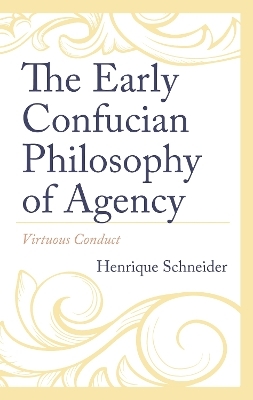
The Early Confucian Philosophy of Agency
Virtuous Conduct
Seiten
2024
Lexington Books (Verlag)
978-1-6669-2837-2 (ISBN)
Lexington Books (Verlag)
978-1-6669-2837-2 (ISBN)
Virtuous conduct is the philosophy of agency within Early Confucianism. Drawing on the ideas of Confucius, Mencius, and Xunzi, this book characterizes Early Confucianism as a progressive philosophy due to its human-centered program for social reform, its process view of self-cultivation, and its development.
Henrique Schneider argues that understanding the three Early Confucian thinkers—Confucius, Mencius, and Xunzi—as virtue-ethicists, political philosophers, or social conservatives proves too narrow. Championing a broader and more philosophical reading, The Early Confucian Philosophy of Agency: Virtuous Conduct sheds new light on a well-established topic. Virtuous conduct—aligning actions and motivations with virtues, social roles, and rituals—is the philosophy of agency of Early Confucianism. Confucius, Mencius, and Xunzi share a common philosophy of agency, which does more than describe agents and acts: it also represents a progressive social and political program. Schneider characterizes Early Confucianism as a progressive philosophy due to its human-centered program for social reform, its process view of self-cultivation, and its development. Agents who cultivate themselves can produce virtuous conduct, flourish, and become Junzi. This lets them lead each other in self-cultivation, social environment, and polity. As such, virtuous conduct integrates ethics, social and political philosophy in a theory of action.
Henrique Schneider argues that understanding the three Early Confucian thinkers—Confucius, Mencius, and Xunzi—as virtue-ethicists, political philosophers, or social conservatives proves too narrow. Championing a broader and more philosophical reading, The Early Confucian Philosophy of Agency: Virtuous Conduct sheds new light on a well-established topic. Virtuous conduct—aligning actions and motivations with virtues, social roles, and rituals—is the philosophy of agency of Early Confucianism. Confucius, Mencius, and Xunzi share a common philosophy of agency, which does more than describe agents and acts: it also represents a progressive social and political program. Schneider characterizes Early Confucianism as a progressive philosophy due to its human-centered program for social reform, its process view of self-cultivation, and its development. Agents who cultivate themselves can produce virtuous conduct, flourish, and become Junzi. This lets them lead each other in self-cultivation, social environment, and polity. As such, virtuous conduct integrates ethics, social and political philosophy in a theory of action.
Henrique Schneider is associate of the Center for Chinese Studies in Switzerland and of the Geopolitical Information Services in Liechtenstein.
Acknowledgments
Introduction: Conceptions of Confucianism
Chapter 1: Virtues
Chapter 2: Roles
Chapter 3: Rituals
Chapter 4: Human Nature, Self-Cultivation, and Flourishing
Chapter 5: Junzi: Self-interest and Leadership
Conclusion: Confucianism as “Progressive” Philosophy
Appendix 1: Virtue, a Contested Idea
Appendix 2: Alternatives to Virtues
Bibliography
About the Author
| Erscheinungsdatum | 31.01.2024 |
|---|---|
| Sprache | englisch |
| Maße | 159 x 236 mm |
| Gewicht | 449 g |
| Themenwelt | Geisteswissenschaften ► Philosophie ► Ethik |
| Geisteswissenschaften ► Philosophie ► Östliche Philosophie | |
| Geisteswissenschaften ► Religion / Theologie ► Weitere Religionen | |
| ISBN-10 | 1-6669-2837-2 / 1666928372 |
| ISBN-13 | 978-1-6669-2837-2 / 9781666928372 |
| Zustand | Neuware |
| Informationen gemäß Produktsicherheitsverordnung (GPSR) | |
| Haben Sie eine Frage zum Produkt? |
Mehr entdecken
aus dem Bereich

aus dem Bereich
Buch | Hardcover (2025)
Suhrkamp (Verlag)
CHF 32,15


