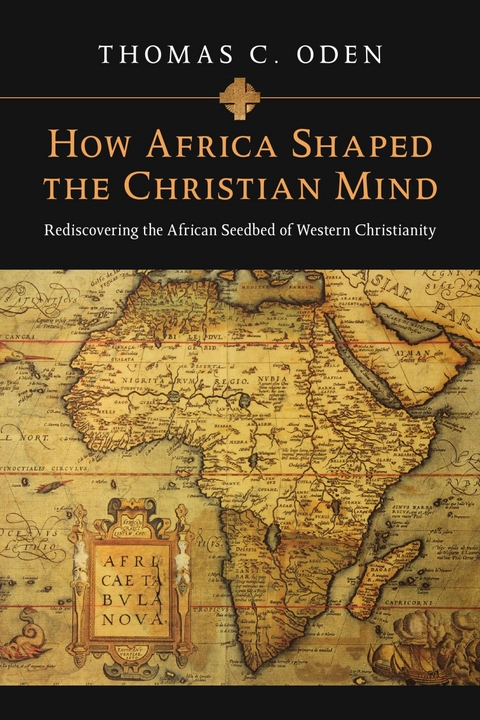
How Africa Shaped the Christian Mind (eBook)
204 Seiten
IVP Academic (Verlag)
978-0-8308-7556-6 (ISBN)
Thomas C. Oden (1931–2016), was the general editor of the Ancient Christian Commentary on Scripture and the Ancient Christian Doctrine series as well as the author of Classic Christianity, a revision of his three-volume systematic theology. He was the director of the Center for Early African Christianity at Eastern University in Pennsylvania and he served as the Henry Anson Buttz Professor of Theology at The Theological School of Drew University in Madison, New Jersey. Oden was active in the Confessing Movement in America, particularly within the United Methodist Church and was president of The Institute for Classical Christian Studies. He suggested that Christians need to rely upon the wisdom of the historical Church, particularly the early Church, rather than on modern scholarship and theology and said his mission was "to begin to prepare the postmodern Christian community for its third millennium by returning again to the careful study and respectful following of the central tradition of classical Christianity."
Introduction
Toward a Half Billion African Christians
An Epic Story
Out of Africa
The Pivotal Place of Africa on the Ancient Map
Two Rivers: The Nile and the Medjerda--Seedbed of Early Christian Thought
Affirming Oral and Written Traditions
Self-Effacement and the Recovery of Dignity
The Missing Link: The Early African Written Intellectual Tradition Forgotten
Why Africa Has Seemed to the West to Lack Intellectual History
Interlude
Part One: The African Seedbed of Western Christianity
1 A Forgotten Story
Who Can Tell It?
Pilgrimage Sites Neglected
Under Sands: The Burial of Ancient Christian Texts and Basilicas
2 Seven Ways Africa Shaped the Christian Mind
How the Western Idea of a University Was Born in the Crucible of Africa
How Christian Exegesis of Scripture First Matured in Africa
How African Sources Shaped Early Christian Dogma
How Early Ecumenical Decision Making Followed African Conciliar Patterns
How the African Desert Gave Birth to Worldwide Monasticism
How Christian Neoplatonism Emerged in Africa
How Rhetorical and Dialectical Skills Were Refined in Africa and Introduced to Europe
Interlude: Harnack?s Folly
Overview
3 Defining Africa
Establishing the Indigenous Depth of Early African Christianity
The Stereotyping of Hellenism as Non-African
Scientific Inquiry into the Ethnicity of Early African Christian Writers
The Purveyors of Myopia
The African-Priority Hypothesis Requires Textual Demonstration
The South-to-North Hypothesis
A Case in Point: The Circuitous Path from Africa to Ireland to Europe and Then Back to Africa
A Caveat Against Afrocentric Exaggeration
4 One Faith, Two Africas
The Hazards of Bridge Building
The Challenge of Reconciliation of Black Africa and North Africa
Overcoming the Ingrained Lack of Awareness
The Roots of the Term Africa
Excommunicating the North
Arguing for African Unity
Defining "Early African Christianity" as a Descriptive Category of a Period of History
How African Is the Nile Valley?
5 Temptations
The Emerging Task of Historical Inquiry
The Catholic Limits of Afrocentrism
The Inflexible Habit of Ignoring African Sources
The Cost of the Forgetfulness
Overlooking African Voices Already Present in Scripture
How Protestants Can Celebrate the Apostolic Charisma of the Copts
The Christian Ancestry of Africa
Part Two: African Orthodox Recovery
6 The Opportunity for Retrieval
Surviving Modernity
The Steadiness of African Orthodoxy
The New African Ecumenism
Pruning Undisciplined Excesses
Burning the Acids of Moral Relativism
Orthodoxy: Global and African
Historic Christian Multiculturalism
Reframing Modern Ecumenics Within Classic Ecumenics
7 How the Blood of African Martyrs Became the Seed of European Christianity
Whether Classic Christian Teaching Is Defined by Power
How the History of African Martyrdom Shaped Christian Views of Universal History
Recalling the Exodus as an African Event
Amassing the Evidence
The Challenge of Young Africa
8 Right Remembering
Remembering the Scripture Rightly Through the Spirit
The Heart of African Orthodoxy
Transcending Material Worldliness
Avoiding Racial Definitions of Apostolic Truth
9 Reshaping the Relation of Christianity and Islam Through Historical Insight
The Risks Scholars Take
Empathizing With Sub-Saharan Suspicions of the North
Conjointly Studying the History of Islam and Christianity
The Rigorous Language Requirements of African Research
Arabic Christian Studies
Learning from Primary Sources
Appendix: The Challenges of Early African Research
Three Aims of Future Research
The Precedent
The Scope
The African Center of the International Consortium
The Consortium of Scholars
Assembling the Pieces of the Puzzle
Academic Leadership
Maximizing Digital Technologies
Publishing Outcomes
Conclusion
Literary Chronology of Christianity in Africa in the First Millennium
Bibliography
| Erscheint lt. Verlag | 20.8.2009 |
|---|---|
| Reihe/Serie | Early African Christianity |
| Verlagsort | Lisle |
| Sprache | englisch |
| Themenwelt | Religion / Theologie ► Christentum ► Kirchengeschichte |
| Schlagworte | African Christianity • African Church • African Continent • African Culture • African History • africans • African Theology • A History of Christianity in Africa • Bible • Christian Belief • Christian doctrine • Christian History • Christian theology • Church Fathers • Church history • Church Leadership • Colonial • Colonialism • Contributions • Early Church Fathers • European • Global Church • God • Heritage • Historical • historical theology • History • Impact • Intellectual development • learn • legacy • modern church • scholars • Theology |
| ISBN-10 | 0-8308-7556-5 / 0830875565 |
| ISBN-13 | 978-0-8308-7556-6 / 9780830875566 |
| Informationen gemäß Produktsicherheitsverordnung (GPSR) | |
| Haben Sie eine Frage zum Produkt? |
 EPUB (Wasserzeichen)
DRM: Digitales Wasserzeichen
Dieses eBook enthält ein digitales Wasserzeichen und ist damit für Sie personalisiert. Bei einer missbräuchlichen Weitergabe des eBooks an Dritte ist eine Rückverfolgung an die Quelle möglich.
Dateiformat: EPUB (Electronic Publication)
EPUB ist ein offener Standard für eBooks und eignet sich besonders zur Darstellung von Belletristik und Sachbüchern. Der Fließtext wird dynamisch an die Display- und Schriftgröße angepasst. Auch für mobile Lesegeräte ist EPUB daher gut geeignet.
Systemvoraussetzungen:
PC/Mac: Mit einem PC oder Mac können Sie dieses eBook lesen. Sie benötigen dafür die kostenlose Software Adobe Digital Editions.
eReader: Dieses eBook kann mit (fast) allen eBook-Readern gelesen werden. Mit dem amazon-Kindle ist es aber nicht kompatibel.
Smartphone/Tablet: Egal ob Apple oder Android, dieses eBook können Sie lesen. Sie benötigen dafür eine kostenlose App.
Geräteliste und zusätzliche Hinweise
Buying eBooks from abroad
For tax law reasons we can sell eBooks just within Germany and Switzerland. Regrettably we cannot fulfill eBook-orders from other countries.
aus dem Bereich