Stewart E. Kelly (PhD, Notre Dame) is professor of philosophy at Minot State University. He is the author of Truth Considered and Applied and Thinking Well: An Introduction to Critical Thinking.
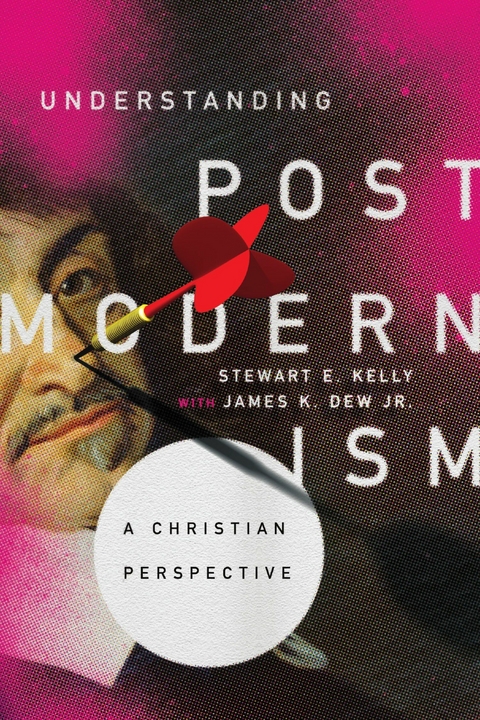
Postmodernity has matured. But the challenge of navigating our contemporary culture remains. In order for Christians to make wise decisions, we first need to understand the many facets of our postmodern context.If Rene Descartes is often identified as the first truly modern philosopher in light of his confidence in human reason, then postmodernism has taken Descartes to the woodshed. Stewart Kelly and James Dew detail the litany of concerns that postmodernism has raised: overconfidence in human reason, the limitations of language, the relativity of truth, the lack of a truly objective view, the inherently oppressive nature of metanarratives, the instability of the human self, and the absence any moral superiority.With wisdom and care, Kelly and Dew compare these postmodern principles with the gospel of Jesus Christ and the Christian faith. What emerges is neither a rejection of everything postmodernism is concerned with nor a wholesale embrace of all that it affirms. Instead, we are encouraged to understand the postmodern world as we seek to mature spiritually in Christ.
James K. Dew Jr. (PhD, Southeastern Baptist) is associate professor of the history of ideas and philosophy and dean of the College at Southeastern Baptist Theological Seminary. He is the coauthor (with Mark W. Foreman) of How Do We Know? An Introduction to Epistemology and coeditor (with Chad Meister) of God and Evil: The Case for God in a World Filled with Pain and God and the Problem of Evil: Five Views. Stewart E. Kelly (PhD, Notre Dame) is professor of philosophy at Minot State University. He is the author of Truth Considered and Applied and Thinking Well: An Introduction to Critical Thinking.
1
Introducing Postmodernism
Our society is in the throes of a cultural shift of immense proportions.
Stanley J. Grenz, A Primer on Postmodernism
Seismic Changes
Many older Americans have fond memories of the 1950s into the 1960s. The Korean War had ended, the economy and suburbia were booming, we were not at war, television was on the scene, and much in American life seemed good and decent. Unfortunately, this happy time was not to last. The 1960s saw the assassination of President Kennedy, race riots in numerous cities, the Vietnam War and the protests against it, the civil rights movement, the assassinations of Dr. Martin Luther King Jr. and Robert Kennedy, a brutal Democratic Convention in 1968, and an unraveling of the tightly woven fabric of American peace and prosperity. The American landscape had drastically changed between 1960 and 1970, in part for the better and in part for the worse.
But the Western world and the United States changed in other important ways in the ’60s. The traditional and dominant ways of approaching history, philosophy, theology, and other disciplines came under a sustained assault. The traditional ways involved a worldview commonly known as the Enlightenment.1 The Enlightenment (and its corresponding worldview, modernism) dominated Europe from around 1660 until the start of the French Revolution in 1789. It introduced a number of ideas that challenged traditional Christian ideas, and contributed significantly to the rise of modern science. Christian thinkers were increasingly challenged to defend the faith against a growing secular revolution.
Given that the Enlightenment worldview was often known as modernism, many thought an appropriate label for the new view was postmodernism, based on the simple ideas that it both came after modernism and that it seemed to reject key modernist beliefs. Postmodernism, whatever exactly it was, caught on in literary circles, philosophy, theology, history, and the social sciences. Through the work of the philosopher Thomas Kuhn, it was also seen as attacking the central ideas of science and its claims to certain knowledge and truth. Depending on who and what you read, after the smoke had cleared it didn’t seem like much was left standing. These radical changes in culture and the world of ideas happened simultaneously in both North America and much of Europe, with the year 1968 as the pivotal turning point in the final transition from modern to postmodern.
Throughout the 1950s the Western world was still dominated by Enlightenment modernism. By the end of the 1960s this was no longer the case. In this book we will attempt both to give an overview of modernism and then to seek to define postmodernism in a manner that does justice to its breadth and variety. We intend to aid the reader in understanding postmodernism, and we hope to thoroughly and fairly evaluate postmodernism from a Christian perspective.
We will limit how much we write about leading postmodern thinkers such as Friedrich Nietzsche, Michel Foucault, Jacques Derrida, Jean-François Lyotard, and Richard Rorty. We do this not because they are not worth studying, but because they are difficult to write about in a manner that is both clear and accessible to those without a substantial amount of background knowledge. Rather, we will focus on the major themes of postmodernism and weave in some of these thinkers along the way. We believe this topical approach makes the understanding of postmodernism an easier task than an approach that focuses on leading postmodern thinkers. Postmodernism has challenged how evangelical Christians think about the gospel,2 about the Scriptures as the inspired Word of God, about knowledge, and about truth itself. If the leading postmodern theologians are correct, then traditional Christianity needs to be overhauled in some significant ways.3 This overhaul would involve more than mere cosmetic surgery, but rather a radical reorientation and revisioning of the whole of Christian theology and Christian life. In 1 Peter 3:15, Peter writes that we should “always be prepared to give an answer to everyone who asks you to give the reason for the hope that you have. But do this with gentleness and respect.” And Paul writes in 2 Corinthians 10:5 that “we demolish arguments and every pretension that sets itself up against the knowledge of God, and we take captive every thought to make it obedient to Christ.” So both Peter and Paul call on us as Christians to use our minds well in the defense of the faith and in our examination of various philosophies and theologies.
Defining Postmodernism
Before we are in a decent position to present and evaluate postmodernism, we first need to know what it is. One cannot think clearly about a belief or worldview that cannot first be defined. But a number of definitions have been suggested,4 and there are even some thinkers who aren’t sure it can be carefully defined.5 It should also be noted that a number of books and articles on postmodernism never get around to giving a definition of it, perhaps because they think it is obvious or because they themselves are not sure exactly what it is. In this book we will understand postmodernism both as a worldview (which includes a number of beliefs about the nature of knowledge and reality) and as the worldview that follows Enlightenment modernism. In the first sense, postmodernism can be understood philosophically, while in the latter sense it is better understood historically—as a particular worldview that follows in time another particular worldview.
Before we attempt an initial definition, one more matter needs to be discussed. This involves what has often been called the principle of charity. The basic idea here is that when we read and seek to understand a differing view, we should always give the benefit of the doubt (act charitably) toward the view and its author. If there are two ways to read a particular page or passage, and one of them makes the author look like an idiot while the other one does not, the kind or charitable thing to do is to understand them in the second sense. In an important sense this is simply applying the basic message of 1 Corinthians 13 to our fellow humans. It is kind and charitable to give someone the benefit of the doubt, and unkind not to do so. In what follows we will make every effort to read and understand with this principle in mind. A simple example is as follows: a few years back, Larry King of CNN fame made the following comment about some people filling sandbags to aid in flood control: “It’s wonderful that we have eight-year-old boys filling sandbags with old women.” We suspect that what he meant to say was something like the following: “It’s wonderful that we have eight-year-old boys and old women filling sandbags together.” Given the principle of charity, we understand King to mean that people were working together rather than that boys were stuffing sandbags with the elderly. Similarly, advocates of postmodernism will be understood as trying to make sensible (rather than ridiculous) claims, unless we have good evidence to the contrary.
Now we are in a position to offer an initial definition of postmodernism. We believe that postmodernism is committed to all of the following beliefs:6
1Postmodernism challenges the Enlightenment confidence in human reason.
This tenet involves rejection of the key beliefs of Enlightenment modernism, especially the confidence in human reason and René Descartes’s conviction that we could achieve certain knowledge by following his method. Descartes’s thought is still admired by many, though we believe he set his sights too high, demanding a level of certainty only rarely attained by humans.
2Postmoderns believe the human person is heavily situated rather than a neutral observer.
Postmoderns place heavy emphasis on the fact that our beliefs, values, and worldviews are all significantly, if not entirely, shaped by our situation in life. The big word for this is situatedness—the idea that we humans cannot look at the world/reality with complete objectivity, but only from a particular point of view that shows the massive influence of culture and the environment we grew up in.
3Postmoderns reject the idea that language simply and transparently captures the world around us.
Modernism had a good deal of confidence in the ability of language to capture or mirror the external realities to which it referred. So the claim “The cat is on the mat” captures the ideas that there is a cat (external to our minds), a mat, and that the cat has a particular relation to the mat (she is on it). Such an understanding views...
| Erscheint lt. Verlag | 5.12.2017 |
|---|---|
| Co-Autor | James K. Dew Jr. |
| Verlagsort | Lisle |
| Sprache | englisch |
| Themenwelt | Geisteswissenschaften ► Philosophie ► Allgemeines / Lexika |
| Geisteswissenschaften ► Philosophie ► Philosophie der Neuzeit | |
| Geisteswissenschaften ► Religion / Theologie | |
| Schlagworte | Anti-realism • Cartesianism • Christian Philosophy • Decartes • Derrida • Enlightenment • Foucault • Lyotard • metanarratives • modernism • Nietzsche • Philosophy of Language • Postmodernism • Postmodernity • Postmodern philosophy • Pragmatism • Realism • Social construction |
| ISBN-10 | 0-8308-8908-6 / 0830889086 |
| ISBN-13 | 978-0-8308-8908-2 / 9780830889082 |
| Informationen gemäß Produktsicherheitsverordnung (GPSR) | |
| Haben Sie eine Frage zum Produkt? |
 EPUB (Adobe DRM)
Kopierschutz: Adobe-DRM
Adobe-DRM ist ein Kopierschutz, der das eBook vor Mißbrauch schützen soll. Dabei wird das eBook bereits beim Download auf Ihre persönliche Adobe-ID autorisiert. Lesen können Sie das eBook dann nur auf den Geräten, welche ebenfalls auf Ihre Adobe-ID registriert sind.
Details zum Adobe-DRM
Dateiformat: EPUB (Electronic Publication)
EPUB ist ein offener Standard für eBooks und eignet sich besonders zur Darstellung von Belletristik und Sachbüchern. Der Fließtext wird dynamisch an die Display- und Schriftgröße angepasst. Auch für mobile Lesegeräte ist EPUB daher gut geeignet.
Systemvoraussetzungen:
PC/Mac: Mit einem PC oder Mac können Sie dieses eBook lesen. Sie benötigen eine
eReader: Dieses eBook kann mit (fast) allen eBook-Readern gelesen werden. Mit dem amazon-Kindle ist es aber nicht kompatibel.
Smartphone/Tablet: Egal ob Apple oder Android, dieses eBook können Sie lesen. Sie benötigen eine
Geräteliste und zusätzliche Hinweise
Buying eBooks from abroad
For tax law reasons we can sell eBooks just within Germany and Switzerland. Regrettably we cannot fulfill eBook-orders from other countries.
aus dem Bereich