


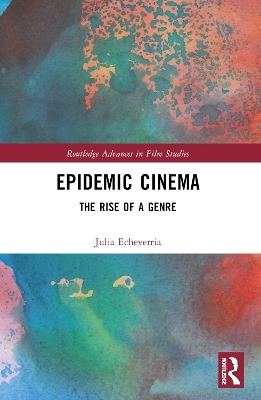
Epidemic Cinema
The Rise of a Genre
Seiten
2025
Routledge (Verlag)
978-1-032-54136-5 (ISBN)
Routledge (Verlag)
978-1-032-54136-5 (ISBN)
This book examines the recent trend in global cinema to feature infectious disease.
As the global crisis of the COVID-19 pandemic materialised the anxieties and discourses of world risk that had long been portrayed in popular media, the book provides a novel definition of the epidemic film genre and offers a systematic look into the narrative and stylistic conventions that characterise it. Epidemic Cinema traces the evolution of the genre from its early cinematic origins to establish the founding principles of a genre standing at the crossroads between science-fiction and horror. It draws on close textual analysis to show how the pandemic reified one of the central predicaments of epidemic narratives: the constant tension existing between free-floating phenomena and the impulse to control and resist such phenomena, ultimately epitomised by the trope of the border. Showing how infectious diseases offer a rich allegorical frame which cinema uses to articulate timely anxieties of growingly invisible and deterritorialised risks, the author presents the prevalence of contagion in popular culture as a symptom of this growingly viral and virus-ridden context, both in its most literal and metaphorical sense.
This insightful study will interest students and scholars of film studies, global cinema, science-fiction, horror, popular culture and genre theory.
As the global crisis of the COVID-19 pandemic materialised the anxieties and discourses of world risk that had long been portrayed in popular media, the book provides a novel definition of the epidemic film genre and offers a systematic look into the narrative and stylistic conventions that characterise it. Epidemic Cinema traces the evolution of the genre from its early cinematic origins to establish the founding principles of a genre standing at the crossroads between science-fiction and horror. It draws on close textual analysis to show how the pandemic reified one of the central predicaments of epidemic narratives: the constant tension existing between free-floating phenomena and the impulse to control and resist such phenomena, ultimately epitomised by the trope of the border. Showing how infectious diseases offer a rich allegorical frame which cinema uses to articulate timely anxieties of growingly invisible and deterritorialised risks, the author presents the prevalence of contagion in popular culture as a symptom of this growingly viral and virus-ridden context, both in its most literal and metaphorical sense.
This insightful study will interest students and scholars of film studies, global cinema, science-fiction, horror, popular culture and genre theory.
Julia Echeverría is a Doctor in Film Studies from the University of Zaragoza, Spain, where she works as an Assistant Professor in the Faculty of Humanities
Introduction
Chapter 1. Plague-Metaphors in the Age of the Virus
Chapter 2. The Origins of the Genre
Chapter 3. Defining the Epidemic Genre
Chapter 4. Connectivity: Contagion and Viral (Dis)Information
Chapter 5. Territorial Conversion: Children of Men and Viral Fear
Chapter 6. Bodily Conversion: Warm Bodies and Viral Love
Chapter 7. Containment: Blindness and Viral Media
Conclusion
| Erscheinungsdatum | 06.12.2023 |
|---|---|
| Reihe/Serie | Routledge Advances in Film Studies |
| Zusatzinfo | 19 Halftones, black and white; 19 Illustrations, black and white |
| Verlagsort | London |
| Sprache | englisch |
| Maße | 156 x 234 mm |
| Gewicht | 420 g |
| Themenwelt | Kunst / Musik / Theater ► Film / TV |
| Geisteswissenschaften ► Geschichte | |
| Sozialwissenschaften ► Kommunikation / Medien ► Medienwissenschaft | |
| ISBN-10 | 1-032-54136-9 / 1032541369 |
| ISBN-13 | 978-1-032-54136-5 / 9781032541365 |
| Zustand | Neuware |
| Informationen gemäß Produktsicherheitsverordnung (GPSR) | |
| Haben Sie eine Frage zum Produkt? |
Mehr entdecken
aus dem Bereich



aus dem Bereich


