


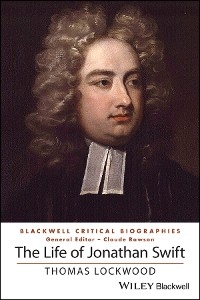
The Life of Jonathan Swift (eBook)
John Wiley & Sons (Verlag)
978-1-118-95718-9 (ISBN)
Presents a fresh account of the life history and creative imagination of Jonathan Swift
Classic satires such as Gulliver's Travels, A Modest Proposal, and A Tale of a Tub express radical positions, yet were written by the most conservative of men. Jonathan Swift was born in Dublin and spent most of his life in Ireland, never traveling outside the British Isles. An Anglo-Irish Protestant clergyman, he was a major political and religious figure whose career was primarily clerical, not literary. Although much is known about Swift, in many ways he remains an enigma. He was admired as an Irish patriot yet was contemptuous of the Irish. He was both secretive and self-dramatizing. His talent for friendship was matched by his skill for making enemies. He hated the English but yearned to live in England.
The Life of Jonathan Swift explores the writing life and personal history of the foremost satirist in the English language. Accessible and engaging, this critical biography brings Swift's writing and creative sensibility into the narrative of his life. Author Thomas Lockwood provides the historical and modern critical context of Swift's prose satires and poetry, as well as his political journalism, essays, manuscripts, and personal correspondence. Throughout the book, biographically contextualized descriptions of Swift's most famous works help readers better understand both the writing and the writer.
- Provides critical profiles of Gulliver's Travels, An Argument Against Abolishing Christianity, Drapier's Letters, and Swift's other famous works
- Offers insights into Swift's relationships with Esther Johnson, 'Stella,' and Esther Vanhomrigh, 'Vanessa'
- Highlights Swift's poetry and how verse writing was a vital part of his creative being
- Summarizes and contextualizes lesser-known works such as The Conduct of the Allies
- Addresses the historic critical bias against comedy or satire as inferior forms of art, both in Swift's lifetime and the present
The Life of Jonathan Swift is an essential resource for general readers of literature and literary biography, university instructors and researchers, and undergraduate students taking courses in English literature.
THOMAS LOCKWOOD is Professor Emeritus and former Chair of the Department of English at the University of Washington, Seattle. He has published widely on Fielding and other eighteenth-century subjects, including satire, journalism, theater history, and the novel. He is the editor of Henry Fielding: Plays, Volumes I-III and a contributor to A Companion to Literary Biography.
Presents a fresh account of the life history and creative imagination of Jonathan Swift Classic satires such as Gulliver s Travels, A Modest Proposal, and A Tale of a Tub express radical positions, yet were written by the most conservative of men. Jonathan Swift was born in Dublin and spent most of his life in Ireland, never traveling outside the British Isles. An Anglo-Irish Protestant clergyman, he was a major political and religious figure whose career was primarily clerical, not literary. Although much is known about Swift, in many ways he remains an enigma. He was admired as an Irish patriot yet was contemptuous of the Irish. He was both secretive and self-dramatizing. His talent for friendship was matched by his skill for making enemies. He hated the English but yearned to live in England. The Life of Jonathan Swift explores the writing life and personal history of the foremost satirist in the English language. Accessible and engaging, this critical biography brings Swift s writing and creative sensibility into the narrative of his life. Author Thomas Lockwood provides the historical and modern critical context of Swift s prose satires and poetry, as well as his political journalism, essays, manuscripts, and personal correspondence. Throughout the book, biographically contextualized descriptions of Swift s most famous works help readers better understand both the writing and the writer. Provides critical profiles of Gulliver s Travels, An Argument Against Abolishing Christianity, Drapier s Letters, and Swift s other famous works Offers insights into Swift s relationships with Esther Johnson, Stella, and Esther Vanhomrigh, Vanessa Highlights Swift s poetry and how verse writing was a vital part of his creative being Summarizes and contextualizes lesser-known works such as The Conduct of the Allies Addresses the historic critical bias against comedy or satire as inferior forms of art, both in Swift s lifetime and the presentThe Life of Jonathan Swift is an essential resource for general readers of literature and literary biography, university instructors and researchers, and undergraduate students taking courses in English literature.
THOMAS LOCKWOOD is Professor Emeritus and former Chair of the Department of English at the University of Washington, Seattle. He has published widely on Fielding and other eighteenth-century subjects, including satire, journalism, theater history, and the novel. He is the editor of Henry Fielding: Plays, Volumes I-III and a contributor to A Companion to Literary Biography.
Abbreviations and Texts viii
Preface x
1 Brought over to Ireland in a Band-Box 1667 - 1689 1
2 Moor Park 1689 - 1692 12
3 Into the Church, Without Being Driven 1692 - 1698 26
4 Laracor and London 1698 - 1704 38
5 A Tale of a Tub 1704 56
6 Arguments about Christianity 1704 - 1709 80
7 Writing for Power 1709 - 1712 98
8 The Life of a Spider 1711 - 1712 113
9 Journal to Stella 1710 - 1713 129
10 Preferment, Barely 1712 - 1714 144
11 But Why Obscurely Here Alone? 1713 - 1714 159
12 Living Out of the World 1714 - 1718 176
13 Second Wind 1719 - 1723 194
14 Mr. Drapier 1723 - 1725 217
15 Several Remote Nations 1721 - 1726 233
16 Poor Floating Isle 1726 - 1729 256
17 Market Hill 1728 - 1730 278
18 A Kind of Knack at Rhyme 1730 - 1733 298
19 We Are All Slaves and Knaves and Fools 1732 - 1735 315
20 Drawing Room and Back Stairs 1735 - 1736 339
21 Silence 1737 - 1745 358
Notes 381
Bibliography 435
Index 445
Preface
Swift was an Irish Protestant clergyman of indifferent origins who rose up to the middle chambers of power in state and church, but – as he himself would bitterly stipulate – no higher. He was born in Dublin and spent most of his life in Ireland, with only a few years in England. He never traveled elsewhere. The outward marks of his life would not distinguish him from many another secular clergyman belonging to this age of black gowns mingling comfortably in coffee houses and assembly rooms or striving for preferment. This clergyman, however, also wrote his way onto the world historical stage of literature with a book of travels, while with his left hand as it were opening up a buried seam of scorching Irish nationalism long before its time. Swift’s work is the part of his life that matters now, and makes us want to scan his personal history for answers to the natural readerly question, Who wrote this? His work mattered to him as well, though neither did he think of it as his life. With Swift we are a long way from the Romantic hero of art.
Swift has been catnip for biographers, from the time of his death onward, with sympathetic or hostile treatment partly reflecting the ups and downs of what might be called his moral credit, a pattern discussed in more detail at the end of this volume. While the black gown and frustrated clerical career would not themselves set him far apart, it doesn’t take much exposure to his complex personality to see why he is a ready‐made biographical subject. He was touchy, insecure, and self‐dramatizing. He had a gift for friendship but tried the patience of his friends mightily and knew he did, as appears by the exasperating character he gives himself in some of his domestic verse. His letters channel a stream of turbulent personal complaint which seldom falls silent. He hated the English but longed to live in England. He hated the Irish and their island of slaves. He hated bishops and much of the rest of mankind. His misogyny was stomach‐churning even by period standards. He set no store by rank, ostentatiously, but was vain of his credit with lords and deferential toward them face to face. He quarreled with all sorts of people, from the Archbishop of Dublin to old friends to beggars in the street. He was physically violent with some who could not fight back, like servants or women of humble status.
Swift also had a lethal nose for hypocrisy and delusion, like a terrier at a rat’s nest: tearing off the mask of imposture from the world, Hazlitt called it. He thought seriously and compulsively about himself, at a Proustian level of awareness which could nevertheless drain away mysteriously when he wanted to talk himself into a belief in the innocence of his own motives or feelings. He dreaded poverty and dependence, having begun life that way, and clung to his cheapskate habits long after they made any sense, arguing with tavern keepers over the reckoning, while nevertheless paying his servants board wages even though already providing them board, improving the deanery from his own funds, and devoting all his wealth at death to a charitable foundation. Swift had a raw instinct for a leveling vision of humankind entirely alien to the social order he otherwise lived and breathed as second nature. He was made for pulling down the old order but spent his life propping it up.
The circumstances of his birth and infant life were unclear thanks in part to his own mystifications, such as occasionally pretending he was born in England. The woman he loved most, Esther Johnson or Stella, was the daughter of an estate steward at Moor Park. Swift knew her first there when she was about eight, then later brought her with him to Dublin to live nearby with her lifelong companion Rebecca Dingley, against a murmurous chorus of town gossip. But what she was to him, wife or lover or daughterly soulmate, or him to her, we really have no idea, though the years since have produced an encyclopedia of speculation. Equally opaque is his relationship with Esther Vanhomrigh, ‘Vanessa,’ though in her case we have enough correspondence between them to tell that the relationship went from loving and playful to conflicted and tormenting. We know a lot about his life, more indeed than for some authors of his stature, but with Swift the black holes of his story have a way of pulling everything else down inside: Was he a bastard son? Did he secretly marry Stella? Have sex with Vanessa? Here too the vacuum of factual knowledge has inevitably filled up with guesswork and invention.
I have tried to give fresh measure to these staples of Swift’s personal history. At the same time my aim has been to bring the whole of Swift’s writing and creative sensibility more assertively into the story of his life, and so I take the most important events there to be his writings, and give considerable room to them within the narrative. The range of his writing – in vivid, freestanding orders of work from political journalism to casual verse‐making to intensely imagined projections of experience like Gulliver – has not been very well explained as an organic whole of authorship, still less as a career of writing. The reason is partly historical, in that the idea of such a career, by what was then called a ‘professed’ author, had not yet quite taken hold as it later would in the time of mass readerships and authors writing for payment from publishers. And Swift’s professional career was clerical, not literary. So to talk of a career of authorship in his case is somewhat anachronistic, in terminology at least. Nevertheless, Swift was powerfully driven to put himself forward in written composition, both in public print and in private or semi‐private manuscript, and it is this complex life of writing that runs at the heart of his story. Swift’s writing was not organized by its venue of end‐consumption, like Shakespeare’s theater or Dickens’s novel‐reading public. It had its own highly variable occasions, but there was a robust consistency and expressive purpose through it all as well.
This account of Swift’s writing life also puts his poetry closer to the center than usual. Verse writing was a vital constituent of his creative being, from beginning to end. In his twenties he was ambitious to make himself somebody within the culture of lettered art then dominated by Dryden, and he tried this by writing serious Pindaric odes which showed he had got the wrong end of the stick in mistaking his form, though not his ambition. Swift produced nearly half the total volume of his verse in the final decade of his life, including some of his greatest poems. He was one of the most gifted and original poets of his time, a branch of his work chronically underrated, with his own half‐serious deprecation of it giving a license to the rating. His verse as a whole represents an imaginative achievement of high order, obscured somewhat by the dazzle and drama of the prose which made him so famous. Swift was also a poet in the old sense corresponding roughly to the modern idea of creative or imaginative writer. That meaning included verse of course but can also be extended not only to prose works of imagination, like the Tale of a Tub or Gulliver’s Travels, but also to his occasional pamphlets and periodical writing and for that matter the Journal to Stella, which for all its documentary value is even more compelling as a brilliant if unclassifiable literary monologue.
Those early Pindarics look worse than they deserve to, only because it is hard to take such solemn work seriously from an author we know as a genius of humor and satire. They must have been ironic! (They weren’t.) But for the genius of satire, here is a difficulty too. Henry Fielding – a qualified witness if ever there were one – ranked Swift with Lucian, Rabelais, and Cervantes. But like Lucian and Rabelais at least, Swift’s standing has been compromised somewhat by the historic critical bias against comedy and satire as inferior forms of art. This was true in his own lifetime and the disposition continues to thrive. I have tried to make my account of Swift’s writing life and achievement a confrontation also with this prejudice. Certainly some modern criticism of Swift has captured and communicated the transcendent quality of art that Fielding saw there, but his reputation is still running a deficit on that score.
This Life of Jonathan Swift provides critical profiles for most of his work, meaning biographically contextualized descriptions meant to give the reader some idea of what Swift was trying to do and how he did it. These treatments are aimed at the reader who may not know the work or has forgotten it. For his best‐known works, like Gulliver’s Travels, I have assumed greater familiarity, integrating them with the biographical narrative as well as their historic and modern critical context. The Tale of a Tub, the Journal to Stella, the Drapier’s Letters, and Gulliver each take up their own chapters. I have tried throughout to give a compact but representative critical account of all the works I cover. These are inevitably inflected by my own views, I hope without compromising the representation. With works nobody but a specialist would know very well, like The Conduct of the Allies (1711), the challenge is to describe it fairly without boring the reader, which means striking a balance between summary and critical scrutiny, either of which can easily overwhelm the other. This is therefore a critical biography of the writing as well as the writer, running...
| Erscheint lt. Verlag | 26.7.2023 |
|---|---|
| Reihe/Serie | Blackwell Critical Biographies |
| Blackwell Critical Biographies | Wiley Blackwell Critical Biographies |
| Sprache | englisch |
| Themenwelt | Geisteswissenschaften ► Sprach- / Literaturwissenschaft ► Anglistik / Amerikanistik |
| Geisteswissenschaften ► Sprach- / Literaturwissenschaft ► Literaturwissenschaft | |
| Schlagworte | 18th Century English Literature • 19th Century English Literature • Claude Rawson • Englische Literatur / 18. Jhd. • Englische Literatur / 19. Jhd. • jonathan swift biography • Jonathan Swift critical biography • Jonathan Swift critical profile • Jonathan Swift historical narrative • Jonathan Swift life history • Jonathan Swift literary biography • Jonathan Swift writing life • Literature • Literaturwissenschaft • Swift, Jonathan |
| ISBN-10 | 1-118-95718-0 / 1118957180 |
| ISBN-13 | 978-1-118-95718-9 / 9781118957189 |
| Informationen gemäß Produktsicherheitsverordnung (GPSR) | |
| Haben Sie eine Frage zum Produkt? |
 EPUB (Adobe DRM)
Kopierschutz: Adobe-DRM
Adobe-DRM ist ein Kopierschutz, der das eBook vor Mißbrauch schützen soll. Dabei wird das eBook bereits beim Download auf Ihre persönliche Adobe-ID autorisiert. Lesen können Sie das eBook dann nur auf den Geräten, welche ebenfalls auf Ihre Adobe-ID registriert sind.
Details zum Adobe-DRM
Dateiformat: EPUB (Electronic Publication)
EPUB ist ein offener Standard für eBooks und eignet sich besonders zur Darstellung von Belletristik und Sachbüchern. Der Fließtext wird dynamisch an die Display- und Schriftgröße angepasst. Auch für mobile Lesegeräte ist EPUB daher gut geeignet.
Systemvoraussetzungen:
PC/Mac: Mit einem PC oder Mac können Sie dieses eBook lesen. Sie benötigen eine
eReader: Dieses eBook kann mit (fast) allen eBook-Readern gelesen werden. Mit dem amazon-Kindle ist es aber nicht kompatibel.
Smartphone/Tablet: Egal ob Apple oder Android, dieses eBook können Sie lesen. Sie benötigen eine
Geräteliste und zusätzliche Hinweise
Buying eBooks from abroad
For tax law reasons we can sell eBooks just within Germany and Switzerland. Regrettably we cannot fulfill eBook-orders from other countries.
aus dem Bereich


