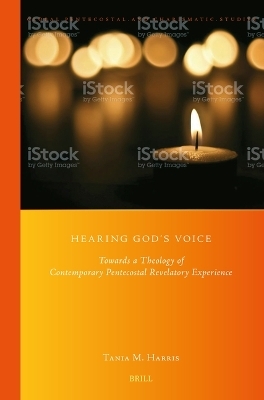
Hearing God’s Voice: Towards a Theology of Contemporary Pentecostal Revelatory Experience
Brill (Verlag)
978-90-04-68240-5 (ISBN)
Drawing on the tools of practical theology, this book presents the findings of a unique and ground-breaking study among Australian Pentecostals. With a theological framework modelled on New Testament practice and undergirded by the accountability of the local church, many of the problems associated with revelatory experience can be addressed and the experience fully harnessed for kingdom purpose.
Tania M. Harris, Ph.D. (2020) Alphacrucis College, is the founding director of God Conversations, a global ministry that equips people to recognise and respond to God’s voice. She consults with and trains ministers in Spirit-led discipleship and is an ordained minister with the Australian Christian Churches.
Acknowledgements
Author's Note
List of Figures
Part 1
Introduction to the Revelatory Experience
1 God Speaks Back: Hearing God’s Voice in the Pentecostal Tradition
1 What Do Pentecostals Mean by Hearing God’s Voice?
1.1 Experiential, Extrabiblical, Unmediated and “High-Level” Revelation
1.2 Phenomenological Equivalency with the Biblical Experience
1.3 Universal Accessibility Distinct from Specialist Gift of Prophecy
2 The Ministry Impact of Contemporary Pentecostal Revelatory Experience
2.1 Ministry Outcomes
2.2 Pastoral Fallout
2.3 Institutional Instability
3 The Theological Problem of Spirit versus Scripture
4 Neglect in the Academy
4.1 Lack of Connection to the Spirit’s Outpouring at Pentecost
4.2 Focus on the Gift of Prophecy
4.3 Rejection of Dream-Visions as a Revelatory Mode
5 Aim of the Study
6 Outline of the Book
2 Cessationism Meets Continuationism: Four Theological Frameworks for Contemporary Revelatory Experience
1 The Pentecostal Tradition
1.1 Pentecostalism in Australia
1.2 Pentecostal Distinctives
2 The Evangelical Tradition
3 Four Theological Frameworks
3.2 Acceptance in the Pentecostal-Charismatic Tradition
3.3 Alternate Distinctions
3.4 Problems with the Phenomenologically Inferior Position
3.5 Summary
3 Bridging the Gap between Theology and Practice: a Study in 3 Churches
1 The ‘Ordinary Theology’ of Revelatory Experience
1.1 Mark Cartledge’s Concept of Dialectic
1.2 Jeff Astley’s “Ordinary Theology”
1.3 David Martin’s Concept of “Rescripting”
1.4 Epistemological Assumptions
1.5 An Insider Perspective
2 Study Design
2.1 Data Collection
2.2 The Sample
2.3 Data Presentation and Analysis
2.4 Study Limitations
Part 2
Hearing God in Sociological Perspective
4 From Acquaintance to Partner: the Social Dynamics of Revelatory Experience
1 The Content of Revelatory Experiences among Australian Pentecostals
1.1 Personal and Particular
1.2 New and Previously Unknown Information
2 Charles Glock and Rodney Stark’s Taxonomy of Religious Experience
2.1 Glock and Stark’s Theory and Other Pentecostal Studies
3 The Sociological Nature of Revelatory Experience
3.1 The Relational Development of Revelatory Experience
3.2 The Disruptive Nature of Revelatory Experience
3.3 Power Shifts in Relational Development
3.4 The Role of Discernment in Maintaining Institutional Stability
3.5 Discernment as an Act of Power
4 Reflection on Glock and Stark’s Theory
5 Summary
5 A World in Continuity with the Early Church: Hearing God in the Local Community
1 Approach to Revelatory Experience in Three Pentecostal Churches
1.1 Introducing Church a
1.2 Introducing Church b
1.3 Introducing Church c
1.4 The Frequency of High-Level Revelatory Experiences
2 Peter Berger’s Theory of World Construction
3 The Social World of Three Churches
3.1 A World in Continuity with the Early Church
3.2 The Language of Pentecostal Revelatory Experience
3.3 Legitimations in the Pentecostal World
3.4 Regulatory Controls in the Pentecostal World
4 Reflection on Berger’s Theory
5 Summary
Part 3
A Close Theological Analysis of Revelatory Experience
Introduction to Part 3
6 Does God have anything More to Say? The Content and Function of Revelatory Experience
1 The Content and Function of Revelatory Experiences among Australian Pentecostals
1.1 Build “Personal Relationship” with God
1.2 A Vehicle of Divine Presence
1.3 Provision of Divine Care and Protection
1.4 Personal Transformation and Sanctification
1.5 Revelation of “God’s Plan”
1.6 Mobilisation to Ministry and Mission
2 Niels Hvidt: Christological Content and Function
2.1 Material and Formal Revelation
2.2 The Actualisation of Doctrine
3 Rescripting Ordinary Theology
3.1 The Limits of “New” Revelatory Content
3.2 The Future-Orientation of Revelatory Content
3.3 The Christocentric Function of Revelatory Experience
3.4 The Role of Revelatory Experience in the Development of Doctrine
4 Summary
7 Hearing God’s Voice: Dream-Visions, Voices and Senses
1 Revelatory Modes among Australian Pentecostals
1.1 Voices
1.2 Dreams and Visions
1.3 Sensory Impressions
1.4 Scripture
1.5 “Creative/Experiential” Use of Scripture
1.6 Teaching via Sermons, Books and Religious Material
1.7 Prophecy
1.8 The Counsel of Others
1.9 Circumstances
1.10 Nature
2 Niels Hvidt: Historic Concepts of Revelation
3 Rescripting Ordinary Theology
3.1 Modes of Revelation
3.2 Legitimacy of Revelatory Modes
4 Summary
8 Recognising God’s Voice: How Did They Know It Was God?
1 The Epistemological Reliability of Revelatory Experience
1.1 Epistemological Reliability of Revelatory Experience among Australian Pentecostals
1.2 Niels Hvidt: the Mixed Nature of Revelatory Experience
1.3 Rescripting Ordinary Theology
2 Discernment Criteria for Revelatory Experience
2.1 Discernment Criteria for Revelatory Experience among Australian Pentecostals
2.2 Niels Hvidt: Three Criteria for Discernment in the Catholic Tradition
2.3 Rescripting Ordinary Theology
3 Responsibility for Discernment
3.1 Responsibility for Discernment among Australian Pentecostals
3.2 Niels Hvidt: Responsibility for Discernment in the Catholic Tradition
3.3 Rescripting Ordinary Theology
4 Summary
9 Responding to God’s Voice: the Faithfulness of God and the Unfaithfulness of Humanity
1 Responses to God’s Voice among Australian Pentecostals
2 Niels Hvidt: Experience as Divine Imperative
3 Rescripting Ordinary Theology
3.1 The Response of Obedience
3.2 Interaction of Divine Fulfilment and Human Free Will
4 Summary
Summary: the Theology and Practice of Revelatory Experiences among Australian Pentecostals
Part 4
The Relationship of Contemporary Revelatory experience to the Theology of Scripture
Introduction to Part 4
10 The Communicating Spirit: Inspired Experiences and Inspired Scripture
1 Charles Kraft’s Communication Model for Inspiration
2 Rescripting Ordinary Theology
2.1 Efficacy of Divine Communication
2.2 The Personalised Nature of Revelatory Experiences
2.3 Use of Biblical Narratives as Models
3 Summary
11 Is This a Trick Question? The Site of Divine Authority
1 James K.A. Smith’s Work on Textualization and Orality
2 Rescripting Ordinary Theology
2.1 The Authority of Revelatory Experience
2.2 The Tension between Orality and Textuality in Pentecostal Communities
2.3 The Meaning of the Phrase “Word of God”
3 Summary
12 The Epistemological Role of Revelatory Experience in Spiritual Development
1 James K.A. Smith’s Work on the Epistemology of Pentecostal Experience
2 Rescripting Ordinary Theology
2.1 The Role of Revelatory Experience in Relational and Spiritual Development
2.2 The Element of Divine Authority in Transformation
2.3 The Epistemology of Revelatory Experience and the Study of Scripture
3 Summary
Summary: the Relationship of Revelatory Experience to the Theology of Scripture
Part 5
Hearing God’s Voice Today
13 The Theology and Practice of “Hearing God’s Voice”
1 Towards a Theology of Contemporary Pentecostal Revelatory Experience
1.1 The Basis for Phenomenological Equivalency
1.2 The Content and Function of Revelatory Experience
1.3 The Process of Revelatory Experience
2 The Relationship of Revelatory Experience to the Theology of Scripture
2.1 Contemporary Revelatory Experience and Existing Pentecostal-Charismatic Bibliologies
2.2 A Bibliology for the Phenomenologically Equivalent Approach
2.3 An Expanded Role for the Community
3 Recommendations for Ministry Praxis
4 Evaluation of the Study
4.1 Opportunities for Further Study
5 Conclusion
Appendices
Bibliography
Index
| Erscheinungsdatum | 07.10.2023 |
|---|---|
| Reihe/Serie | Global Pentecostal and Charismatic Studies ; 47 |
| Verlagsort | Leiden |
| Sprache | englisch |
| Maße | 155 x 235 mm |
| Gewicht | 522 g |
| Themenwelt | Religion / Theologie ► Christentum ► Kirchengeschichte |
| ISBN-10 | 90-04-68240-6 / 9004682406 |
| ISBN-13 | 978-90-04-68240-5 / 9789004682405 |
| Zustand | Neuware |
| Informationen gemäß Produktsicherheitsverordnung (GPSR) | |
| Haben Sie eine Frage zum Produkt? |
aus dem Bereich