


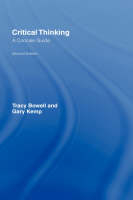
Critical Thinking
A Concise Guide
Seiten
2005
|
2nd New edition
Routledge (Verlag)
978-0-415-34312-1 (ISBN)
Routledge (Verlag)
978-0-415-34312-1 (ISBN)
- Titel ist leider vergriffen;
keine Neuauflage - Artikel merken
An introduction to thinking clearly and rationally for oneself, which equips students with the skills to tell a good argument from a bad one.
Attempts to persuade us - to believe something, to do something, to buy something - are everywhere. What is less clear is how to think critically about such attempts and how to distinguish those that are sound arguments. Critical Thinking: A Concise Guide is a much needed guide to argument analysis and a clear introduction to thinking clearly and rationally for oneself. Accessibly written, this book equips students with the essential skills required to tell a good argument from a bad one.
Key features of the book include:
* clear, jargon-free discussion of key concepts in argumentation
* how to avoid common confusions surrounding words such as 'truth', 'knowledge' and 'opinion'
* how to identify and evaluate the most common types of argument
* how to spot fallacies and tell good reasoning from bad
* chapter summaries, exercises, examples and a glossary.
The second edition has been updated to include topical new examples from politics, sport, medicine and music, as well as new exercises throughout.
Attempts to persuade us - to believe something, to do something, to buy something - are everywhere. What is less clear is how to think critically about such attempts and how to distinguish those that are sound arguments. Critical Thinking: A Concise Guide is a much needed guide to argument analysis and a clear introduction to thinking clearly and rationally for oneself. Accessibly written, this book equips students with the essential skills required to tell a good argument from a bad one.
Key features of the book include:
* clear, jargon-free discussion of key concepts in argumentation
* how to avoid common confusions surrounding words such as 'truth', 'knowledge' and 'opinion'
* how to identify and evaluate the most common types of argument
* how to spot fallacies and tell good reasoning from bad
* chapter summaries, exercises, examples and a glossary.
The second edition has been updated to include topical new examples from politics, sport, medicine and music, as well as new exercises throughout.
Tracy Bowell is lecturer in philosophy at the University of Waikato, New Zealand. Gary Kemp is lecturer in philosophy at Glasgow University.
Preface Introduction and preview 1. Why Should we become Critical Thinkers? 2. Logic: Deductive Validity 3. Logic: Inductive Force 4. Rhetorical Ploys and Fallacies 5. The Practice of Argument Reconstruction 6. Issues in Argument Assessment 7. Truth, Knowledge and Belief Glossary Index
| Erscheint lt. Verlag | 22.4.2005 |
|---|---|
| Verlagsort | London |
| Sprache | englisch |
| Maße | 156 x 234 mm |
| Gewicht | 726 g |
| Themenwelt | Geisteswissenschaften ► Philosophie ► Logik |
| Geisteswissenschaften ► Psychologie ► Allgemeine Psychologie | |
| ISBN-10 | 0-415-34312-7 / 0415343127 |
| ISBN-13 | 978-0-415-34312-1 / 9780415343121 |
| Zustand | Neuware |
| Informationen gemäß Produktsicherheitsverordnung (GPSR) | |
| Haben Sie eine Frage zum Produkt? |
Mehr entdecken
aus dem Bereich

aus dem Bereich
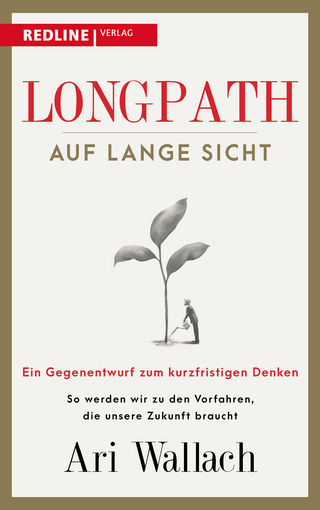
ein Gegenentwurf zum kurzfristigen Denken : so werden wir zu den …
Buch | Hardcover (2023)
REDLINE (Verlag)
CHF 27,90
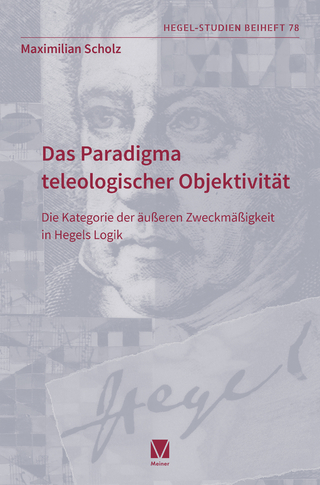
die Kategorie der äußeren Zweckmäßigkeit in Hegels Logik
Buch | Softcover (2025)
Meiner (Verlag)
CHF 137,20


