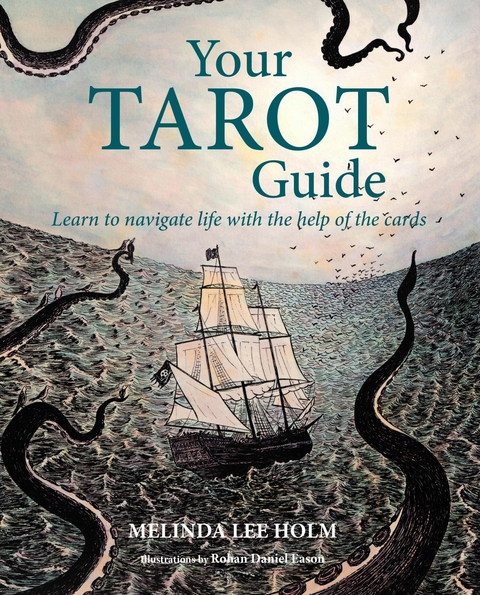
Your Tarot Guide (eBook)
232 Seiten
Ryland Peters & Small (Verlag)
978-1-80065-287-3 (ISBN)
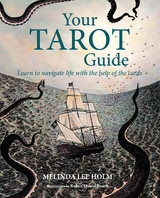
Uncover the meanings of the cards to interpret the past, present and future with this inspiring guide from expert tarot reader Melinda Lee Holm. In this beautifully illustrated handbook, expert tarot reader Melinda Lee Holm shares her method of understanding tarot as a language, helping you to gain fluency in your readings. Beginning with the basics, you'll find out about the deck structure and suits, the history of tarot and how to choose your deck. Learn about different spreads, or patterns of cards chosen for a reading, and discover how the cards combine to tell stories and provide guidance. The book also includes a dictionary of the meaning of each of the 78 tarot cards, its layers of text and imagery, and the different ways it can function. With their symbols and richly detailed scenes, Rohan Eason's stunning illustrations provide visual clues to the meanings of the cards. Whether you are a complete beginner or would like to add further depth to your readings, this unique approach to tarot will help you to gain insight into your past, present and future, and find the wisdom and answers that you need.
What is a Tarot Deck?
Tarot decks are decks of cards that follow a specific format and are used for game play or to access information through magickal* or spiritual means. We are focusing on the latter purpose. They contain 78 cards as follows:
• 22 Major Arcana cards, numbered 0–21.
• 56 Minor Arcana cards divided into four suits: Swords, Wands, Cups, and Coins or Pentacles. Each of these suits has ten cards numbered Ace–10 and four court cards: Page, Knight, Queen, and King.
* I use magick spelled with a “k” at the end to refer to any practice that draws on the powers of the Earth, the Elements, and/or the Universe to bring about change and clarity in one’s life.
The Major Arcana cards from Tarot of Tales
The Minor Arcana cards from Tarot of Tales
The suit of Swords
The suit of Wands The suit of Cups
The suit of Coins
Some decks have different names for the cards and a few add an extra Major Arcana card or two, but this is the basic structure of all tarot decks.
Many decks of cards are used for magickal and spiritual purposes. If they follow the format above, we call them tarot decks. If they do not, we generally call them oracle decks unless they prefer to be called something else, in which case we respect their wishes.
The Origins of Tarot
While the earliest tarot cards date from fifteenth-century Italy, there is no record of the cards being used for anything other than game play until the eighteenth century. In 1781, Antoine Court de Gébelin published the first esoteric meanings associated with the cards. He also claimed the cards contained a secret embedded book of ancient Egyptian wisdom, an idea that continues to this day though there is no historical evidence to support this theory.
Sixteenth-century French tarot card designs for The Pope (above) and The Popess (right) next to their modern-day equivalents from Tarot of Tales: The Hierophant and The High Priestess.
The figures and archetypes depicted on the cards draw from life in southern Europe at the time, which was dominated by the Catholic church. This is why early decks refer to The Hierophant as The Pope and The High Priestess as The Popess. Other figures from early medieval mystery plays (which were Bible-based) and morality plays (which depicted a general struggle between good and evil) appear in the Major Arcana: The Fool, Death, Temperance, The Moon, and more. Th ough the early decks present these figures through a Christian lens, the archetypes themselves predate Christianity, which is one reason tarot remains relevant across belief systems and traditions today.
In the late nineteenth century, The Hermetic Order of the Golden Dawn, a magickal society based in London, organized, developed, and systematized many forms of magickal practice including tarot. The astrological and Qabbalistic associations commonly attributed to the cards come from their work.
Today, many tarot readers work to frame the original teachings of tarot in a way that is relevant to modern life and inclusive to the vast diversity of people who use the tarot to find focus, guidance, and wisdom. This is the intention of Your Tarot Guide.
Whoever you are and wherever you come from, tarot, and this book, are for you.
Parts of the Deck
Major Arcana
The 22 cards of the Major Arcana represent archetypes with roots across cultures worldwide that we embody and encounter throughout life. These cards speak to inner evolution, life phases, and themes—ways of being more than ways of doing.
In the late nineteenth century, the Hermetic Order of the Golden Dawn assigned each Major Arcana card an astrological association and a Hebrew letter. Arthur Edward Waite, a Golden Dawn member and esoteric scholar and writer, switched the places of the Justice and Strength cards in the tarot deck he authored to allow their symbolism to fall more in line with the order of the signs of the zodiac. The deck was illustrated by Pamela Colman Smith and published by the Rider publishing company in 1910. The Smith-Waite deck is the most well-known tarot deck today. The Golden Dawn associations with Waite’s order adjustment are the conventions followed in this book and the card order followed in both Elemental Power Tarot and Tarot of Tales, which are used to illustrate this book. In the Major Arcana chapter, you will see these cards presented in this order.
To assist with the use of the Major Arcana cards in ritual and to allow a deeper integration of their wisdom, crystal and apothecary associations are also provided. Some are traditional and some are more contemporary pairings. For the meanings of these associations, see pages 51–93.
| Major Arcana Card | Astrological Association | Hebrew Letter |
| 0 The Fool | Uranus | Aleph א |
| I The Magician | Mercury | Beth ב |
| II The High Priestess | Moon | Gimel ג |
| III The Empress | Venus | Daleth ד |
| IV The Emperor | Aries | He ה |
| V The Hierophant | Taurus | Vav (Waw) ו |
| VI The Lovers | Gemini | Zayin ז |
| VII The Chariot | Cancer | Heth ח |
| VIII Strength | Leo | Teth ט |
| IX The Hermit | Virgo | Yod י |
| X The Wheel of Fortune | Jupiter | Kaph כ |
| XI Justice | Libra | Lamed ל |
| XII The Hanged Man | Neptune | Mem ם |
| XIII Death | Scorpio | Nun נ |
| XIV Temperance | Sagittarius | Samekh ס |
| XV The Devil | Capricorn | Ayin ע |
| XVI The Tower | Mars | Pe ף |
| XVII The Star | Aquarius | Tsade ץ |
| XVIII The Moon | Pisces | Qoph ק |
| XIX The Sun | Sun | Resh ר |
| XX Judgment | Pluto | Shin ש |
| XXI The World | Saturn | Tav (Taw) ת |
| Crystal | Apothecary Association | Affirmation |
| Peacock Ore | Bergamot | I immerse myself in the joy of here and now. |
| Labradorite | Cinnamon | I conjure my life through my words and actions every day. |
| Moonstone | Pomegranate, Jasmine | I commune easily with the spiritual and the earthly. |
| Aventurine | Rose | I give love freely and the world blooms. |
| Malachite | Cedar | I lead with vision, grace, and compassion. |
| Quartz Crystal | Frankincense | I honor the traditions of the past and make them my own to pass on. |
| Rhodonite | Vanilla | I embrace my weaknesses and offer my strengths. |
| Magnetite | Eucalyptus | I allow myself to be carried forward. |
| Carnelian | Ginger | I shine my light for the world to see. |
| Sodalite | Licorice | I study in solitude for the benefit of all. |
| Peridot | Nutmeg | I am exactly where and when I am supposed to be. |
| Tiger Eye | Olive | I treat myself and others fairly. |
| Lepidolite | Mushrooms | I turn my gaze in an unfamiliar direction to gain a new perspective. |
| Black Tourmaline | Myrrh | I release all that is not mine. |
| Scolecite | Sweet Violet | I... |
| Erscheint lt. Verlag | 10.10.2023 |
|---|---|
| Verlagsort | London |
| Sprache | englisch |
| Themenwelt | Sachbuch/Ratgeber ► Geschichte / Politik ► Regional- / Landesgeschichte |
| Sachbuch/Ratgeber ► Gesundheit / Leben / Psychologie ► Esoterik / Spiritualität | |
| Sachbuch/Ratgeber ► Gesundheit / Leben / Psychologie ► Lebensdeutung | |
| Sachbuch/Ratgeber ► Gesundheit / Leben / Psychologie ► Lebenshilfe / Lebensführung | |
| Geisteswissenschaften ► Geschichte | |
| Schlagworte | Arcana • Fortune Telling • holistic • Magic • Mysticism • Spiritual Guidance • Spiritualism • Spirituality • tarot cards • wiccan |
| ISBN-10 | 1-80065-287-9 / 1800652879 |
| ISBN-13 | 978-1-80065-287-3 / 9781800652873 |
| Informationen gemäß Produktsicherheitsverordnung (GPSR) | |
| Haben Sie eine Frage zum Produkt? |
 EPUB (Adobe DRM)
Kopierschutz: Adobe-DRM
Adobe-DRM ist ein Kopierschutz, der das eBook vor Mißbrauch schützen soll. Dabei wird das eBook bereits beim Download auf Ihre persönliche Adobe-ID autorisiert. Lesen können Sie das eBook dann nur auf den Geräten, welche ebenfalls auf Ihre Adobe-ID registriert sind.
Details zum Adobe-DRM
Dateiformat: EPUB (Electronic Publication)
EPUB ist ein offener Standard für eBooks und eignet sich besonders zur Darstellung von Belletristik und Sachbüchern. Der Fließtext wird dynamisch an die Display- und Schriftgröße angepasst. Auch für mobile Lesegeräte ist EPUB daher gut geeignet.
Systemvoraussetzungen:
PC/Mac: Mit einem PC oder Mac können Sie dieses eBook lesen. Sie benötigen eine
eReader: Dieses eBook kann mit (fast) allen eBook-Readern gelesen werden. Mit dem amazon-Kindle ist es aber nicht kompatibel.
Smartphone/Tablet: Egal ob Apple oder Android, dieses eBook können Sie lesen. Sie benötigen eine
Geräteliste und zusätzliche Hinweise
Buying eBooks from abroad
For tax law reasons we can sell eBooks just within Germany and Switzerland. Regrettably we cannot fulfill eBook-orders from other countries.
aus dem Bereich