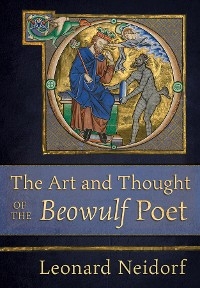
The Art and Thought of the "Beowulf" Poet (eBook)
216 Seiten
Cornell University Press (Verlag)
978-1-5017-6691-6 (ISBN)
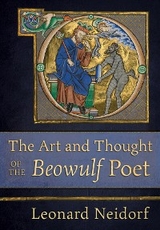
In The Art and Thought of the Beowulf Poet, Leonard Neidorf explores the relationship between Beowulf and the legendary tradition that existed prior to its composition. The Beowulf poet inherited an amoral heroic tradition, which focused principally on heroes compelled by circumstances to commit horrendous deeds: fathers kill sons, brothers kill brothers, and wives kill husbands. Medieval Germanic poets relished the depiction of a hero's unyielding response to a cruel fate, but the Beowulf poet refused to construct an epic around this traditional plot. Focusing instead on a courteous and pious protagonist's fight against monsters, the poet creates a work that is deeply untraditional in both its plot and its values. In Beowulf, the kin-slayers and oath-breakers of antecedent tradition are confined to the background, while the poet fills the foreground with unconventional characters, who abstain from transgression, display courtly etiquette, and express monotheistic convictions.
Comparing Beowulf with its medieval German and Scandinavian analogues, The Art and Thought of the Beowulf Poet argues that the poem's uniqueness reflects one poet's coherent plan for the moral renovation of an amoral heroic tradition. In Beowulf, Neidorf discerns the presence of a singular mind at work in the combination and modification of heroic, folkloric, hagiographical, and historical materials. Rather than perceive Beowulf as an impersonally generated object, Neidorf argues that it should be read as the considered result of one poet's ambition to produce a morally edifying, theologically palatable, and historically plausible epic out of material that could not independently constitute such a poem.
Leonard Neidorf is Professor of English at Nanjing University and the author of The Transmission of Beowulf.
Introduction
1. Kin-Slaying and Oath-Breaking
2. Courtesy and Courtliness
3. Monotheism and Monstrosity
Conclusion
| Erscheint lt. Verlag | 15.1.2023 |
|---|---|
| Verlagsort | Ithaca |
| Sprache | englisch |
| Maße | 150 x 150 mm |
| Themenwelt | Literatur ► Essays / Feuilleton |
| Literatur ► Lyrik / Dramatik ► Lyrik / Gedichte | |
| Geschichte ► Allgemeine Geschichte ► Mittelalter | |
| Geisteswissenschaften ► Geschichte ► Regional- / Ländergeschichte | |
| Geisteswissenschaften ► Sprach- / Literaturwissenschaft ► Anglistik / Amerikanistik | |
| Geisteswissenschaften ► Sprach- / Literaturwissenschaft ► Literaturwissenschaft | |
| Schlagworte | Medieval Germanic heroic literature, Old English Literature, Courtliness in Beowulf, Christianity and Paganism in Beowulf, Medieval epic poetry, reconciling pagan and Christian moralities |
| ISBN-10 | 1-5017-6691-0 / 1501766910 |
| ISBN-13 | 978-1-5017-6691-6 / 9781501766916 |
| Informationen gemäß Produktsicherheitsverordnung (GPSR) | |
| Haben Sie eine Frage zum Produkt? |
 EPUB (Adobe DRM)
Kopierschutz: Adobe-DRM
Adobe-DRM ist ein Kopierschutz, der das eBook vor Mißbrauch schützen soll. Dabei wird das eBook bereits beim Download auf Ihre persönliche Adobe-ID autorisiert. Lesen können Sie das eBook dann nur auf den Geräten, welche ebenfalls auf Ihre Adobe-ID registriert sind.
Details zum Adobe-DRM
Dateiformat: EPUB (Electronic Publication)
EPUB ist ein offener Standard für eBooks und eignet sich besonders zur Darstellung von Belletristik und Sachbüchern. Der Fließtext wird dynamisch an die Display- und Schriftgröße angepasst. Auch für mobile Lesegeräte ist EPUB daher gut geeignet.
Systemvoraussetzungen:
PC/Mac: Mit einem PC oder Mac können Sie dieses eBook lesen. Sie benötigen eine
eReader: Dieses eBook kann mit (fast) allen eBook-Readern gelesen werden. Mit dem amazon-Kindle ist es aber nicht kompatibel.
Smartphone/Tablet: Egal ob Apple oder Android, dieses eBook können Sie lesen. Sie benötigen eine
Geräteliste und zusätzliche Hinweise
Buying eBooks from abroad
For tax law reasons we can sell eBooks just within Germany and Switzerland. Regrettably we cannot fulfill eBook-orders from other countries.
aus dem Bereich