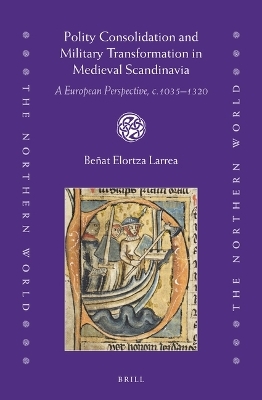
Polity Consolidation and Military Transformation in Medieval Scandinavia
Brill (Verlag)
978-90-04-51877-3 (ISBN)
In this book, Beñat Elortza Larrea analyses the processes of polity consolidation and military transformation in Scandinavia between the early eleventh and early fourteenth centuries. Based on a plethora of administrative, legal, and narrative sources, this study examines the development of governance and warfare in Denmark, Norway, and Sweden, and evaluates to which degree European ideas and institutions shaped the budding medieval Scandinavian realms.
In other words – did the formation of these kingdoms stem mostly from European influence, were they a by-product of a purely Scandinavian ethos, or did they largely develop due to historical and geographical circumstances unique to each realm
Beñat Elortza Larrea, Ph.D. (2018), University of Aberdeen, is Associate Professor at Nord University in Bodø, Norway. His research interests include the Scandinavian ‘state formation’ processes, martial culture in the Middle Ages, and medieval aristocratic networks.
Acknowledgements
List of Figures and Tables
Abbreviations
1 Introduction
1.1 From State Formation to Polity Consolidation
1.2 Europeanisation and Cultural Transfer
1.3 Primary Sources
1.4 ‘State Formation’ and Martial Culture in Historiography
1.5 Scandinavia between the 8th and the 11th Centuries
1.5.1 The Leiðangr: The Scandinavian Naval Levies
1.5.2 Warfare and Martial Culture
2 Kingship, Administration and Warfare in Western Europe, c.1000–1300
2.1 The 11th Century: The ‘Banal Revolution’ and Decentralised Polities
2.1.1 Royal Power and Governance in the 11th Century
2.1.2 Military Organisation and Warfare in the 11th Century
2.1.3 Martial Attire in the 11th Century
2.2 The 12th Century: Internal Struggles and New Officials
2.2.1 Royal Power and Governance in the 12th Century
2.2.2 Military Organisation and Warfare in the 12th Century
2.2.3 Martial Attire in the 12th Century
2.3 The 13th Century: Increased Institutionalisation and Aristocratic Pressure
2.3.1 Royal Power and Governance in the 13th Century
2.3.2 Military Organisation and Warfare in the 13th Century
2.3.3 Martial Attire in the 13th Century
2.4 Concluding Remarks
3 Denmark: From Scandinavian Domination to Dissolution
3.1 From Knud’s Empire to Erik ii’s Coronation, c.1035–1130
3.1.1 Kingship and Royal Power in 11th-Century Denmark
3.1.2 Royal and Aristocratic Finances in 11th-Century Denmark
3.1.3 Military Organisation in 11th-Century Denmark
3.1.4 Strategy and Tactics in 11th-Century Denmark
3.1.5 Martial Equipment in 11th-Century Denmark
3.2 The ‘Civil Wars’ and the Early Valdemarian Period, c.1130–1200
3.2.1 Kingship and Royal Power in 12th-Century Denmark
3.2.2 Royal and Aristocratic Finances in 12th-Century Denmark
3.2.3 Military Organisation in 12th-Century Denmark
3.2.4 Strategy and Tactics in 12th-Century Denmark
3.2.5 Martial Equipment in 12th-Century Denmark
3.3 Eastern Expansion and Dissolution, c.1200–1320
3.3.1 Kingship and Royal Power in 13th-Century Denmark
3.3.2 Royal and Aristocratic Finances 13th-Century Denmark
3.3.3 Military Organisation in 13th-Century Denmark
3.3.4 Strategy and Tactics in 13th-Century Denmark
3.3.5 Martial Equipment in 13th-Century Denmark
3.4 Conclusion
4 Norway: From Danish Overlordship to Atlantic Empire
4.1 From Olav the Saint to the ‘Civil Wars’, c.1035–1130
4.1.1 Kingship and Royal Power in 11th-Century Norway
4.1.2 Royal and Aristocratic Finances in 11th-Century Norway
4.1.3 Military Organisation in 11th-Century Norway
4.1.4 Strategy and Tactics in 11th-Century Norway
4.1.5 Martial Equipment in 11th-Century Norway
4.2 The ‘Civil Wars’ and the Reign of Sverre Sigurdsson, c.1130–1200
4.2.1 Kingship and Royal Power in 12th-Century Norway
4.2.2 Royal and Aristocratic Finances in 12th-Century Norway
4.2.3 Military Organisation in 12th-Century Norway
4.2.4 Strategy and Tactics in 12th-Century Norway
4.2.5 Martial Equipment in 12th-Century Norway
4.3 Consolidation and Expansion, c.1200–1320
4.3.1 Kingship and Royal Power in 13th-Century Norway
4.3.2 Royal and Aristocratic Finances in 13th-Century Norway
4.3.3 Military Organisation in 13th-Century Norway
4.3.4 Strategy and Tactics in 13th-Century Norway
4.3.5 Martial Equipment in 13th-Century Norway
4.4 Conclusion
5 Sweden: Between East and West
5.1 Fragmentation and Paganism, c.1035–1130
5.1.1 Kingship and Royal Power in 11th-Century Sweden
5.1.2 Royal and Aristocratic Finances in 11th-Century Sweden
5.1.3 Military Organisation in 11th-Century Sweden
5.1.4 Strategy and Tactics in 11th-Century Sweden
5.1.5 Martial Equipment in 11th-Century Sweden
5.2 Erik and Sverker: Struggles between Götaland Dynasties, c.1130–1200
5.2.1 Kingship and Royal Power in 12th-Century Sweden
5.2.2 Royal and Aristocratic Finances in 12th-Century Sweden
5.2.3 Military Organisation in 12th-Century Sweden
5.2.4 Strategy and Tactics in 12th-Century Sweden
5.2.5 Martial Equipment in 12th-Century Sweden
5.3 The Consolidation of the Crown and Fraternal Wars, c.1200–1320
5.3.1 Kingship and Royal Power in 13th-Century Sweden
5.3.2 Royal and Aristocratic Finances in 13th-Century Sweden
5.3.3 Military Organisation in 13th-Century Sweden
5.3.4 Strategy and Tactics in 13th-Century Sweden
5.3.5 Martial Equipment in 13th-Century Sweden
5.4 Conclusion
6 Polity Consolidation and Military Transformation in Scandinavia
6.1 Scandinavia and Europe: Polity Consolidation and Martial Culture
6.2 The Scandinavian Angle – Archaicness or Innovation?
6.3 Concluding Remarks
Appendix
Bibliography
Index
| Erscheinungsdatum | 28.03.2023 |
|---|---|
| Reihe/Serie | The Northern World ; 94 |
| Verlagsort | Leiden |
| Sprache | englisch |
| Maße | 155 x 235 mm |
| Gewicht | 781 g |
| Themenwelt | Geschichte ► Allgemeine Geschichte ► Mittelalter |
| Geisteswissenschaften ► Geschichte ► Regional- / Ländergeschichte | |
| Geschichte ► Teilgebiete der Geschichte ► Militärgeschichte | |
| ISBN-10 | 90-04-51877-0 / 9004518770 |
| ISBN-13 | 978-90-04-51877-3 / 9789004518773 |
| Zustand | Neuware |
| Informationen gemäß Produktsicherheitsverordnung (GPSR) | |
| Haben Sie eine Frage zum Produkt? |
aus dem Bereich