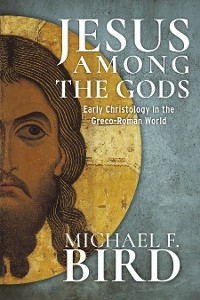
Jesus among the gods (eBook)
480 Seiten
Baylor University Press (Verlag)
978-1-4813-1677-4 (ISBN)
After several centuries of controversy, the early church came to an uneasy consensus that Jesus was both fully human and fully divine. In his divinity, orthodox Christianity claimed, he shared fully in the nature of the uncreated creator God. But was this doctrinal position crafted from whole cloth in the era of the great ecumenical councils? How did earlier Christ-followers understand Jesus in light of their convictions about the one supreme deity and in the context of a cultural milieu saturated with gods?
In Jesus among the gods, Michael Bird gives renewed attention to divine ontology--what a god is--in relation to literary representations of Jesus. Most studies of the origins of early Christology focus on christological titles, various functions, divine identity, and types of worship. The application of ontological categories to Jesus is normally considered something that only began to happen in the second and third centuries as the early church engaged in platonizing interpretations of Jesus. Bird argues, to the contrary, that ontological language and categories were used to describe Jesus as an eternal, true, and unbegotten deity from the earliest decades of the nascent church.
Through comparison with representative authors such as Philo and Plutarch, and a comprehensive analysis of Jesus and various intermediary figures from Greco-Roman religion and ancient Judaism, Bird demonstrates how early accounts of Jesus both overlapped with and diverged from existing forms of religious expression. However Jesus resembled the various divine agents of Greco-Roman religion and Second Temple Judaism, the chorus of early Christian witnesses held Jesus to be simultaneously an agent of and an analogue with the God of Israel. Among the gods, Jesus stood in clear relief, a conviction that may have been refined over time but that belongs to the emerging heart of Christian confession.
Michael F. Bird is the Academic Dean and Lecturer in Theology and New Testament at Ridley College.
Preface
Introduction
Part One: Jesus and Ancient Divinity
1. Problematizing Jesus' Divinity
2. The Search for Divine Ontology
Part Two: Jesus and Intermediary Figures
3. Putting Jesus in His Place: Scholarship on Early Christology and Intermediary Figures
4. Jesus and the "In-Betweeners": Comparing Early Christologies and Intermediary Figures
5. Setting Jesus apart from Demiurges, Deities, Daemons, and Divi
| Erscheint lt. Verlag | 15.10.2022 |
|---|---|
| Verlagsort | Waco |
| Sprache | englisch |
| Themenwelt | Geschichte ► Allgemeine Geschichte ► Altertum / Antike |
| Religion / Theologie ► Christentum ► Kirchengeschichte | |
| Schlagworte | Christology, Church History, Theology, Christian Origins, intermediary figures, ontology, Christian creeds, Greco-Roman deities, Greco-Roman pantheon, divine agents |
| ISBN-10 | 1-4813-1677-X / 148131677X |
| ISBN-13 | 978-1-4813-1677-4 / 9781481316774 |
| Informationen gemäß Produktsicherheitsverordnung (GPSR) | |
| Haben Sie eine Frage zum Produkt? |
 EPUB (Adobe DRM)
Kopierschutz: Adobe-DRM
Adobe-DRM ist ein Kopierschutz, der das eBook vor Mißbrauch schützen soll. Dabei wird das eBook bereits beim Download auf Ihre persönliche Adobe-ID autorisiert. Lesen können Sie das eBook dann nur auf den Geräten, welche ebenfalls auf Ihre Adobe-ID registriert sind.
Details zum Adobe-DRM
Dateiformat: EPUB (Electronic Publication)
EPUB ist ein offener Standard für eBooks und eignet sich besonders zur Darstellung von Belletristik und Sachbüchern. Der Fließtext wird dynamisch an die Display- und Schriftgröße angepasst. Auch für mobile Lesegeräte ist EPUB daher gut geeignet.
Systemvoraussetzungen:
PC/Mac: Mit einem PC oder Mac können Sie dieses eBook lesen. Sie benötigen eine
eReader: Dieses eBook kann mit (fast) allen eBook-Readern gelesen werden. Mit dem amazon-Kindle ist es aber nicht kompatibel.
Smartphone/Tablet: Egal ob Apple oder Android, dieses eBook können Sie lesen. Sie benötigen eine
Geräteliste und zusätzliche Hinweise
Buying eBooks from abroad
For tax law reasons we can sell eBooks just within Germany and Switzerland. Regrettably we cannot fulfill eBook-orders from other countries.
aus dem Bereich