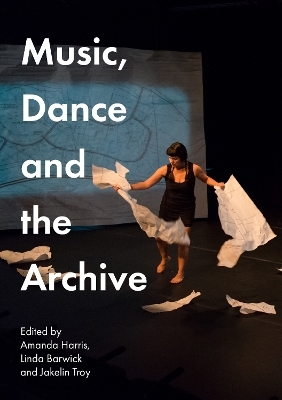
Music, Dance and the Archive
Sydney University Press (Verlag)
978-1-74332-867-5 (ISBN)
WINNER OF THE 2022 MANDER JONES AWARD
Music, Dance and the Archive reimagines records of performance cultures from the archive through collaborative and creative research. In this edited volume, Amanda Harris, Linda Barwick and Jakelin Troy bring together performing artists, cultural leaders and interdisciplinary scholars to highlight the limits of archival records of music and dance. Through artistic methods drawn from Indigenous methodologies, dance studies and song practices, the contributors explore modes of re-embodying archival records, renewing song practices, countering colonial narratives and re-presenting performance traditions. The book’s nine chapters are written by song and dance practitioners, curators, music and dance historians, anthropologists, linguists and musicologists, who explore music and dance by Indigenous people from the West, far north and southeast of the Australian continent, and from Aotearoa New Zealand, Taiwan and Turtle Island (North America).
Music, Dance and the Archive interrogates historical practices of access to archives by showing how Indigenous performing artists and community members and academic researchers (Indigenous and non-Indigenous) are collaborating to bring life to objects that have been stored in archives. It not only examines colonial archiving practices but also creative and provocative efforts to redefine the role of archives and to bring them into dialogue with contemporary creative work. Through varied contributions the book seeks to destabilise the very definition of “archives” and to imagine the different forms in which cultural knowledge can be held for current and future Indigenous stakeholders. Music, Dance and the Archive highlights the necessity of relationships, Country and creativity in practising song and dance, and in revitalising practices that have gone out of use.
Amanda Harris is a Senior Research Fellow at Sydney Conservatorium of Music, University of Sydney and Director of the Sydney Unit of digital archive Pacific and Regional Archive for Digital Sources in Endangered Cultures (PARADISEC). Amanda is interested in hearing the voices of those often excluded from conventional music histories through collaborative research focused on gender and intercultural musical cultures. Her monograph Representing Australian Aboriginal Music and Dance 1930–70 was published by Bloomsbury Publishing in 2020. Linda Barwick is a researcher and writer whose interests include nurturing creativity, honouring intergenerational wisdom and promoting diversity of thought and compassionate action. She enjoys gardening, bridge, grandchildren and cats, and is Emeritus Professor at Sydney Conservatorium of Music, University of Sydney, and a Fellow of the Australian Academy of the Humanities. Jakelin Troy (Jaky) is Ngarigu of the Snowy Mountains, called by Jaky’s community Kunama Namadgi, in south-eastern Australia. She is Director, Indigenous Research at The University of Sydney and founded the Sydney Indigenous Research Network (https://bit.ly/3SpWQF1). Jaky is conducting research with Linda and Amanda into the use of historical records locked in the archives to support her own and other Aboriginal communities to recover and maintain language, cultural practices, performance and music. Recently she has been working with communities in north-west Pakistan to support their cultural activism as they document and share their language, music and performance.
List of figures
List of tables
The contributors
List of abbreviations
1 Embodied culture and the limits of the archive (doi: 10.30722/sup.9781743328675.01)
Amanda Harris, Linda Barwick, Jakelin Troy
2 “I’ll show you that manyardi”: Memory and lived experience in the performance of public ceremony in western Arnhem Land (doi: 10.30722/sup.9781743328675.02)
Reuben Brown and Solomon Nangamu
3 Ruatepupuke II: Māori meeting house in a museum (doi: 10.30722/sup.9781743328675.03)
Jack Gray and Jacqueline Shea Murphy
4 Animating cultural heritage knowledge through songs: Museums, archives, consultation and Tiwi music (doi: 10.30722/sup.9781743328675.04)
Genevieve Campbell, Jacinta Tipungwuti, Amanda Harris and Matt Poll
5 The body is an archive: Collective memory, ancestral knowledge, culture and history (doi: 10.30722/sup.9781743328675.05)
Rosy Simas
6 Music, dance and the archive: Reanimating 1830s Nyungar songs of Miago (doi: 10.30722/sup.9781743328675.06)
Clint Bracknell
7 Authenticity and illusion: Performing Māori and Pākehā in the early twentieth century (doi: 10.30722/sup.9781743328675.07)
Marianne Schultz
8 Bodies of representation and resistance: Archiving and performingculture through contemporary Indigenous theatre in Taiwan (doi: 10.30722/sup.9781743328675.08)
Chi-Fang Chao
9 Mermaids and cockle shells: Innovation and tradition in the “Diyama” song of Arnhem Land (doi: 10.30722/sup.9781743328675.09)
Jodie Kell and Cindy Jinmarabynana
| Erscheinungsdatum | 02.11.2022 |
|---|---|
| Reihe/Serie | Indigenous Music, Language and Performing Arts |
| Zusatzinfo | Maps, family tree, photographs, musical notation |
| Verlagsort | Sydney |
| Sprache | englisch |
| Maße | 176 x 250 mm |
| Gewicht | 450 g |
| Themenwelt | Kunst / Musik / Theater ► Musik ► Pop / Rock |
| Geisteswissenschaften ► Geschichte ► Regional- / Ländergeschichte | |
| ISBN-10 | 1-74332-867-2 / 1743328672 |
| ISBN-13 | 978-1-74332-867-5 / 9781743328675 |
| Zustand | Neuware |
| Informationen gemäß Produktsicherheitsverordnung (GPSR) | |
| Haben Sie eine Frage zum Produkt? |
aus dem Bereich