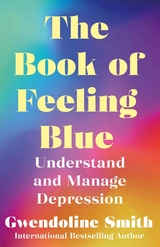
Book of Feeling Blue (eBook)
320 Seiten
Atlantic Books (Verlag)
978-1-83895-816-9 (ISBN)
Gwendoline Smith is a clinical psychologist, speaker, blogger and the author of the books The Book of Feeling Blue (2023), The Book of Angst (2022), The Book of Overthinking (2021) and The Book of Knowing (2020), Depression Explained (2002) and Sharing the Load (1996). She also goes by the name Dr Know. Born and raised in Chatham, Kent, she now lives in Auckland, New Zealand.
Discover how best to manage mental health issues - specifically depression - in bestselling psychologist Gwendoline Smith's evidence-based, practical guide. THE BOOK OF FEELING BLUE offers hope to those experiencing depression, explaining the nature of the condition and the many different forms it can take at different life stages, and offering straightforward advice about how to manage it. Written in a chatty, reassuring tone with supplementary illustrations included throughout to demonstrate key points, chapters cover all aspects of the condition, including how to support a family member or friend who may be suffering from it, providing a therapist's evidence-based, practical toolkit for dealing with this widespread and debilitating mental-health problem. 'Provides a language to articulate things that can feel hard to express' - Pandora Sykes, Sunday Times on The Book of Overthinking
Gwendoline Smith is a clinical psychologist, speaker, blogger and the author of the books The Book of Feeling Blue (2023), The Book of Angst (2022), The Book of Overthinking (2021) and The Book of Knowing (2020), Depression Explained (2002) and Sharing the Load (1996). She also goes by the name Dr Know. Born and raised in Chatham, Kent, she now lives in Auckland, New Zealand.
CHAPTER ONE
FEELING BLUE
From the late 1300s, the expression ‘feeling blue’ has been used to mean being sad. But there are many other cultural meanings given to the colour blue. In Western countries, blue also denotes safety and trust or authority; for example, the blue uniforms worn by the police. It has also been linked with masculinity — that old notion ‘blue is for boys, pink for girls’ — and associated with tranquillity.
• In Indian culture it is associated with Lord Krishna, and represents bravery and strength.
• In Latin America it represents hope, but also mourning.
• In Chinese culture, blue symbolises immortality and advancement, and the season of spring.
• For Māori, blue is associated with the sky father, Ranginui.
Universally, the associations of the colour blue are primarily positive. However, in Western contemporary culture the colour blue also has a strong association with sadness.
In Africa, blue is the colour of harmony and love, symbolising the importance of peace and togetherness. Yet for the African people who were taken to the New World to work as slaves, singing ‘the blues’ was something different again. These were songs of their despair and suffering, sung to make the time pass more quickly. Historians refer to blues music as being about the slaves’ struggle to survive and their efforts to win back their freedom. Perhaps our collective consciousness of ‘feeling blue’ also emanates partly from our resonance with the universal language of music such as the blues.
FEELING SAD
Sadness is something all of us experience. You might feel sad because someone has died, because a relationship has ended, because you have experienced a loss of some kind, any kind — a friend, a job, an opportunity.
Feeling sad or ‘blue’ is very much a part of our emotional repertoire. You feel happy sometimes; and at other times you feel disappointed; you feel angry, excited or frustrated; you feel blue.
Emotions are innate. They are biologically driven reactions to certain challenges and opportunities, sculpted by evolution to help humans survive, as part of the ‘fight/flight/freeze’ response.
Some emotions, such as shame and guilt, are learned emotions, shaped by the social and cultural environment we grow up in.
What I have observed in my clinical work, particularly in the past twenty or so years, is that if we don’t like how we experience an emotion, we don’t want it to be there. If you happen to be feeling sad about the breakdown of your relationship, you might find yourself surrounded by people making comments such as ‘You’ll get over it’, ‘Snap out of it’, ‘Think positively’.
Although your friends and loved ones are trying to be helpful, this pressure to never feel sad or ‘blue’ is very rarely helpful. These comments also tend to encourage people to suppress feelings that are a part of being human.
Poets often describe pain and joy as two sides of the same coin — both are necessary for a life that is fully lived. An example is John Keats’ ‘Ode on Melancholy’ written in 1819.
PRESSURE TO BE HAPPY
The world that you are living in endlessly sends you messages that you not only should be happy but also deserve to be happy. Everywhere you look, people’s social media profiles are immaculately curated to show their happiest selves.
Billions of dollars are spent showing you what products to buy to be truly happy — the foods, fashions, cosmetic surgery, cars, holidays . . . an endless supply of things and stuff that will ensure you never have to feel blue. Of course, the other inference here is that if you do feel ‘blue’ and dissatisfied you must be a loser who can’t afford what it takes to be an always-happy winner, with a happy, perfect life.
When the fact is . . .
What’s more, as I wrote in my earlier book The Book of Knowing:
If you don’t accept reality for what it is, you’re f@#ked. Because the universe doesn’t care. It is not just nor is it fair. Otherwise, bad things wouldn’t happen to good people.
In this same context, I do not believe in the word deserve. You do not deserve to feel sad after a loss or traumatic event, you just are. It is not a punishment.
Sometimes you might feel sad or blue because of things that are happening in your world. What is important is how you find your way to the other side.
THE MYTH OF ‘MAKE ME’
Another important fact to understand is that no one can make you feel sad or blue. Other people may impact on or influence your emotional state, but you are ultimately responsible for how you feel (unless of course it is caused by something biological like the flu, a stomach bug, a broken limb, depression, etc.).
In The Book of Angst I draw attention to this phenomenon. It sounds something like this:
‘He made me feel sad/blue.’
‘She made me feel angry.’
‘They made me feel worthless.’
THESE STATEMENTS
ARE NOT TRUE!
How you think about yourself and your world creates how you feel. Sure, you can be influenced by factors in your environment, but ultimately it’s all your work. (That is, unless the ‘feeling blue’ morphs into being depressed, and your biology starts to take hold — more on that later.)
It may feel as though the emotions you are experiencing are independent of you and are being inflicted upon you by the world, but that quite simply is not true. Think about it this way (from The Book of Angst):
I can’t make you love me, I can’t make you smile or cry — you do that. If someone you love doesn’t love you back, you may feel sad and blue but you don’t get to change it. Likewise, if you don’t want to establish an intimate relationship with someone they can’t make you.
THE LOCUS OF CONTROL
You may not have heard of this term. It refers to the extent to which you feel as though you have control over the events and influences in your life, and therefore how you manage them. If you constantly look outside of yourself for happiness and fulfilment — through things like consumables, other people, religion or money — you never learn how to trust your own abilities and develop your own resilience.
In fact, we all operate according to what psychologists refer to as this locus of control. It relates to an individual’s perception about the underlying main causes of events in their life. So, in other words, are you in control of your own destiny (internal locus of control), or do you believe that you are controlled by external forces such as fate or God or other people (external locus of control)?
I encourage the belief that the locus of control needs to be internal. This means you get to choose. The external pursuit of happiness positions you as a victim, or, as I often say: ‘You live like a leaf in the wind.’ If you can be destabilised by the slightest breeze, you’ll never be prepared for the inevitable storms that life will dish out.
RECENT RESEARCH
Interestingly, researchers have now shown that allowing yourself to experience ‘not-so-happy’ feelings develops resilience, hence promoting psychological wellbeing. One research team found that the link between negative mental states and poor emotional and physical health was weaker in individuals who considered negative moods as useful. Indeed, negative moods correlated with low life satisfaction only in people who did not perceive adverse feelings as helpful or pleasant (Luong, Wrzus, Wagner & Riedeger, Emotion, 2016).
If you have an external locus of control, you can end up living like a leaf in the wind.
Other cross-cultural studies also indicate that people living in Westernised countries are four to ten times more likely to experience depression and anxiety than people from cultures where both positive and negative emotions are considered to be an essential part of life. In such cultures there does not appear to be the same constant pressure to be happy and joyful.
It is interesting to note, however, that in Eastern cultures that have become heavily Westernised, such as Japan, mood disturbance has increased, as have suicide rates.
HAPPINESS ENTITLEMENT
The Baby Boomers (born 1946–64) have never really suffered the hardship their parents had on a societal scale, living through world wars and severe economic depression.
Neither have their children:
• Gen X: born 1965–80
• Gen Y: born 1981–96
• Gen Z: born 1997–2012
For these generations, happiness and pleasure are viewed as a ‘given’ or a ‘right’. Hardship is an inconvenience, and something that can be fixed by the parental figure. This teaches them the big golden myth: ‘Thou shalt never, and never have to, experience discomfort.’
The Baby Boomers remembered the suffering and hardship experienced by their parents, and vowed and declared that their children’s lives...
| Erscheint lt. Verlag | 5.1.2023 |
|---|---|
| Reihe/Serie | Gwendoline Smith - Improving Mental Health Series |
| Zusatzinfo | Black-and-white line integrated throughout |
| Verlagsort | London |
| Sprache | englisch |
| Themenwelt | Sachbuch/Ratgeber ► Gesundheit / Leben / Psychologie ► Lebenshilfe / Lebensführung |
| Sachbuch/Ratgeber ► Gesundheit / Leben / Psychologie ► Psychologie | |
| Geisteswissenschaften ► Psychologie ► Angst / Depression / Zwang | |
| Schlagworte | Anxiety • Baby Blues • Book of Angst • Book of Knowing • Book of Overthinking • cbt treatments • Depression • dr julie smith • Gwendoline Smith • medical treatments • Mental Health • natural therapies • postnatal depression • Suicide • teenage depression • why has nobody told me this before • Why Has Nobody Told Me This Before? |
| ISBN-10 | 1-83895-816-9 / 1838958169 |
| ISBN-13 | 978-1-83895-816-9 / 9781838958169 |
| Informationen gemäß Produktsicherheitsverordnung (GPSR) | |
| Haben Sie eine Frage zum Produkt? |
 EPUB (Wasserzeichen)
DRM: Digitales Wasserzeichen
Dieses eBook enthält ein digitales Wasserzeichen und ist damit für Sie personalisiert. Bei einer missbräuchlichen Weitergabe des eBooks an Dritte ist eine Rückverfolgung an die Quelle möglich.
Dateiformat: EPUB (Electronic Publication)
EPUB ist ein offener Standard für eBooks und eignet sich besonders zur Darstellung von Belletristik und Sachbüchern. Der Fließtext wird dynamisch an die Display- und Schriftgröße angepasst. Auch für mobile Lesegeräte ist EPUB daher gut geeignet.
Systemvoraussetzungen:
PC/Mac: Mit einem PC oder Mac können Sie dieses eBook lesen. Sie benötigen dafür die kostenlose Software Adobe Digital Editions.
eReader: Dieses eBook kann mit (fast) allen eBook-Readern gelesen werden. Mit dem amazon-Kindle ist es aber nicht kompatibel.
Smartphone/Tablet: Egal ob Apple oder Android, dieses eBook können Sie lesen. Sie benötigen dafür eine kostenlose App.
Geräteliste und zusätzliche Hinweise
Buying eBooks from abroad
For tax law reasons we can sell eBooks just within Germany and Switzerland. Regrettably we cannot fulfill eBook-orders from other countries.
aus dem Bereich