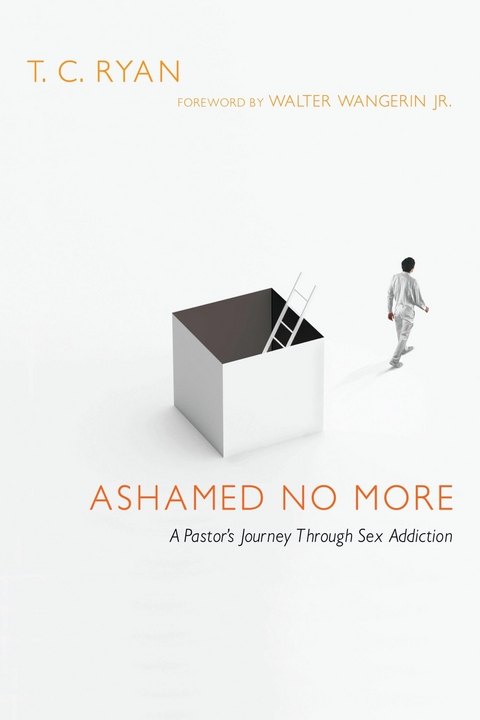
Ashamed No More (eBook)
InterVarsity Press (Verlag)
978-0-8308-6678-6 (ISBN)
T. C. Ryan was founding and senior pastor of a large church for nearly twenty years. He now provides counseling and spiritual direction for pastors and ministry leaders.
There are some things we just don't talk about.Things like sex, particularly when our sexuality is a matter of personal struggle.Things like the vulnerabilities of our pastors, who must maintain a facade not merely of respectability but of moral and psychological superiority.We don't talk about things that make us feel insecure, that make us feel unsettled. But the nature of spiritual growth, even the story of Christian faith, is a matter of being unsettled from the comfortable compromises we've made and set on a course together toward wholeness and mutually supportive community.Pastor T. C. Ryan takes us on an unsettling journey through his lifelong struggle with sexual addiction, one that predated and pervaded his pastoral ministry-one which for far too long he faced in secrecy and isolation, separated from the brothers and sisters in Christ who were called to bear one another's burdens.Ashamed No More doesn't cast blame or argue for looser moral standards. It does, however, call us to the unsettling ministry that a God who is love calls us to-the unsettling grace that is the audacious gospel of Christ.
Walter Wangerin, Jr. is the award-winning author of thirty-five books, including the best-selling The Book of God, the National Book Award-winning The Book of the Dun Cow, and, most recently, Letters from the Land of Cancer. Wangerin holds the Jochum Chair at Valparaiso University in Valparaiso, Indiana, where he teaches literature and creative writing, and is writer-in-residence. For nearly twenty years T. C. Ryan was founding and senior pastor of a large church. He resigned in order to concentrate more fully on his ongoing recovery from a lifelong sexual addiction. Dr. Ryan now has a ministry of spiritual direction with individuals and groups, preaches, writes and leads seminars on achieving spiritual wholeness in a sexually broken world.
2
Sexuality and Spirituality
In the beginning, God created the heavens and the earth.
The earth was without form and void, and darkness was over
the face of the deep. And the Spirit of God was hovering
over the face of the waters.
When God created man, he made him in the likeness of God.
Male and female he created them, and he blessed them
and named them Man when they were created.
—Genesis 1:1-2; 5:1-2
It might seem highly incongruous to some people that a person can be a growing, earnest Christian—especially a spiritual leader like a minister, priest or pastor—and also struggle with compulsive sexual behaviors. For years I was sure I was the only person in my church, in my clergy associations and among my Christian friends who did. It was startling to discover later that far more pastors struggle with compulsive sexual behaviors than don’t.[1] How can that be? I think one of the factors is that there is a profound link between our spirituality and our sexuality.
Human sexuality is a fascinating aspect of being human. Every human is a sexual being. “Our sexuality is the most private, the most intimate, the most idiosyncratic manifestation of who we are,” writes Mark Patrick Hederman. “It is as personal and as unique as our fingerprint. It tells us the secret of our deepest identity.”[2] Our sexuality and our expression of our sexuality can cause us to experience good feelings, great frustration, sublime satisfaction, fear, excitement and deep hurt.
Our culture, however, is absolutely schizophrenic and hypocritical about sex. We use sex to sell products and entertain each other. Sex is everywhere in our ads and movies and TV shows and talk-show conversations. When terrible sex crimes happen, there is an outcry against the evil of the behavior and the tragedy suffered by the victims. But if you look closely, there’s also a keen, almost prurient, interest in the details. Even as we’re horrified, we want to know what happened. Think about how many network and cable shows carry detailed information about sex-tainted crimes, acts and behaviors. There is a huge market for it. We’re fascinated by sexuality—ours and others’.
The hypocrisy of our culture around sexuality borders on the bizarre. If someone crosses one of a very few taboo lines related to sexual behavior, he becomes a pariah to be locked away and shunned. I’m thinking of a local case in which a young man of eighteen and his girlfriend one year younger had sex. The girl’s mother found out and contacted authorities, and the young man was charged with a sex crime, did two years in the state penitentiary and is now a registered sex offender. Is this right? Or have we lost perspective and are we overreacting as a culture?
My point is, it’s human to have challenges and difficulties in understanding and handling our sexuality. We have to continually think clearly and carefully about what it means to be a sexual person and how to appropriately treat our sexuality in relation to others.
I stumbled into the world of sexual imagining and self-gratification in early adolescence, at least ten years before I met my wife and twenty-five years before I finally began the journey out of that wilderness. Pursuing and marrying Pam was perhaps the first significant thing I did to move from unhealthy living to healthy living. I’ll never fully know what it cost her to marry me, but I know marrying her was the best thing that ever happened to me.
As we got to know each other and decided to marry, we had many things in common, especially our faith. But we had stark differences too. Pam comes from a relatively healthy family, and she had a very healthy approach to human sexuality. My family was dysfunctional and kept secrets. Hers was more open.
I had the erroneous notion that once Pam and I were married and intimate with each other, my sexual thinking and behaving would fall in line. But I’d already cultivated my default pattern of handling life, and I couldn’t break it. This meant that for the first fifteen years of our marriage—because I kept my struggles hidden from her—Pam had an unseen presence in her marriage to me. It caused us a great deal of hurt and pain and struggle.
We had no way of understanding what was going on in our marriage. No one talked about sexually compulsive behavior; there were no books about it at the time, and our faith community never talked about sex except in a romanticized, idealized way. We needed help understanding what was going on, and the help wasn’t there. We needed a lot of things to find our way out of my wilderness, and a realistic, genuinely Christ-based view of sexuality would have helped us a great deal.
The Gospel and Thinking About Sexuality
The gospel of Jesus is the story about God, about how much he loves his creation and about the extraordinary lengths to which he’s gone to reconnect human beings to himself. The dimensions of our Creator’s extravagant love are given fullness of expression in the story of Jesus of Nazareth, the God-Man who is the central figure in human history and whose self-giving life has opened the path for all men and women to live in increasing awareness of and intimacy with God. Through the living and dying and living again of Jesus, women and men are given the opportunity to so connect with the Spirit of their Creator that they actually become his agents of creativity and restoration. Living in this spiritual relationship and continuing the ministry of Jesus is what is meant by living in the kingdom of God.
Those who work at living in active, thoughtful partnership with the Spirit of God are the ones who constitute the real church. Lots of folks who are baptized and attend or are listed on the membership rolls of churches have no serious thought about following Christ. They’re loved by God all the same, but they’re not really Christians in the sense that they are not intentionally trying to conform their lives to Christ. Being a Christian is an affair of the heart—an interior sense of identity and being that spills into all aspects of life.
It is essential to note that the gospel is inherently corporate rather than individualistic. It is about who we are to be as a people here, not where we will end up as individuals. Too many American Christians live as if the primary point of the gospel is that we be “saved” for the next life. Having been assured of life in heaven after this life, they live now as if they are free to control their own devices and development.
Having the God of Jesus’ gospel come into our life means a change, a different kind of life, the kind of experience here and now that could never happen without God. It’s not about perfection. It’s not about pretending. It’s not about mustering a new morality that fits with a new worldview and a new set of values.
Living with the gospel in our heart means taking the life of Jesus into our very heartbeat and letting the life force of his Spirit season and salt, alter and redirect the ways we think and what we do with our feelings. All of that eventually begins to change how we live.
Living the gospel is a partnership between the redeeming Creator and repentant creatures. It is a joint effort that results in transformation. It is the transcendent becoming immanent, sort of in a lowercase way, just as Jesus coming into the world was the transcendent becoming immanent. And when that happens, the world notices. Why? Because people are hungry for a life genuinely touched from beyond. They are hungry for hope bigger than themselves.
Jesus does make it clear that eventually a winnowing will take place, that unfortunately not everyone is going to respond to his wildly generous offer of life transformation through grace and truth. But he’s equally clear that the separating out of who’s who and what’s what is not our job. And as his message creates division, it really is only exposing divisions that are already there. What his message actually does is create a new people, a new family, a new community.
It also seems clear to me that the gospel is not about our living comfortable lives in this world. That might be one reason so much about the gospel doesn’t make us feel very good. The truth is that the gospel is incredibly good for us. It’s just that we often confuse what is comfortable and easy and pleasing with what is necessary and good and ultimately satisfying. The gospel doesn’t satisfy my selfish whims of wanting life to be easier than it is. But the gospel makes me part of something so world-shatteringly awesome that sometimes I simply can’t sit still thinking about it.
What does the gospel have to say, though, about my struggle with sexual brokenness? What does it say about the struggle others have with their sexual brokenness? The verses at the head of this chapter remind us that our humanity is a reflection of our Creator, and our sexuality is an aspect of our humanity. Our sexuality is God-given and God-reflecting. Human sexuality is a beautiful, powerful gift from our Creator.
It may be that, because our sexuality is so wonderful, so important, so central to what it means to be human, that is the very reason we have such great trouble with it. We don’t rightly understand what it means to be human and spiritual and sexual. We take our sexuality for granted. We misunderstand our sexuality in that we think of it only erotically. But to be masculine or feminine is much more than to express oneself erotically. Our sexuality provides us...
| Erscheint lt. Verlag | 28.6.2012 |
|---|---|
| Vorwort | Jr. Walter Wangerin |
| Verlagsort | Lisle |
| Sprache | englisch |
| Themenwelt | Religion / Theologie ► Christentum ► Kirchengeschichte |
| Religion / Theologie ► Christentum ► Pastoraltheologie | |
| Schlagworte | Christian Church • Christian counseling • christian counselor • Christian ministry • Church • church counselor • church ministry • Counseling • Counselor • ministry • Psychology • Recovery |
| ISBN-10 | 0-8308-6678-7 / 0830866787 |
| ISBN-13 | 978-0-8308-6678-6 / 9780830866786 |
| Informationen gemäß Produktsicherheitsverordnung (GPSR) | |
| Haben Sie eine Frage zum Produkt? |
 EPUB (Adobe DRM)
Kopierschutz: Adobe-DRM
Adobe-DRM ist ein Kopierschutz, der das eBook vor Mißbrauch schützen soll. Dabei wird das eBook bereits beim Download auf Ihre persönliche Adobe-ID autorisiert. Lesen können Sie das eBook dann nur auf den Geräten, welche ebenfalls auf Ihre Adobe-ID registriert sind.
Details zum Adobe-DRM
Dateiformat: EPUB (Electronic Publication)
EPUB ist ein offener Standard für eBooks und eignet sich besonders zur Darstellung von Belletristik und Sachbüchern. Der Fließtext wird dynamisch an die Display- und Schriftgröße angepasst. Auch für mobile Lesegeräte ist EPUB daher gut geeignet.
Systemvoraussetzungen:
PC/Mac: Mit einem PC oder Mac können Sie dieses eBook lesen. Sie benötigen eine
eReader: Dieses eBook kann mit (fast) allen eBook-Readern gelesen werden. Mit dem amazon-Kindle ist es aber nicht kompatibel.
Smartphone/Tablet: Egal ob Apple oder Android, dieses eBook können Sie lesen. Sie benötigen eine
Geräteliste und zusätzliche Hinweise
Buying eBooks from abroad
For tax law reasons we can sell eBooks just within Germany and Switzerland. Regrettably we cannot fulfill eBook-orders from other countries.
aus dem Bereich