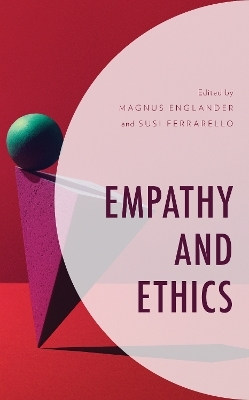
Empathy and Ethics
Rowman & Littlefield (Verlag)
978-1-5381-5410-6 (ISBN)
This book represents a unique indispensable reflection on the interconnection between empathy and ethics. To what extent is it right to be empathetic? Can empathy be unethical? Or is there an ethical obligation to be empathetic? Do we educate our citizens and train our professionals to use the right form of empathy?
Phenomenological ethics is a relatively new approach to ethics whose emphasis is put on the description of the lived-experience and the ethical phenomenon. The essays offer phenomenological descriptions of the thorny problem pertaining to the interconnection of empathy and ethics essential for professionals and scholars of different fields, such as philosophy, psychiatry, health science, psychology, and sociology.
Contributors: Michael Agostinelli Jr., Elodie Boublil, Francesca Brencio, Manuel Camassa, Scott D. Churchill, Nicolas de Warren, Craig Derksen, John J. Drummond, Íngrid Vendrell Ferran, Jannik M. Hansen, Simon Høffding, Joel Krueger, Carlos Lobo, Esteban Marín-Ávila, Alexander Montes, Dermot Moran, Henning Nörenberg, Tone Roald, Eva Schwarz, Andrea Staiti, Joona Taipale, Stefano Vincini, Maren Wehrle, Dan Zahavi
Magnus Englander is associate professor at Malmö University and associate editor for the Journal of Phenomenological Psychology. His phenomenological research is situated within the interdisciplinary research context of Health and Society, with an interest in topics such as psychopathology, empathy, and qualitative research methodology. He is the author of multiple articles on phenomenological psychology and the editor of Phenomenology and the Social Context of Psychiatry (2018). Susi Ferrarello is assistant professor at California State University, East Bay. She is a philosophical counselor and writes for Psychology Today. She has published novels, poetry, and academic books on philosophy, including Bioethics and Emotions; The Phenomenology of Sex, Love, and Intimacy; Ethical Experience: A Phenomenology; and Husserl’s Ethics and Practical Intentionality.
Chapter 1: Why Empathy Means Nothing—and Everything—for Ethics, John J. Drummond
Chapter 2: Ethics, Empathy, and Vulnerability: Trust as a Way of Making Sense of Our Vulnerability and Dependability, Esteban Marín-Ávila
Chapter 3: Emotion, Reality, and Ownership, Craig Derksen
Chapter 4: Embracing Ambiguity: Simone de Beauvoir’s Responsive Ethics, Maren Wehrle
Chapter 5: The Personalistic Attitude: Edmund Husserl and Edith Stein on Empathy as the Intuition of the Person as Value, Dermot Moran
Chapter 6: The Role of Empathy in the Affective Twist of Husserl’s Critique of an Axiological and Practical Reason, Carlos Lobo
Chapter 7: Phenomenology as Reverence: The Role of Reverence in the Phenomenological Method of Dietrich von Hildebrand, Alexander Montes
Chapter 8, “Against” Empathy: From the Isolated Self to Intersubjectivity in Martin Heidegger’s Thinking and the Consequences for Health Care, Francesca Brencio
Chapter 9: Being (N)One of Us: The Ethical and the Body, Henning Nörenberg
Chapter 10: Tomas
| Erscheinungsdatum | 02.09.2022 |
|---|---|
| Zusatzinfo | 1 b/w illustrations; 1 tables; |
| Sprache | englisch |
| Maße | 161 x 237 mm |
| Gewicht | 894 g |
| Themenwelt | Geisteswissenschaften ► Philosophie ► Ethik |
| Geisteswissenschaften ► Philosophie ► Philosophie der Neuzeit | |
| Geisteswissenschaften ► Psychologie ► Sozialpsychologie | |
| ISBN-10 | 1-5381-5410-2 / 1538154102 |
| ISBN-13 | 978-1-5381-5410-6 / 9781538154106 |
| Zustand | Neuware |
| Informationen gemäß Produktsicherheitsverordnung (GPSR) | |
| Haben Sie eine Frage zum Produkt? |
aus dem Bereich