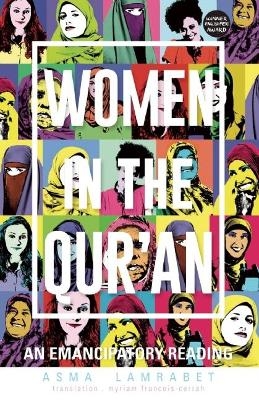
Women in the Qur'an
Square View (Verlag)
978-0-9935166-1-0 (ISBN)
Today, the issue of Muslim women is held hostage between two perceptions: a conservative Islamic approach and a liberal Western approach. At the heart of this debate Muslim women are seeking to reclaim their right to speak in order to re-appropriate their own destinies, calling for the equality and liberation that is at the heart of the Qur'an.
However, with few female commentators on the meaning of the Qur'an and an overreliance on the readings of the Qur'an compiled centuries ago this message is often lost. In this book Asma Lamrabet demands a rereading of the Qur'an by women that focuses on its spiritual and humanistic messages in order to alter the lived reality on the ground.
By acknowledging the oppression of women, to different degrees, in social systems organized in the name of religion and also rejecting a perspective that seeks to promote Western values as the only means of liberating them, the author is able to define a new way. One in which their refusal to remain silent is an act of devotion and their demand for reform will lead to liberation.
Asma Lamarbet is a pathologist in Avicenna Hospital, Rabat, Morocco. She is also an award-winning author of many articles and books tackling Islam and women's issues.
Myriam Francois-Cerrah is a writer and broadcaster whose articles have been published in the Guardian, Salon, and elsewhere.
Asma Lamrabet: Asma Lamrabet is currently working as a pathologist in Avicenna Hospital, Rabat, Morocco. She is also an award-winning author of many articles and books tackling Islam and women’s issues. Myriam Francois-Cerrah: Myriam Francois-Cerrah is a writer and broadcaster with a focus on current affairs, France and the Middle East. Her articles have been published in the Guardian, the Daily Telegraph, the New Statesman, Salon, The Independent, The New Internationalist, the Huffington Post and elsewhere.
Table of contents
1. Introducing the author
Foreword
A meeting with very different Muslim women…
Thanks
2. Introduction
Of which liberation do we speak?
In the beginning…
First part: when the Quran speaks about women
A story of all women
Bilq?s, Queen of Sheeba, a democratic queen
Sarah and Hagar, monotheistic emblems
Zulaykha or forbidden love
Umm M?s? and Assia, free women
The daughter of Shu’ayb and the meeting with M?s?
Maryam the favourite
Maryam, the link between Christians and Muslims
The birth of Maryam
Maryam’s spiritual retreat
Revelation and annunciation
The birth of ‘?s? and all the struggles
Maryam and her son, a ‘sign’ for the worlds
3. Second part – When the Quran speaks to women
The language of the Quran, a masculine language?
When the Quran responds to female demands
The mub?hala or when the Quran encourages women to social participation
The muhajirat or the female political refugees
The mub?yi’?t or women’s political engagement
Al-Muj?dala, when God listens to women’s concerns
And the other verses?
Polygamy
Testimony
Inheritance
Hit them…?
4. Conclusion
Islam or the story of an aborted women’s revolution
6. Bibliography
| Erscheinungsdatum | 29.01.2022 |
|---|---|
| Übersetzer | Myriam Francois-Cerrah |
| Zusatzinfo | Illustrations |
| Verlagsort | Markfield |
| Sprache | englisch |
| Maße | 127 x 196 mm |
| Themenwelt | Geisteswissenschaften ► Religion / Theologie ► Islam |
| ISBN-10 | 0-9935166-1-0 / 0993516610 |
| ISBN-13 | 978-0-9935166-1-0 / 9780993516610 |
| Zustand | Neuware |
| Informationen gemäß Produktsicherheitsverordnung (GPSR) | |
| Haben Sie eine Frage zum Produkt? |
aus dem Bereich