


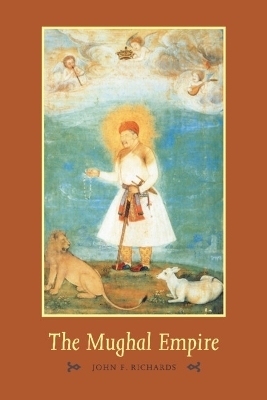
The Mughal Empire
Seiten
1996
Cambridge University Press (Verlag)
978-0-521-56603-2 (ISBN)
Cambridge University Press (Verlag)
978-0-521-56603-2 (ISBN)
The Mughal empire was one of the largest centralised states in the pre-modern world and this new volume traces the history of this magnificent empire from its creation in 1526 to its breakup in 1720.
The Mughal empire was one of the largest centralised states in pre-modern world history. It was founded in the early 1500s and by the end of the following century the Mughal emperor ruled almost the entire Indian subcontinent with a population of between 100 and 150 millions. The Mughal emperors displayed immense wealth and the ceremonies, music, poetry, and exquisitely executed paintings and objects of the imperial court created a distinctive aristocratic high culture. In this volume, Professor John Richards traces the history of this magnificent empire from its creation in 1526 to its breakup in 1720. He stresses the dynamic quality of Mughal territorial expansion, their institutional innovation in land revenue, coinage and military organisation, ideological change and the relationship between the emperors and Islam. Professor Richards also analyses institutions particular to the Mughal empire, such as the jagir system, and explores Mughal India's links with the early modern world.
The Mughal empire was one of the largest centralised states in pre-modern world history. It was founded in the early 1500s and by the end of the following century the Mughal emperor ruled almost the entire Indian subcontinent with a population of between 100 and 150 millions. The Mughal emperors displayed immense wealth and the ceremonies, music, poetry, and exquisitely executed paintings and objects of the imperial court created a distinctive aristocratic high culture. In this volume, Professor John Richards traces the history of this magnificent empire from its creation in 1526 to its breakup in 1720. He stresses the dynamic quality of Mughal territorial expansion, their institutional innovation in land revenue, coinage and military organisation, ideological change and the relationship between the emperors and Islam. Professor Richards also analyses institutions particular to the Mughal empire, such as the jagir system, and explores Mughal India's links with the early modern world.
Introduction; 1. Conquest and stability; 2. The new Empire; 3. Autocratic centralism; 4. Land revenue and rural society; 5. Jahangir 1605–1627; 6. Shah Jahan 1628–1658; 7. The war of succession; 8. Imperial expansion under Aurangzeb 1658–1689; 9. The economy, societal change and international trade; 10. Maratha insurgency and Mughal conquest in the Deccan; 11. The Deccan war; 12. Decline and collapse, 1707–1720; Conclusion; Bibliographic essay.
| Erscheint lt. Verlag | 26.1.1996 |
|---|---|
| Reihe/Serie | The New Cambridge History of India |
| Zusatzinfo | 6 Tables, unspecified |
| Verlagsort | Cambridge |
| Sprache | englisch |
| Maße | 152 x 229 mm |
| Gewicht | 578 g |
| Themenwelt | Geschichte ► Allgemeine Geschichte ► Neuzeit (bis 1918) |
| Geisteswissenschaften ► Geschichte ► Regional- / Ländergeschichte | |
| ISBN-10 | 0-521-56603-7 / 0521566037 |
| ISBN-13 | 978-0-521-56603-2 / 9780521566032 |
| Zustand | Neuware |
| Informationen gemäß Produktsicherheitsverordnung (GPSR) | |
| Haben Sie eine Frage zum Produkt? |
Mehr entdecken
aus dem Bereich
aus dem Bereich
Geschichte einer wilden Handlung
Buch | Hardcover (2024)
C.H.Beck (Verlag)
CHF 47,60


