


Mousterian Lithic Technology
An Ecological Perspective
Seiten
1995
Princeton University Press (Verlag)
978-0-691-03615-1 (ISBN)
Princeton University Press (Verlag)
978-0-691-03615-1 (ISBN)
- Titel ist leider vergriffen;
keine Neuauflage - Artikel merken
Exploring the development of the process whereby humans came to rely upon technology, this study turns to the Middle Palaeolithic (Mousterian) period, and examines the artifacts associated with Neanderthals. It describes how these tools were developed to cope with the basic problems of survival.
Human beings depend more on technology than any other animal-the use of tools and weapons is vital to the survival of our species. What processes of biocultural evolution led to this unique dependence? Steven Kuhn turns to the Middle Paleolithic (Mousterian) and to artifacts associated with Neandertals, the most recent human predecessors. His study examines the ecological, economic, and strategic factors that shaped the behaviour of Mousterian tool makers, revealing how these hominids brought technological knowledge to bear on the basic problems of survival. Kuhn's main database consists of assemblages of stone artifacts from four caves and a series of open-air localities situated on the western coast of the Italian peninsula. Variations in the ways stone tools were produced, maintained, and discarded demonstrate how Mousterian hominids coped with the problems of keeping mobile groups supplied with the artifacts and raw materials they used on a daily basis. Changes through time in lithic technology were closely tied to shifting strategies for hunting and collecting food.
Some of the most provocative findings of this study stem from observations about the behavioural flexibility of Mousterian populations and the role of planning in foraging and technology.
Human beings depend more on technology than any other animal-the use of tools and weapons is vital to the survival of our species. What processes of biocultural evolution led to this unique dependence? Steven Kuhn turns to the Middle Paleolithic (Mousterian) and to artifacts associated with Neandertals, the most recent human predecessors. His study examines the ecological, economic, and strategic factors that shaped the behaviour of Mousterian tool makers, revealing how these hominids brought technological knowledge to bear on the basic problems of survival. Kuhn's main database consists of assemblages of stone artifacts from four caves and a series of open-air localities situated on the western coast of the Italian peninsula. Variations in the ways stone tools were produced, maintained, and discarded demonstrate how Mousterian hominids coped with the problems of keeping mobile groups supplied with the artifacts and raw materials they used on a daily basis. Changes through time in lithic technology were closely tied to shifting strategies for hunting and collecting food.
Some of the most provocative findings of this study stem from observations about the behavioural flexibility of Mousterian populations and the role of planning in foraging and technology.
| Reihe/Serie | Princeton Legacy Library |
|---|---|
| Zusatzinfo | 4 halftones 58 line drawings 50 tables |
| Verlagsort | New Jersey |
| Sprache | englisch |
| Maße | 178 x 267 mm |
| Gewicht | 482 g |
| Themenwelt | Geisteswissenschaften ► Archäologie |
| Geschichte ► Allgemeine Geschichte ► Vor- und Frühgeschichte | |
| Naturwissenschaften ► Biologie ► Humanbiologie | |
| Sozialwissenschaften ► Ethnologie | |
| Sozialwissenschaften ► Soziologie | |
| ISBN-10 | 0-691-03615-2 / 0691036152 |
| ISBN-13 | 978-0-691-03615-1 / 9780691036151 |
| Zustand | Neuware |
| Informationen gemäß Produktsicherheitsverordnung (GPSR) | |
| Haben Sie eine Frage zum Produkt? |
Mehr entdecken
aus dem Bereich


aus dem Bereich
auf den Spuren der frühen Zivilisationen
Buch | Hardcover (2023)
C.H.Beck (Verlag)
CHF 27,95
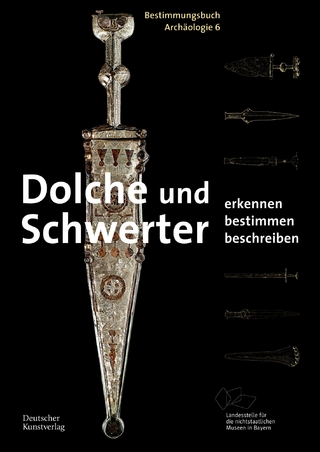
Erkennen. Bestimmen. Beschreiben
Buch | Softcover (2022)
Deutscher Kunstverlag
CHF 27,85


