


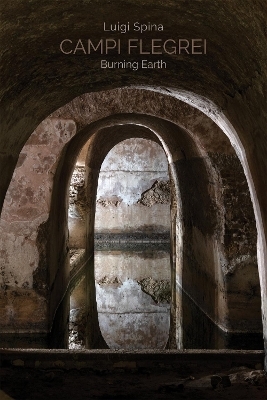
Campi Flegrei. Burning Earth
Seiten
2026
Five Continents Editions (Verlag)
978-88-7439-671-9 (ISBN)
Five Continents Editions (Verlag)
978-88-7439-671-9 (ISBN)
Explore a land shaped by fire and time. In Campi Flegrei: Burning Earth Luigi Spina's photographs capture the raw power and enduring human presence.
Campi Flegrei, near Naples, is a seismically active landscape that attracts, stimulates, and challenges. It seduces the soul, engages perception, and demands to be interpreted rather than merely registered.
People have chosen to live amongst these unique geological and volcanic features, weaving the fabric of human occupation and taming a land in perpetual transformation, one of the harshest yet most enchanting environments. Mankind has matched its own impermanence against the earth’s inevitable and unrestrained convulsions, in the process hewing out some of the most glorious examples of human endeavour, such as Cumae, the oldest Greek colony in the Western Mediterranean, the bustling Roman port of Puteoli, and the “dolce vita” savoured in the baths and villas dotted around the Bay of Baiae.
Luigi Spina has been exploring this land since 2020, delving into the complex, stratified geography. Key landmarks include places of memory (archaeological sites, monuments, landscapes), which, like true benchmarks of perception, outline the path towards an understanding of a world that links nature, ancient ruins, and the overwhelming presence of mankind. Balanced between mimicry and contradiction, the Campi Flegrei landscape is now blanketed by a dense urban sprawl, where the ancient and the contemporary coexist in a kind of precarious equilibrium, generating a complex socio-cultural state of affairs that is challenging to govern.
Spina explores and photographs places such as the Dragonara Cave, the Piscina Mirabilis, the Theatre of Misenum, the Flavian Amphitheatre at Puteoli, the Temple of Apollo on the shores of Lake Avernus, and the Temples of Venus and Diana, as he wanders through the hills above Baiae, finally heading towards Cumae.
Campi Flegrei, near Naples, is a seismically active landscape that attracts, stimulates, and challenges. It seduces the soul, engages perception, and demands to be interpreted rather than merely registered.
People have chosen to live amongst these unique geological and volcanic features, weaving the fabric of human occupation and taming a land in perpetual transformation, one of the harshest yet most enchanting environments. Mankind has matched its own impermanence against the earth’s inevitable and unrestrained convulsions, in the process hewing out some of the most glorious examples of human endeavour, such as Cumae, the oldest Greek colony in the Western Mediterranean, the bustling Roman port of Puteoli, and the “dolce vita” savoured in the baths and villas dotted around the Bay of Baiae.
Luigi Spina has been exploring this land since 2020, delving into the complex, stratified geography. Key landmarks include places of memory (archaeological sites, monuments, landscapes), which, like true benchmarks of perception, outline the path towards an understanding of a world that links nature, ancient ruins, and the overwhelming presence of mankind. Balanced between mimicry and contradiction, the Campi Flegrei landscape is now blanketed by a dense urban sprawl, where the ancient and the contemporary coexist in a kind of precarious equilibrium, generating a complex socio-cultural state of affairs that is challenging to govern.
Spina explores and photographs places such as the Dragonara Cave, the Piscina Mirabilis, the Theatre of Misenum, the Flavian Amphitheatre at Puteoli, the Temple of Apollo on the shores of Lake Avernus, and the Temples of Venus and Diana, as he wanders through the hills above Baiae, finally heading towards Cumae.
Luigi Spina has published several photographic books with 5 Continents Editions, including The Buchner Boxes (2014), Hemba (2017) and Mythical Diary (2017), which explored the Farnese Collection. With the same publisher, he created the Hidden Treasures series: The Farnese Cup, The Alexander Mosaic, Saint Dominic by Niccolò dell’Arca, The Riace Bronzes (2022), the Canova. Four Tempos project (2020–2024) and the sweeping Inside Pompeii project (2023). Fabio Pagano is an archaeologist and the director of the Campi Flegrei Archeological Park.
| Erscheinungsdatum | 30.12.2025 |
|---|---|
| Co-Autor | Fabio Pagano |
| Zusatzinfo | 140 Illustrations, color |
| Verlagsort | Milan |
| Sprache | englisch |
| Maße | 216 x 306 mm |
| Gewicht | 1580 g |
| Einbandart | Paperback |
| Themenwelt | Kunst / Musik / Theater ► Fotokunst |
| Geisteswissenschaften ► Archäologie | |
| Naturwissenschaften ► Geowissenschaften ► Geologie | |
| ISBN-10 | 88-7439-671-6 / 8874396716 |
| ISBN-13 | 978-88-7439-671-9 / 9788874396719 |
| Zustand | Neuware |
| Informationen gemäß Produktsicherheitsverordnung (GPSR) | |
| Haben Sie eine Frage zum Produkt? |
Mehr entdecken
aus dem Bereich


aus dem Bereich
Baugruben und Gründungen
Buch | Hardcover (2024)
Springer Vieweg (Verlag)
CHF 83,95
Geräte und Verfahren
Buch | Hardcover (2024)
Reguvis (Verlag)
CHF 199,95


