


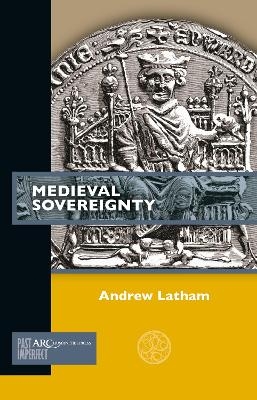
Medieval Sovereignty
Seiten
2022
|
New edition
ARC Humanities Press (Verlag)
978-1-64189-294-0 (ISBN)
ARC Humanities Press (Verlag)
978-1-64189-294-0 (ISBN)
An exploration of how ideas regarding the source and character of supreme political authority—sovereignty—experienced a crucial period of formative development during the thirteenth century.
Through a focused and systematic examination of medieval theologians, philosophers, and jurists, Andrew Latham explores how ideas about supreme political authority—sovereignty—first emerged during the high medieval period. The author provides a new model for understanding the concept of sovereignty, and traces its roots, not to the early modern or late medieval eras as do all other accounts, but to the High Middle Ages.
This book aims first to provide an account of a pivotal episode in the historical evolution of the idea of sovereignty—the supreme authority to command, legislate, and judge—in the thirteenth century. It also aims to reconnect early modern theorists of sovereignty to the medieval intellectual tradition out of which they emerged.
Latham traces the rise of a “dualist–regnalist” model whereby supreme authority was vested neither in the pope nor the emperor; nor was it divided between coordinate temporal and spiritual powers (kings and popes). Instead, it was vested exclusively in the king, who held it directly from God or (in the case of John of Paris, for example) “the people,” without any papal or imperial mediation.
Through a focused and systematic examination of medieval theologians, philosophers, and jurists, Andrew Latham explores how ideas about supreme political authority—sovereignty—first emerged during the high medieval period. The author provides a new model for understanding the concept of sovereignty, and traces its roots, not to the early modern or late medieval eras as do all other accounts, but to the High Middle Ages.
This book aims first to provide an account of a pivotal episode in the historical evolution of the idea of sovereignty—the supreme authority to command, legislate, and judge—in the thirteenth century. It also aims to reconnect early modern theorists of sovereignty to the medieval intellectual tradition out of which they emerged.
Latham traces the rise of a “dualist–regnalist” model whereby supreme authority was vested neither in the pope nor the emperor; nor was it divided between coordinate temporal and spiritual powers (kings and popes). Instead, it was vested exclusively in the king, who held it directly from God or (in the case of John of Paris, for example) “the people,” without any papal or imperial mediation.
Andrew Latham is Professor of Political Science at Macalester College and the recipient of a National Endowment for the Humanities grant in 2017.
Prologue
Chapter 1: The Character of Supreme Authority: Quanto personam
Chapter 2: The Locus of Supreme Authority: Per venerabilem
Chapter 3: Boniface vs Phillip: Conflict Over Taxation
Chapter 4: Boniface vs Phillip: Conflict Over Jurisdiction
Epilogue
Further Reading
| Erscheinungsdatum | 28.10.2021 |
|---|---|
| Reihe/Serie | Past Imperfect |
| Sprache | englisch |
| Maße | 114 x 178 mm |
| Themenwelt | Geschichte ► Allgemeine Geschichte ► Mittelalter |
| Sozialwissenschaften ► Politik / Verwaltung | |
| ISBN-10 | 1-64189-294-3 / 1641892943 |
| ISBN-13 | 978-1-64189-294-0 / 9781641892940 |
| Zustand | Neuware |
| Informationen gemäß Produktsicherheitsverordnung (GPSR) | |
| Haben Sie eine Frage zum Produkt? |
Mehr entdecken
aus dem Bereich


aus dem Bereich
Geschichte einer Augsburger Familie (1367-1650)
Buch | Softcover (2024)
Kohlhammer (Verlag)
CHF 47,60


