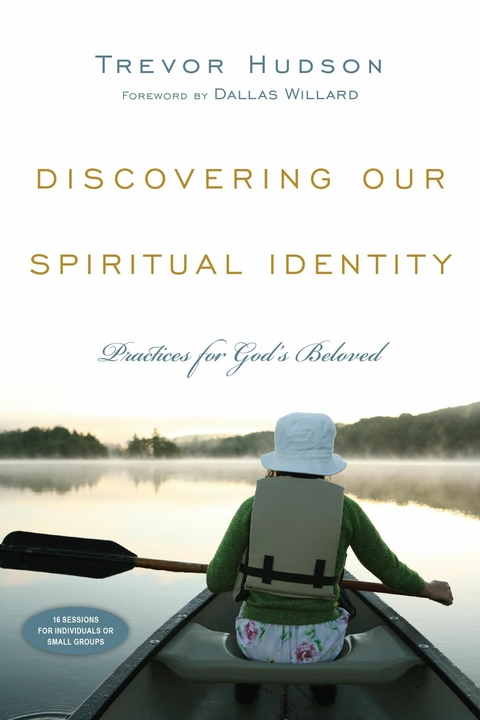
Discovering Our Spiritual Identity (eBook)
197 Seiten
IVP Formatio (Verlag)
978-0-8308-6856-8 (ISBN)
Trevor Hudson is a pastor in South Africa and the author of a number of books, including Listening to the Groans (Upper Room). He is a teaching fellow with the Renovaré Spiritual Formation Institute and speaks in the U.S. several times a year.
Trevor Hudson has been in the Methodist ministry for the past thirty odd years, spending most of this time in and around Johannesburg, South Africa. Presently he is part of the pastoral team at Northfield Methodist Church in Benoni where he preaches and teaches on a weekly basis. He has written nine books, including A Mile in My Shoes and Listening to the Groans, which have recently been published in the U.S. Much of his ministry has been shaped by two passions: helping ordinary people experience the transforming presence and power of Jesus in their everyday lives and helping people build the kind of local faith community which seeks to take seriously the suffering of those around them. His interests include watching sports, walking and running, discovering new places, reading and writing. Dallas Willard (1935-2013) was a professor in the School of Philosophy at the University of Southern California in Los Angeles for over forty years. A highly influential author and teacher, Willard was as celebrated for his enduring writings on spiritual formation as he was for his scholarship. His books include The Divine Conspiracy (Christianity Today?s Book of the Year in 1998), The Spirit of the Disciplines, Hearing God, Renovation of the Heart and others. His books have received numerous Christianity Today Annual Book Awards and other recognitions. Willard served on the boards of the C. S. Lewis Foundation and Biola University, and was a member of numerous evaluation committees for the Western Association of Schools and Colleges. He received bachelor?s degrees from both Tennessee Temple College and Baylor University and a graduate degree at Baylor University, as well as a PhD from the University of Wisconsin in Philosophy and the History of Science.
1
Drawing a Picture of God
The Signpost
There is a picture of God drawn inside each of our hearts and minds. This picture, formed over the years through various influences, significantly shapes the way we live our daily lives. As we reflect on our ideas about God, we are invited to enter a redrawing process in which we gain a clearer view of who God truly is.
Holy Experiment
Knowing God through knowing Jesus
Reading
“What is your picture of God?”
The question surprised me. I was sitting in the plainly furnished study of a close friend and mentor. Over the years his listening presence, at critical moments in my own pilgrimage, had been a gracious gift. In the previous thirty minutes I had sought to describe those patterns of behavior that were leaving me bedraggled in spirit, weary in body and withdrawn in relationship. When I had finished speaking, he remained silent for a while, almost as if he were listening to his own heart. Then came the surprising question.
At first the question seemed unrelated and irrelevant to the concerns I had expressed. What did my view of God have to do with crowded days, an over-scheduled appointment book and strenuous efforts to achieve and accomplish? Surely, I thought to myself, all that was needed was some practical counsel regarding time management and realistic goal setting. However, the question communicated my companion’s clear conviction that the way we live is profoundly shaped by our picture of God.
William Temple, that great Anglican minister and spiritual leader, once rather provocatively observed that if people live with a wrong view of God, the more religious they become, the worse the consequences will be, and eventually it would be better for them to be atheists.
In each of our hearts and minds there is drawn our picture of God. Formed over the years through our interaction with parent figures, church representatives and our surrounding culture, it significantly influences the way we live our daily lives. Listening perceptively to the description of my drained condition, my friend had offered a spiritual diagnosis. My picture of God needed to be critically examined. There was a connection between my schedule, driven lifestyle and view of God.
For the first time in my life, I stopped to think about my image of God. Yes, I did feel that I needed to earn God’s grace. Yes, I did believe I had to achieve his affirmation. Yes, I did sense that God would withdraw his blessings if I did not measure up. Gradually it dawned on me that I had come to view God as a somewhat passive spectator, sitting in the balcony of my life, whose applause would only come in response to satisfactory performance. A dysfunctional picture of God, I was discovering, had expressed itself in a dysfunctional way of living.
When distortions creep into our picture of God, their negative effects reverberate throughout our lives. Consider some commonly held views of God, together with their usual consequences. Those who view God as an impersonal force tend toward a cold and vague relationship with him. Those who see God as a heavenly tyrant, intent on hammering anyone who wanders outside his laws, seldom abandon themselves with joy to the purposes of his kingdom. Those who imagine God to be a scrupulous bookkeeper, determined to maintain up-to-date accounts of every personal sin and shortcoming, rarely acknowledge their inner contradictions and struggles in his presence. Those who regard God as a divine candy machine (just say a prayer and you can get what you want) inevitably end up in disillusionment. Since, as author-philosopher Dallas Willard has pointed out, we live at the mercy of our ideas, we would be wise to reflect carefully on those that we have about God.
Our picture of God can be redrawn. It happened for Cardinal Basil Hume, archbishop of Westminster and well-known spiritual guide, and is illustrated in an amusing story he tells about himself. On a speaking tour of the United States, he shared how he had been raised by a good but severe mother. Constantly she would say to him, “If I see you, my son, stealing an apple from my pantry, I’ll punish you.” Then she would add quickly, “If you take an apple and I don’t see you, Almighty God will see you, and he will punish you.” It doesn’t take much imagination to catch a glimpse of the harsh picture of God these words sketched in young Basil’s mind! As his Christian experience matured however, his picture of God gradually changed. Eventually he had come to realize, the cardinal testified, that God might have said to him, “My son, why don’t you take two?”
God Is a Boundless Mystery
James Houston writes:
Awe encourages us to think of God as a transcendent presence: someone outside and beyond our own small concerns and our own vulnerable lives. Awe opens us up to the possibility of living always on the brink of mystery. Awe helps us to be truly alive, fully open to new possibilities we had not envisaged before.[1]
I invite you to begin immediately. For a few brief moments lay this book aside and ponder your current image of God. Try to be as honest as you can. Do you believe that God wants to relate with you personally and individually? Do you feel that God is for or against you? When life goes wrong, do you assume that God is punishing you? As you reflect on these questions, note any negative components in your God picture. Can you remember where these came from? How do these negative components affect your relationship with God and your life in his service?
This redrawing process begins in the scriptural affirmation that God is a boundless Mystery. This does not mean that he is a giant puzzle to be fathomed out. It simply means that there is no one else like him. When the word holy (meaning to be separate, to be different) is used to describe God, it indicates this sense of wholly otherness. Indeed, if ever we think that we have finally got God all worked out, then we can be sure that we are wrong. As a professor-friend would keep reminding me in my know-it-all student days: “Trevor, when you are in the presence of the real God you either shut up or fall on your face.”
We are often uncomfortable and uneasy in the presence of mystery. We struggle to be involved with an ungraspable God. We feel safer when faith is confined within dogmatic formulations and tidy theories. Then we can tame God, bring him under control and manage his workings in our world. But these attempts to control and manage cost us dearly. Our sense of wonder is exiled, our faith begins suffocating from thick layers of dull familiarity and easy answers, and our lives are emptied of surprise.
In any true picture of God there will always be room for mystery. Acknowledging God in this way gets us to take off our shoes in his presence. We begin living on tiptoe. Our lives are touched with a renewed sense of awe.
God Is Christlike
The bottom line of the Christian faith is the amazing claim that God has stepped into human history in the person of Jesus. In Jesus, God comes close and shows us his face. The boundless Mystery is not something vague and woolly, but Someone personal. Listen to Paul’s confident exclamation about Jesus in the midst of his carefully worded theological letter to the Colossians: “he is the image of the invisible God. . . . For in him all the fullness of God was pleased to dwell” (Colossians 1:15, 19).
If we want to get our picture of God clearer, we must look in the direction of Jesus. Through word and deed, dying and rising, Jesus introduces us to what God is really like. In a famous remark, Archbishop Michael Ramsey teases out the staggering implications of this claim: “God is Christlike and in Him is no un-Christlikeness at all.”[2] Dare we take this seriously? Every idea and assumption that we have about God must be measured against the person of Jesus. If they are contradicted by what we have come to know about God through Jesus, they need to be relinquished. If not, then they can safely be included in our God picture.
This is what letter-writer John does when he puts forward his picture of God for our consideration. In the opening sentences of his first letter he reminds his readers that he writes from the perspective of one who had known the company of Jesus firsthand. On this basis he concludes a few chapters later that “God is love” (1 John 4:16). Notice that he does not say that God has love, but rather that God is love. This is the very essence of who the Holy One is: extravagantly, sacrificially, passionately loving. And since this is his essential nature, this is what God is always doing—loving you and me.
Popular Catholic writer John Powell illustrates from nature the meaning of this truth for our lives. He suggests that we compare God’s love to the sun. It is the nature of the sun always to give off warmth and light. The sun always shines, always radiates its warmth and light. There is no way in which the sun can act against its essential nature. Nor is there any way in which we can stop it from shining. We can allow its light to fill our senses and make us warm; alternatively, we can separate ourselves from its rays by putting up an umbrella or going indoors. But whatever we may do, we know that the sun itself does not change.[3]
In the same way, the God whom we see in Jesus always loves. Like the shining sun, his love never ceases. We have the freedom to open ourselves to this love and be transformed by it, or we can separate...
| Erscheint lt. Verlag | 17.3.2011 |
|---|---|
| Vorwort | Dallas Willard |
| Verlagsort | Lisle |
| Sprache | englisch |
| Themenwelt | Religion / Theologie ► Christentum ► Kirchengeschichte |
| Religion / Theologie ► Christentum ► Moraltheologie / Sozialethik | |
| Schlagworte | Christian • christian growth • Christian Life • christian living • God • Jesus • spiritual growth • Spiritual life |
| ISBN-10 | 0-8308-6856-9 / 0830868569 |
| ISBN-13 | 978-0-8308-6856-8 / 9780830868568 |
| Informationen gemäß Produktsicherheitsverordnung (GPSR) | |
| Haben Sie eine Frage zum Produkt? |
 EPUB (Wasserzeichen)
DRM: Digitales Wasserzeichen
Dieses eBook enthält ein digitales Wasserzeichen und ist damit für Sie personalisiert. Bei einer missbräuchlichen Weitergabe des eBooks an Dritte ist eine Rückverfolgung an die Quelle möglich.
Dateiformat: EPUB (Electronic Publication)
EPUB ist ein offener Standard für eBooks und eignet sich besonders zur Darstellung von Belletristik und Sachbüchern. Der Fließtext wird dynamisch an die Display- und Schriftgröße angepasst. Auch für mobile Lesegeräte ist EPUB daher gut geeignet.
Systemvoraussetzungen:
PC/Mac: Mit einem PC oder Mac können Sie dieses eBook lesen. Sie benötigen dafür die kostenlose Software Adobe Digital Editions.
eReader: Dieses eBook kann mit (fast) allen eBook-Readern gelesen werden. Mit dem amazon-Kindle ist es aber nicht kompatibel.
Smartphone/Tablet: Egal ob Apple oder Android, dieses eBook können Sie lesen. Sie benötigen dafür eine kostenlose App.
Geräteliste und zusätzliche Hinweise
Buying eBooks from abroad
For tax law reasons we can sell eBooks just within Germany and Switzerland. Regrettably we cannot fulfill eBook-orders from other countries.
aus dem Bereich