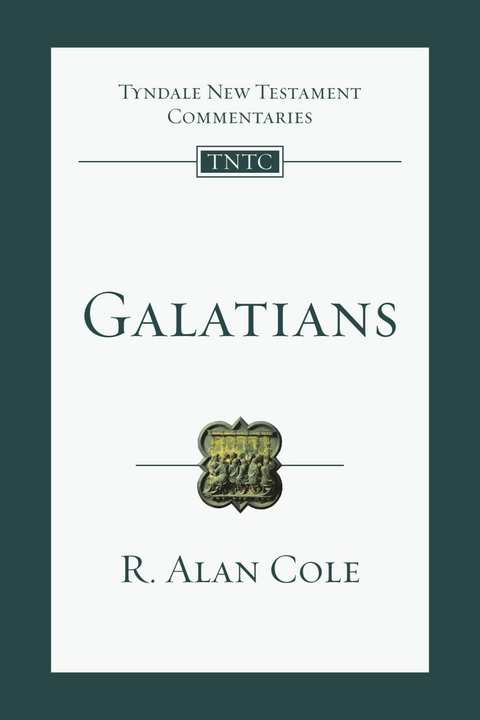
Do We Need the New Testament? (eBook)
InterVarsity Press (Verlag)
978-0-8308-9847-3 (ISBN)
John Goldingay (PhD, University of Nottingham; DD, Archbishop of Canterbury at Lambeth) is senior professor of Old Testament at Fuller Theological Seminary and lives in Oxford, England. His many books include An Introduction to the Old Testament, A Reader's Guide to the Bible, Biblical Theology, the three-volume Old Testament Theology, and the seventeen-volume Old Testament for Everyone series. He has also published his translation the entire Hebrew Bible as The First Testament. He is a Church of England minister, and now that he is back in England likes walking by the Thames, rediscovering English food, worshiping in Christ Church Cathedral, and relearning British English.
Do we need the Old Testament? That's a familiar question, often asked. But as an Old Testament scholar, John Goldingay turns that question on its head: Do we need the New Testament? What's new about the New Testament? After all, the Old Testament was the only Bible Jesus and the disciples knew. Jesus affirmed it as the Word of God. Do we need anything more? And what happens when we begin to look at the Old Testament, which is the First Testament, not as a deficient old work in need of a christological makeover, but as a rich and splendid revelation of God's faithfulness to Israel and the world? In this cheerfully provocative yet probingly serious book, John Goldingay sets the question and views it from a variety of angles. Under his expert hand, each facet unfolds the surprising richness of the Old Testament and challenges us to recalibrate our perspective on it.
John Goldingay (PhD, University of Nottingham; DD, Archbishop of Canterbury at Lambeth) is David Allan Hubbard Professor of Old Testament at Fuller Theological Seminary. He was previously principal and a professor of Old Testament and Hebrew at St John?s Theological College in Nottingham, England. His books include An Introduction to the Old Testament, The Theology of the Book of Isaiah, Key Questions about Interpretation, Do We Need the New Testament? and commentaries on Psalms, Isaiah, and Daniel. He has also authored the three-volume Old Testament Theology and the seventeen-volume Old Testament For Everyone series.Goldingay also serves in pastoral ministry as an associate pastor at St. Barnabas Episcopal Church, Pasadena. He holds membership in the Society of Biblical Literature and the Society for Old Testament Study, and serves on the Task Force on Biblical Interpretation in the Anglican Communion and the editorial board for the Library of Hebrew Bible/Old Testament Studies.
- 2 -
Why Is Jesus Important?
We need the New Testament because it tells the story of Jesus, and this story is of crucial importance. Why is that so? What does the New Testament tell us about Jesus’ significance?
The introduction to each Gospel declares that Jesus came to bring the fulfillment of God’s purpose for Israel as his people. In Matthew he comes as the climax of the three-act drama extending from Abraham to David, from David to the exile and from the exile to his appearance (Mt 1:1-17). As a descendant of David and Abraham, he is eligible to be the Anointed One (the Messiah, the Christ) and he is set in the context of God’s purpose to bless the nations. Like the prophet who speaks in Isaiah 52:7-10, he declares that God’s reign has come: as Babylon reigned over Israel earlier, more recently Rome has been reigning, but that reign is now being terminated.
Mark gets more briskly into an account of Jesus’ proclamation that “God’s reign has come near” (Mk 1:15). The signs of this fact are Jesus’ expelling impure spirits from people, healing them, cleansing them, declaring their forgiveness and associating with people who earn their money from dubious occupations. In due course he chooses twelve of his followers and sends them off to issue his proclamation and to expel impure spirits themselves (Mk 3:13-19). Jesus meets with varying forms of response—curiosity, commitment, skepticism and also opposition from many scholars, from many people who see themselves as dedicated to living by the Scriptures, and from many people with religious or political responsibility.
In Luke’s account of the way Jesus brings the fulfillment of God’s purpose for Israel, he takes up the proclamation to the poor in Isaiah 61 (see Lk 4:16-21). In Isaiah 61, the poor are not the people within a community who lack resources, but the community as a whole whose life is hard as it lives under the dominion of a foreign power. In Jesus’ context, Israel’s position is the same, and as the objects of preaching and teaching, the term the poor has this broader meaning in Luke. It denotes the people as a whole. With this connotation, Jesus’ quotation from Isaiah fits Luke’s opening account of the significance of his coming (Lk 1:46-79). Jesus’ disciples are not people lacking resources, but they are poor because they belong to this people under the oppressive and demoralizing dominion of a foreign power (e.g., Lk 6:20). They are indeed thus poor in spirit (Mt 5:3). Jesus does not focus on a concern for the poor in the sense of people who lacked resources.
In John, Jesus’ coming has its background in the rejection of God’s message by the world in general and by his own people. So he comes to bring them grace and truth. John takes up the way Yahweh had revealed himself as the God who is full of grace and truth (Ex 34:6-7). Moses declared it to be so and the Torah expresses the fact, but by their nature neither Moses nor the Torah could embody or incarnate the fact. Jesus has done so. No one had seen God in that sense. Jesus has now made him known. Yahweh’s grace and truth have come through Jesus: “Out of his fullness we have all received grace in place of grace already given” (Jn 1:16, TNIV).
In none of the Gospels does Jesus tell his disciples to extend the kingdom, work for the kingdom, build up the kingdom, or further the kingdom.
What Jesus Did and What He Was
When John the Baptizer receives reports in prison of what Jesus was doing, he sends to ask whether Jesus is “the one who is to come,” the expected Messiah. Maybe John is implicitly affirming that Jesus is the fulfillment of such hopes; maybe he has doubts. Jesus points to his acts of healing, cleansing, resuscitation and preaching to the poor (Lk 7:18-23). Since these acts do not correspond to the role of “the one who is to come” whose tasks have been described in the songs of Mary and Zechariah (Lk 1:46-79), John can hardly be faulted if he does have doubts. Jesus’ acts are more those of a prophet. Thus when Peter declares that Jesus is the Anointed One (Mt 16:16-27), Jesus blesses him, yet also tells him not to talk in these terms to people. Jesus is destined to be killed, but then to come back to life. His fate follows from the strange fact that his own people will end up repudiating him and killing him, as happened with the prophets.
Jesus focuses his ministry on his own people, though he occasionally heals Gentiles (e.g., Mt 8:5-13), and on one such occasion contrasts a centurion’s faith with that of Jews. In light of this contrast, he declares that the people who belong to God’s reign will be thrown out of it; cursing a fig tree because it is producing no fruit is an enacted prophetic sign of this dismissal (see Mt 20–22). Set in the context of the First Testament, however, Jesus’ vocation to bring good news to Israel is also a vocation to bring about blessing for the world, in keeping with God’s promise to Abraham. In John, likewise, he comes to take away the world’s sin (Jn 1:29). He is the Savior of the world (Jn 4:42). In light of his coming, arguments about the right mountain for worship will become irrelevant; people will worship in spirit and truth (Jn 4:21-24). He has other sheep beyond the ones in Israel’s pen; there is to be one flock, one shepherd (Jn 10:16). He dies for the Jewish nation and for God’s scattered children (Jn 11:51-52). Some Greeks seek to see him, and he comments that he is going to draw all people when he is lifted up (Jn 12:20, 32).
Looking at Jesus and listening to him might make people think of Moses (teaching and feeding), of Elijah and Elisha (doing miracles and gathering a group of disciples), of a priest (forgiving sins, making declarations about purity or the Sabbath), of a prophet (speaking God’s word, but experiencing persecution and martyrdom), of the Anointed One for whom Israel hoped (bringing God’s reign), and of the “human figure,” the “Man” or “Son of Man” in Daniel (having authority to judge). Exorcizing, healing, calming storms, walking across a lake and creating food to feed huge crowds were signs of supernatural power, though such power had been exercised by Moses, Elijah and Elisha. He came from God, and his teaching and authority came from God, but those facts indicated only that he was a prophet, or the Anointed One. He is the light of the world (Jn 8:12); but so are his disciples (Mt 5:14).
Although he was like such First Testament figures, then, one could understand him only if one combined them (cf. Mk 1:11; 9:7; Heb 1:1). He was like them, only more so. Moses and Elijah appear with him, but he is the one his disciples are to heed (Mk 9:2-7). He is way more significant than Moses (Heb 3:1-6). “All things have been committed to me by my Father,” he says; he alone knows the Father and reveals him (Mt 11:27). Before Abraham was born, “I am” (Jn 8:58). He is the resurrection and the life, and he gives eternal life; he is in the Father and the Father is in him; he is the only way to the Father (Jn 10:28; 11:25; 14:6, 10). While the Torah had been given through Moses, grace and truth came through Jesus (Jn 1:17-18); we have noted that grace and truth are proclaimed in the Torah, all right, but in Jesus they are embodied in a person. He is the very image of the invisible God (Col 1:15). So the only appropriate response to him is to bow down and say, “My Lord and my God” (Jn 20:28).
What Jesus Said
As a prophet and a teacher (e.g., Mt 8:19; 13:57; Lk 24:19; Jn 13:13), Jesus is an interpreter of the Scriptures (e.g., Mt 7:12), and his teaching corresponds to the teaching of the First Testament. Like the Torah, he looks for a community characterized by generosity in giving, lending and forgiving.1 As First Testament prophets undermine the idea that God wants people to offer sacrifices, Jesus undermines the idea that there is any point in rules about purity (Mk 7:1-23). Like a First Testament prophet, he can push people to accept more radical standards from within the Torah than the Torah sometimes allows—for instance, in forgoing the right to divorce your wife (Mk 10). Like a First Testament figure such as Job, he can push people to examine their attitudes as well as their actions (see Job 31). Like the First Testament teachers whose work appears in Proverbs, he can urge people to be peacemakers, but can also be realistic about the fact that there are always going to be wars (Mt 5:9; 24:6-7). Indeed, he comes to bring a sword, not to bring peace—to set family members against each other because of the different way they will respond to him (Mt 10:34). In keeping with stories in books such as Judges and Samuel–Kings, he also declares that people who draw the sword die by the sword (Mt 26:50-54).
What is distinctive and engaging about Jesus is not the novel things he says but the way he says things. He is creative not so much because he says things that are completely new but because he speaks with such authority. “All he says and does is transparent, crystal-clear, and self-evident.”2 At the same time he is controversial, not least in what he says about God, because he says things that people ought to recognize but that they avoid: such as God’s prioritizing life, mercy and reconciliation over rules, religious tradition, learning and acquiring stuff, especially when the latter clash with those priorities.3
He has some distinctive teaching over against the Prophets and Proverbs. We have noted that hell is a distinctive motif in his teaching; all but one of the New Testament references to hell come on his lips. People who call other people “fools” are in danger of...
| Erscheint lt. Verlag | 15.4.2015 |
|---|---|
| Verlagsort | Lisle |
| Sprache | englisch |
| Themenwelt | Geisteswissenschaften ► Religion / Theologie ► Christentum |
| Schlagworte | Bible • biblical hermaneutics • Biblical Theology • Christian • God • Jesus • message of the old testament • New Testament • Old Testament • Old Testament Theology • Scripture • Theology |
| ISBN-10 | 0-8308-9847-6 / 0830898476 |
| ISBN-13 | 978-0-8308-9847-3 / 9780830898473 |
| Informationen gemäß Produktsicherheitsverordnung (GPSR) | |
| Haben Sie eine Frage zum Produkt? |
 EPUB (Adobe DRM)
Kopierschutz: Adobe-DRM
Adobe-DRM ist ein Kopierschutz, der das eBook vor Mißbrauch schützen soll. Dabei wird das eBook bereits beim Download auf Ihre persönliche Adobe-ID autorisiert. Lesen können Sie das eBook dann nur auf den Geräten, welche ebenfalls auf Ihre Adobe-ID registriert sind.
Details zum Adobe-DRM
Dateiformat: EPUB (Electronic Publication)
EPUB ist ein offener Standard für eBooks und eignet sich besonders zur Darstellung von Belletristik und Sachbüchern. Der Fließtext wird dynamisch an die Display- und Schriftgröße angepasst. Auch für mobile Lesegeräte ist EPUB daher gut geeignet.
Systemvoraussetzungen:
PC/Mac: Mit einem PC oder Mac können Sie dieses eBook lesen. Sie benötigen eine
eReader: Dieses eBook kann mit (fast) allen eBook-Readern gelesen werden. Mit dem amazon-Kindle ist es aber nicht kompatibel.
Smartphone/Tablet: Egal ob Apple oder Android, dieses eBook können Sie lesen. Sie benötigen eine
Geräteliste und zusätzliche Hinweise
Buying eBooks from abroad
For tax law reasons we can sell eBooks just within Germany and Switzerland. Regrettably we cannot fulfill eBook-orders from other countries.
aus dem Bereich