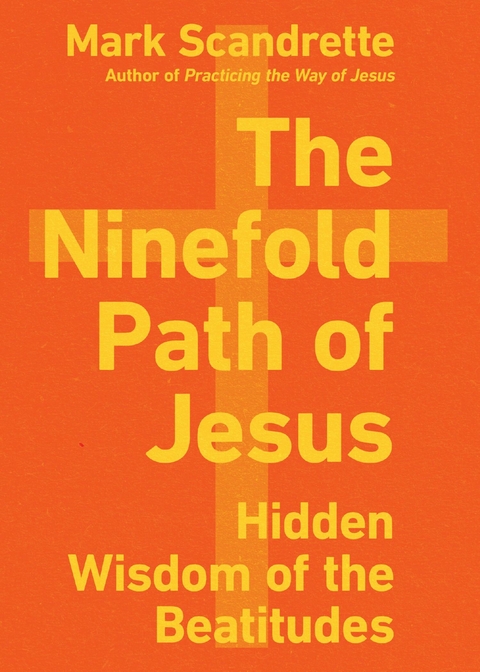
The Ninefold Path of Jesus (eBook)
176 Seiten
IVP Formatio (Verlag)
978-0-8308-4685-6 (ISBN)
Mark Scandrette is executive director and cofounder of ReIMAGINE, a center for spiritual formation in San Francisco, and the Jesus Dojo, a yearlong intensive formation process inspired by the life and teachings of Jesus. He is the author of Soul Graffiti.
Mark Scandrette is an internationally recognized expert in practical Christian spirituality. He is the founding director of ReIMAGINE: A Center for Integral Christian Practice and he is on the creative team for NINE BEATS collective. A sought after voice for creative, radical, and embodied faith practices, he frequently speaks at universities, churches and conferences nationally and internationally and also serves as adjunct faculty in the doctoral program at Fuller Theological Seminary. His most recent books include The Ninefold Path of Jesus, FREE, Practicing the Way of Jesus, and Belonging and Becoming (with Lisa Scandrette). Mark lives with his wife and their three young adult children in an old Victorian in San Francisco's Mission District.
Introduction
Nine Postures for Life
Shortly after my first book was published, a Zen priest contacted me. He wrote, “My name is Shinko. I believe you are the kind of Christian I could talk to about what is happening in my life.”
Over dinner a few weeks later, he explained,
I came to Jesus during the seventies Jesus movement. The church I joined taught me that only groups like ours had the right beliefs and that everyone else is going to hell. That didn’t sit well with me, and I became disaffected with the church as I knew it then. I began exploring Judaism and Eastern philosophy. Eventually, I became a dedicated student of Zen Buddhism. I have lived and worked at Green Gulch monastery for the past fifteen years.
What I’m trying to make sense of is . . . when I practice sitting meditation (zazen), I hear Jesus calling to me—and I don’t know what to do with that.
I asked Shinko what he believed about Jesus. He paused thoughtfully and replied, “I adore Jesus.” Tears began streaming down his cheeks. “I don’t know if I’d be considered orthodox by many Christians. But in my heart I know that I adore Jesus.”
Shinko and I became fast friends. We were an odd pair walking the streets of my neighborhood, a young pastor and a cheerful shorn-headed priest wearing a rakusu, robe, and sandals. In restaurants and cafés people would stop and smile at Shinko and bow respectfully.
At the time I wasn’t particularly conversant with faith traditions outside my own. So one day I asked Shinko, “What is the way of Zen Buddhism? When you wake up each day, what do you seek to do and be?”
In about four minutes Shinko succinctly answered my question. First, he named the Four Noble Truths. Then he explained the Eightfold Path: right understanding, right thought, right speech, right action, right livelihood, right effort, right mindfulness, and right concentration. “Each day I seek to deepen my experience of this path.”
I was struck by how clear and concrete his answer was.
Then Shinko turned and asked me, “Mark, you identify as a follower of Jesus. When you wake up each day, what do you seek to do and be?”
I hesitated. My first impulse was to explain how I‘d become a Christian. But that wasn’t the question. I quickly recovered and said, “Each day I try to love God with my whole being and love my neighbor as myself.”
I congratulated myself for giving an adequate answer. But I was haunted by how vague my response was compared to Shinko’s. What, exactly, do I do each day to love God and people? I didn’t have a clear answer.
How This Book Came to Be
On a summer evening in 2015 I was having drinks in a London pub with my friends Danielle and Steve. I asked Danielle about the most recent bombing in the city. She told me that ten young people a month are reportedly recruited and radicalized into terrorist organizations. “Meanwhile,” she exclaimed, “church participation in the UK continues to plummet. We simply aren’t giving young people a compelling vision for life!”
I mentioned what was happening back home in the United States. A series of highly publicized police shootings had galvanized the newly minted Black Lives Matter movement. In San Francisco, where I live, I’d recently been to the funeral of my twenty-year-old neighbor who had been shot six times in the back by two undercover officers.
Steve said, “It’s clear that our systems are broken.”
“And we are that system,” I added. “What we need is a whole new way of being.”
Steve and Danielle worked for a historic British Bible agency. With the prevalence of smartphones and Scripture apps, fewer people need printed Bibles anymore. “What does seems scarce,” Steve said, “is a meaningful connection between Scripture and everyday life. Young people today have little interest in church, but that doesn’t mean they aren’t spiritually curious. Many would resonate with themes found in the Beatitudes—justice, peacemaking, nonviolence, etc.”
“Has there ever been a moment when we’ve needed the message of the Beatitudes more?” Danielle exclaimed.
That night, Danielle and Steve invited me to join a project based on the Beatitudes called NINE BEATS Collective. My life passion is helping people apply the teachings of Christ to everyday life. So immediately I said yes.
I told Danielle and Steve that the project made me think of the haunting conversation I’d had with Shinko years before.
Danielle could see where the story was going. “So are you suggesting that the Beatitudes might be like the ninefold path of Jesus?” She asked.
“Exactly,” I said. Dallas Willard used to say that the Sermon on the Mount is the best example we have of a “curriculum for Christlikeness.” The problem is that there are one hundred ten verses in those three chapters. If most of us find it hard to remember a ten-digit phone number, no wonder we struggle to keep the teachings of Christ at the forefront of our minds. Maybe the Beatitudes can function as a thematic guide to the teachings of Christ.
I grabbed a napkin and Danielle handed me a pen, and we began to brainstorm. Blessed are the poor. That seems like an invitation to the way of trust. Blessed are those who mourn. That sounds like an invitation to lament what’s broken in our world and inside of us. Blessed are the meek—that’s an invitation to the way of humility. By the time we’d finished our drinks, we had a tentative sketch of the ninefold path of Jesus, inspired by the Beatitudes.
Over the next year we gathered artists, musicians, scholars, and activists from three continents to explore the wisdom of the Beatitudes together. We made a commitment to be ruthlessly honest. We examined how the Beatitudes challenge the dominant systems of society and our typical responses to life. We took on practices and experiments to help us understand the new consciousness the Beatitudes point us to. Eventually, we published two resources: The Ninefold Path Learning Lab and The Ninefold Path Notebook. Over the last five years I’ve traveled to five continents and invited thousands of people to explore the radical invitation of the Beatitudes. And with this book, I’m inviting you to join us.
What Are the Beatitudes?
The teachings on the hill found in the Gospel of Matthew are the fullest record we have of what Jesus regularly taught as he traveled throughout Galilee. It begins with nine strange blessings traditionally called the Beatitudes. Makarios is the Greek word Jesus uses, which means something like “incredibly fortunate, favored, or Godlike.” It’s a term we might use to describe the most privileged and admired star athlete, celebrity, or billionaire. Jesus begins by saying:
Blessed (or Godlike) are
the poor,
those who mourn,
the meek,
those hungry for justice,
the merciful,
the pure in heart,
the peacemakers,
the persecuted
and blessed are you . . .
Imagine Jesus making these statements as he walks through a crowd, putting his hand on the shoulder of a beggar as he says, “Blessed are the poor,” locking eyes with a grieving widow as he says, “Blessed are those who mourn,” or lifting the chin of a peasant laborer as he says, “Blessed are the meek.”
What’s surprising is who Jesus calls fortunate. At the time, people assumed that only the most wealthy, attractive, or powerful were blessed. Poor, sad, and suffering people were thought to be cursed. Still today it can feel like our circumstances, identity, or previous choices exclude us from the blessed life. With these strange blessings Jesus announces that a thriving life, under God’s care, is available to anyone. Whatever your story, whatever your struggle, wherever you find yourself, this path is available to you.
If we look only at the first three Beatitudes, it might seem like the whole point is that a blessed life is available to unlikely people. But the next four Beatitudes celebrate noble qualities: a hunger for justice, mercy, purity of heart, and peacemaking. This shift suggests that Jesus is introducing a more comprehensive picture of what the blessed life looks like and how to experience it.
Nine Shifts in Consciousness
The Beatitudes name nine distinct areas of human struggle that Jesus addresses in his teaching on the hill. Our first instincts are to be anxious, avoidant, competitive, apathetic, judgmental, evasive, divided, retaliatory, and afraid. Several of these instincts are related to mental health issues. If you are experiencing clinical anxiety, posttraumatic stress, depression, paranoid thinking, or other conditions, please seek professional help. Neurological research suggests that many of these patterns of perception are wired into the biology of our brains. For example, to keep us alive, the fight-or-flight response alerts us to potential dangers. But to thrive we must...
| Erscheint lt. Verlag | 13.7.2021 |
|---|---|
| Verlagsort | Lisle |
| Sprache | englisch |
| Themenwelt | Religion / Theologie ► Christentum ► Bibelausgaben / Bibelkommentare |
| Religion / Theologie ► Christentum ► Moraltheologie / Sozialethik | |
| Schlagworte | Beatitudes • integral Christian practice • Learning Labs • living the beatitudes • Living the Jesus way • matthew 5 • New Consciousness • Ninefold Path • orthopraxy • Practical Christianity • reimagine • Sermon on the Mount • Spiritual Formation • Spiritual postures • spiritual practices • teachings of Jesus • Way of Jesus |
| ISBN-10 | 0-8308-4685-9 / 0830846859 |
| ISBN-13 | 978-0-8308-4685-6 / 9780830846856 |
| Informationen gemäß Produktsicherheitsverordnung (GPSR) | |
| Haben Sie eine Frage zum Produkt? |
 EPUB (Wasserzeichen)
DRM: Digitales Wasserzeichen
Dieses eBook enthält ein digitales Wasserzeichen und ist damit für Sie personalisiert. Bei einer missbräuchlichen Weitergabe des eBooks an Dritte ist eine Rückverfolgung an die Quelle möglich.
Dateiformat: EPUB (Electronic Publication)
EPUB ist ein offener Standard für eBooks und eignet sich besonders zur Darstellung von Belletristik und Sachbüchern. Der Fließtext wird dynamisch an die Display- und Schriftgröße angepasst. Auch für mobile Lesegeräte ist EPUB daher gut geeignet.
Systemvoraussetzungen:
PC/Mac: Mit einem PC oder Mac können Sie dieses eBook lesen. Sie benötigen dafür die kostenlose Software Adobe Digital Editions.
eReader: Dieses eBook kann mit (fast) allen eBook-Readern gelesen werden. Mit dem amazon-Kindle ist es aber nicht kompatibel.
Smartphone/Tablet: Egal ob Apple oder Android, dieses eBook können Sie lesen. Sie benötigen dafür eine kostenlose App.
Geräteliste und zusätzliche Hinweise
Buying eBooks from abroad
For tax law reasons we can sell eBooks just within Germany and Switzerland. Regrettably we cannot fulfill eBook-orders from other countries.
aus dem Bereich