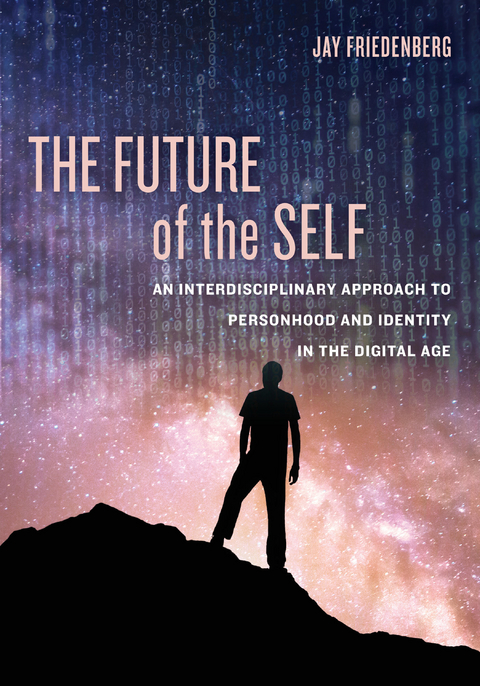
The Future of the Self (eBook)
344 Seiten
University of California Press (Verlag)
978-0-520-97059-5 (ISBN)
List of Figures
List of Tables
Acknowledgments
1 Introduction
Primary Terms: Personhood, Self, and Identity
The Psychology of Personhood
Perspectives on Personhood
Non-Western Views of Self
A Few More Ideas on the Self
The Artificial Self
Book Overview
2 The Philosophy of Self
Historical Conceptions of Personhood and Self
Three Additional Philosophical Conceptions of the Self
Personal Identity
Knowledge of the Self
Free Will and Determinism
The Extended-Mind Thesis
3 The Psychology of Self
Varieties of Self: The Modern Approach
Psychological Theories of Self
Disorders of Self
4 Brain
The Neuroscience of Self
Is There a Specialized Brain System for Self?
One or Many Neural Selves?
Neural Models of the Self
Problems with the Neuroscientific Study of Self
Responses to Problems with the Neuroscientific Study of Self
5 Brain + Hardware
Cyborgs
Prosthetics
Neural Prosthetics (Brain-Machine Interfaces or Brain-Computer Interfaces)
Artificial Memories
Robotics
6 Brain + Software
Technology
Cyberpsychology
Varieties of Online Behavior
Video Games
7 Avatars
What Is an Avatar?
Avatar Typologies
Avatar Behavior in the Palace
Avatar Embodiment
Points of View
The Proteus Effect
Representing and Creating the Online Self
Avatars at Play
Avatars and Video Role-Playing Games
Avatars and Identity
Avatar Case Studies
The Future of Avatars
8 Virtual Worlds
Augmented Reality
Virtual Worlds
Virtual Spaces
A Brief History of Virtual Worlds
Presence and the Ultimate Display
A Chronology of VR Systems
Second Life
Avatars, Virtual Worlds, and the Digital Self
Benefits of VR and Virtual Worlds
Problems with VR and Virtual Worlds
The Future of the Virtual World
9 Software Selves
What Is Life?
Artificial Life
Life and Consciousness
Consciousness
Artificial Consciousness
Is Artificial Consciousness Possible? Some Ideas
Artificial Intelligence
Artificial Selves as Mindclones and Bemans
Digital Identity, Personhood, and Rights
Human Attitudes and Behaviors toward Artificial Selves
Digital Immortality
10 Conclusion
Changing the Self
The Future of the Self
The Far Future
Summary and Main Issues
References
Index
| Erscheint lt. Verlag | 4.8.2020 |
|---|---|
| Sprache | englisch |
| Themenwelt | Geisteswissenschaften ► Psychologie ► Allgemeine Psychologie |
| Geisteswissenschaften ► Psychologie ► Verhaltenstherapie | |
| Schlagworte | Artificial Intelligence • Artificial Psychology • artificial self • avatars • Biology • Biotech • Body • brain • Cyborg • Digital Age • Digital Identity • Digital lives • digital self • Embodiment • future selves • Human identity • Identity • Neuroscience • Nonfiction • online lives • Online self • Personhood • Posthuman • postmodern • Psychology • Robotics • Science • self • Social Media • Software • stem • Technology • Virtual Reality • Virtual Worlds |
| ISBN-10 | 0-520-97059-4 / 0520970594 |
| ISBN-13 | 978-0-520-97059-5 / 9780520970595 |
| Informationen gemäß Produktsicherheitsverordnung (GPSR) | |
| Haben Sie eine Frage zum Produkt? |
 EPUB (Adobe DRM)
Kopierschutz: Adobe-DRM
Adobe-DRM ist ein Kopierschutz, der das eBook vor Mißbrauch schützen soll. Dabei wird das eBook bereits beim Download auf Ihre persönliche Adobe-ID autorisiert. Lesen können Sie das eBook dann nur auf den Geräten, welche ebenfalls auf Ihre Adobe-ID registriert sind.
Details zum Adobe-DRM
Dateiformat: EPUB (Electronic Publication)
EPUB ist ein offener Standard für eBooks und eignet sich besonders zur Darstellung von Belletristik und Sachbüchern. Der Fließtext wird dynamisch an die Display- und Schriftgröße angepasst. Auch für mobile Lesegeräte ist EPUB daher gut geeignet.
Systemvoraussetzungen:
PC/Mac: Mit einem PC oder Mac können Sie dieses eBook lesen. Sie benötigen eine
eReader: Dieses eBook kann mit (fast) allen eBook-Readern gelesen werden. Mit dem amazon-Kindle ist es aber nicht kompatibel.
Smartphone/Tablet: Egal ob Apple oder Android, dieses eBook können Sie lesen. Sie benötigen eine
Geräteliste und zusätzliche Hinweise
Buying eBooks from abroad
For tax law reasons we can sell eBooks just within Germany and Switzerland. Regrettably we cannot fulfill eBook-orders from other countries.
aus dem Bereich