


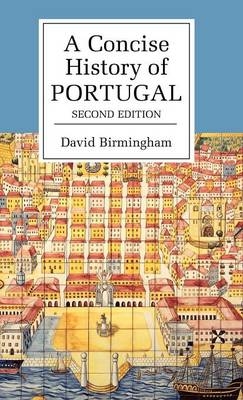
A Concise History of Portugal
Seiten
2003
|
Updated edition
Cambridge University Press (Verlag)
978-0-521-83004-1 (ISBN)
Cambridge University Press (Verlag)
978-0-521-83004-1 (ISBN)
- Titel erscheint in neuer Auflage
- Artikel merken
Zu diesem Artikel existiert eine Nachauflage

This illustrated history of Portugal offers an introduction to the culture of the country, its empire, and its search for economic modernisation, and international partnership. This second edition updates the story, and discusses the state of historical writing on Portugal at the turn of the millennium.
This concise, illustrated history of Portugal offers an introduction to the people and culture of the country, its empire, and to its search for economic modernisation, political stability and international partnership. The book studies the effects of the vast wealth mined from Portuguese Brazil, the growth of the wine trade, and the evolution of international ties. The Portuguese Revolution of 1820 to 1851 created a liberal monarchy, but in 1910 the king was overthrown and, by 1926, had been replaced by a dictatorship. In 1975 Portugal withdrew from its African colonies and turned north to become a democratic member of the European Community in 1986. Researched during the years which followed the fall of Portugal's dictators in 1974, this book has become the standard single-volume work. The second edition brings the story up to date and discusses the state of historical writing on Portugal at the turn of the millennium.
This concise, illustrated history of Portugal offers an introduction to the people and culture of the country, its empire, and to its search for economic modernisation, political stability and international partnership. The book studies the effects of the vast wealth mined from Portuguese Brazil, the growth of the wine trade, and the evolution of international ties. The Portuguese Revolution of 1820 to 1851 created a liberal monarchy, but in 1910 the king was overthrown and, by 1926, had been replaced by a dictatorship. In 1975 Portugal withdrew from its African colonies and turned north to become a democratic member of the European Community in 1986. Researched during the years which followed the fall of Portugal's dictators in 1974, this book has become the standard single-volume work. The second edition brings the story up to date and discusses the state of historical writing on Portugal at the turn of the millennium.
David Birmingham is Emeritus Professor of Modern History in the University of Kent, Canterbury.
Introduction; 1. Peoples, cultures and colonies; 2. Rebellion and revolution in the seventeenth century; 3. The golden age and the earthquake in the eighteenth century; 4. Brazilian independence and the Portuguese Revolution; 5. The bourgeois monarchy and the republicans; 6. The dictatorship and the African empire; 7. Democracy and the European Community; 8. Further reading in English; Annotated bibliography; Select source materials.
| Erscheint lt. Verlag | 13.11.2003 |
|---|---|
| Reihe/Serie | Cambridge Concise Histories |
| Zusatzinfo | 2 Maps; 46 Halftones, unspecified |
| Verlagsort | Cambridge |
| Sprache | englisch |
| Maße | 145 x 224 mm |
| Gewicht | 443 g |
| Themenwelt | Geisteswissenschaften ► Geschichte ► Regional- / Ländergeschichte |
| Geschichte ► Teilgebiete der Geschichte ► Kulturgeschichte | |
| ISBN-10 | 0-521-83004-4 / 0521830044 |
| ISBN-13 | 978-0-521-83004-1 / 9780521830041 |
| Zustand | Neuware |
| Informationen gemäß Produktsicherheitsverordnung (GPSR) | |
| Haben Sie eine Frage zum Produkt? |
Mehr entdecken
aus dem Bereich
aus dem Bereich
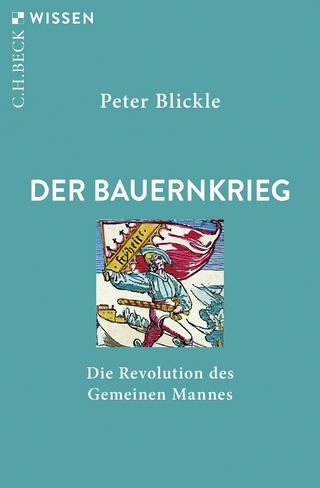
Die Revolution des Gemeinen Mannes
Buch | Softcover (2024)
C.H.Beck (Verlag)
CHF 16,80


