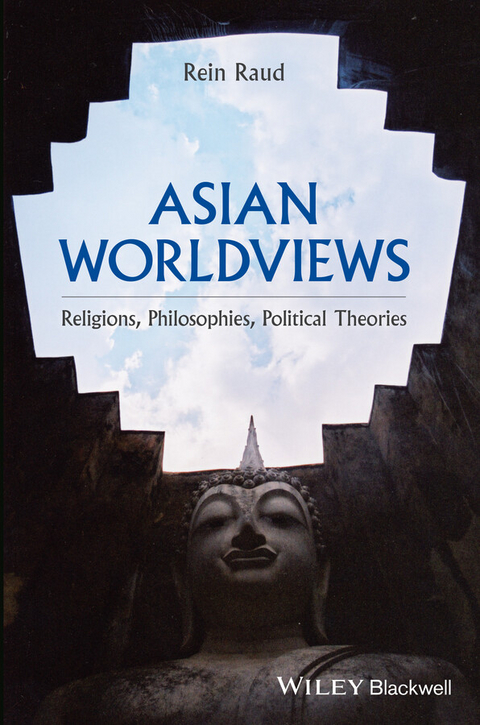
Asian Worldviews (eBook)
John Wiley & Sons (Verlag)
978-1-119-16600-9 (ISBN)
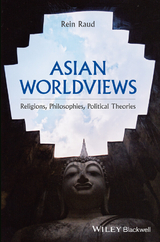
An ambitious comparative introduction to Asian thought, expertly written for undergraduate courses in Asian Studies, Asian philosophy and neighboring disciplines
Recent decades have witnessed a sharp increase of interest in the cultures and regions of South and East Asia, owing in part to the prominent role Asian economies have played in the?era of?globalization. ?Asian Worldviews: Religions, Philosophies, Political Theories? is?a unique, reader-friendly?introduction?to?the intellectual heritage of the?region.?Assuming no previous background in Asian cultural history,?Asian Worldviews?moves beyond chronological and geographic boundaries to?present?an integrated treatment of the beliefs, teachings, and ideologies that have shaped the worldviews of?approximately half of the?global population.?Rein Raud explores?forms of knowledge in?China, India, Tibet, Japan, Korea, and?Southeast?Asia, providing balanced coverage of all historical periods from antiquity to the modern day.
Asian Worldviews embraces the connections rather than the divisions between the religious and philosophical dimensions of South and East Asian thought, and emphasizes a robust engagement with each culture's political, social, and economic contexts. Clear, accessible?chapters discuss?the development of religious, philosophical, and political thought in India, China, and Japan, and provide succinct overviews of the history of ideas in Korea, Tibet, and Southeast Asia. Throughout the book, Raud uses a comparative approach to examine the mutual influence and productive dialogue, past and present, between Asian cultures as well as with the West, and considers the impact of various worldviews on the development of modern Asian societies.
Comprehensive and well-informed by recent developments in the scholarship, Asian Worldviews: Religions, Philosophies, Political Theories? is an unparalleled resource for a broad range of courses in Asian studies, philosophy, religious studies, and global politics, as well as an excellent introduction for non-specialist readers looking for a contextual foothold in the rich cultural and intellectual history of South and East Asia.
REIN RAUD is Professor of Asian and Cultural Studies at Tallinn University, Estonia. He has published widely on Asian philosophy and cultural theory, and is the author of several books including Meaning in Action: Outline of an Integral Theory of Culture, which unites textual and sociological approaches to culture based on examples from around the world.
An ambitious comparative introduction to Asian thought, expertly written for undergraduate courses in Asian Studies, Asian philosophy and neighboring disciplines Recent decades have witnessed a sharp increase of interest in the cultures and regions of South and East Asia, owing in part to the prominent role Asian economies have played in the era of globalization. Asian Worldviews: Religions, Philosophies, Political Theories is a unique, reader-friendly introduction to the intellectual heritage of the region. Assuming no previous background in Asian cultural history, Asian Worldviews moves beyond chronological and geographic boundaries to present an integrated treatment of the beliefs, teachings, and ideologies that have shaped the worldviews of approximately half of the global population. Rein Raud explores forms of knowledge in China, India, Tibet, Japan, Korea, and Southeast Asia, providing balanced coverage of all historical periods from antiquity to the modern day. Asian Worldviews embraces the connections rather than the divisions between the religious and philosophical dimensions of South and East Asian thought, and emphasizes a robust engagement with each culture's political, social, and economic contexts. Clear, accessible chapters discuss the development of religious, philosophical, and political thought in India, China, and Japan, and provide succinct overviews of the history of ideas in Korea, Tibet, and Southeast Asia. Throughout the book, Raud uses a comparative approach to examine the mutual influence and productive dialogue, past and present, between Asian cultures as well as with the West, and considers the impact of various worldviews on the development of modern Asian societies. Comprehensive and well-informed by recent developments in the scholarship, Asian Worldviews: Religions, Philosophies, Political Theories is an unparalleled resource for a broad range of courses in Asian studies, philosophy, religious studies, and global politics, as well as an excellent introduction for non-specialist readers looking for a contextual foothold in the rich cultural and intellectual history of South and East Asia.
REIN RAUD is Professor of Asian and Cultural Studies at Tallinn University, Estonia. He has published widely on Asian philosophy and cultural theory, and is the author of several books including Meaning in Action: Outline of an Integral Theory of Culture, which unites textual and sociological approaches to culture based on examples from around the world.
Preface vii
Acknowledgements xi
1 India 1
The Brahmanist Worldview 6
Reform Movements: Jains and Buddhism 21
The Development of Hinduism 45
Philosophical Systems 54
Indian Worldviews Under Muslim Rule 66
Modern Indian Thought 73
2 China 89
The Beginnings 94
Classical Chinese Thought: The Hundred Schools 102
From Han to Tang 138
From Song to Qing 164
From the Fall of the Empire to the Present 185
3 Japan 207
Prehistory and the Aristocratic Period 211
The Age of the Warriors: From Kamakura to Edo 225
Japanese Modernity: From Meiji to the Present 241
4 Korea, Tibet, and South East Asia 257
Korea 257
Tibet 268
Indic South East Asia 274
Vietnam 281
Further Reading 287
Glossary of Names and Terms 293
Chronological Table 311
Index 319
Preface
The aim of this book is to acquaint its reader with the rich thought traditions of Asia (India, China, Japan, Korea, Tibet, and South East Asia), which have mutually influenced each other throughout history and consequently share large parts of their intellectual heritage. It can serve both as an introductory textbook for the future specialist and as a source of background knowledge for those whose primary interest lies outside Asian studies, be it religious studies, Western philosophy, political science or anything else. No previous knowledge of the history or cultures of this region is presupposed, entanglement in specific debates is avoided and names and terms have been kept to the minimum. If you think that an educated person anywhere in the world should know who are St Augustine, Luther, and Mother Theresa or Aristotle, Kant, and Wittgenstein or Machiavelli, Rousseau, and Marx, or what is the meaning of ‘cardinal sin’, cogito, and ‘separation of powers’, the names and terms printed bold in this book are those you should be familiar with from a range of Asian points of view. I have done my best to keep the scope of the book equally balanced throughout and to maintain a more or less similar level of coverage in all areas. The book thus addresses all teachings, schools, and individuals that have usually been included in the range of such introductory intellectual histories. However, the reader will notice that some authors and ideas not always present in similar overviews, such as feminist theorists, have been given more space here than has been customary up to now.
The worldviews described in this book influence the choices and actions of the people who currently make up about one half of the world's population. This alone is reason enough to be interested in Asia, but there is more. Having been economically handicapped for over a century by Western domination and inefficient, if not directly harmful domestic politics, Asian countries have now emerged to form the world's most quickly developing region, one that can no longer be excluded from global decision‐making. Culturally, geographically and politically, Asia is perhaps more diverse than any other part of the world. Dominated by two ancient, multilayered, and rich civilizations, India and China, this region is the home of some of the world's oldest and worthiest literary and philosophical cultures, theatrical traditions, and aesthetic systems. So undoubtedly at least some knowledge of Asian worldviews is necessary for anyone with an interest in the world beyond one's own home ground, were it for cultural history or current political and economic affairs.
Of course, traditional opposition pairs such as ‘east–west’ always rely on simplifications. Norway differs from Portugal and Texas from Scotland perhaps more significantly than Singapore from Vancouver. Moreover, for the purposes of this book the ‘West’ includes also a large portion of what most Westerners consider to be in the East, namely the Islamic world. This may seem strange, because religious wars throughout centuries and recent political conflicts as well as European colonial presence in the ‘Orient’ have shaped the image of Muslims for most Westerners as the Other, whose cultural and social habits are incompatible with ‘Western values’. However, historically and etymologically, Islam is most certainly a part of ‘Western’ culture, sharing both in the traditions of Greek antiquity – which it actually preserved for Europe during the times when the West was militantly fundamentalist – and the Judaic legacy of monotheism. Muslims themselves have always felt a unity with other ‘people of the Book’, that is, those whose religion is based on the foundations of the Old Testament, and Islamic thought has exercised a decisive influence on Western intellectual history through the work of such thinkers as, for example, Ibn Rushd (Averroes) or Ibn Sina (Avicenna). Thus, even though Islam is prominently present also in Asia, it is treated there as a Western import that has taken on local colour, but nonetheless has its roots elsewhere – not unlike Christianity or Marxism. The reader who would like to be better informed about the teachings of Islam will find a few suggestions in the section of further reading recommendations at the back of this book.
As a result, the term ‘Asia’ does not refer in this book to the entire geographical range that includes also the Middle East, the majority of the territory of Russia and the former Soviet republics of central Asia, but only to those parts of Asia that are usually addressed in publications dedicated to ‘Asian religions’, ‘Asian philosophies’, and ‘Asian politics’, namely south, east and southeast Asian countries as well as Tibet. More attention has been dedicated to the two most ancient civilizations of Asia, India and China, as well as to Japan as the first successful modernizing country to have emerged from outside the traditional West. Smaller subchapters have been dedicated to Korea, Tibet, Indic South East Asia and Vietnam, not because their intellectual contributions would be less valuable, but largely due to the fact that these regions have, for historical reasons, had less impact on the global processes and the interest in their intellectual history has been mostly academic up to the present.
There are quite a few good introductions to the religions, philosophies and political ideologies of each of the countries and regions that this book deals with, but most of the time these different types of convictions and beliefs are kept separate. However, as soon as we leave the Western cultural environment, the division of worldviews into ‘religions’, ‘philosophies’, and ‘political theories’ starts to obscure more than it reveals. Philosophy and religion have been in a complicated relationship in the West, almost since their moment of separation, when Socrates was accused of disrespect for the gods, yet many Western philosophers, too, have been devoutly religious and have made significant efforts to bring their beliefs and their reasoning into harmony. Religions can seldom manage without a certain metaphysical grounding, and we often see them prompting rulers how to conduct their affairs properly. Political ideologies are always grounded in theories of justice and ideas about the course of history, which are related to both the religious and the philosophical convictions of their proponents. It therefore makes sense, especially when stepping on unfamiliar ground, to highlight these connections rather than the divisions, and to treat worldviews as holistic, even if they occasionally seem incoherent to us – they seldom do to the people whose lives they guide.
But we might want to go even further than that and question at the outset the very validity of the concepts ‘religion’, ‘philosophy’, and ‘ideology’ as such for a broader perspective. Most Westerners associate religion on a non‐analytical level with belief in a god, or gods, which is grounded in a certain doctrine, one normally fixed in scriptures and upheld by an institution of spiritual professionals. Religions are also exclusive and make strong claims on the identity of the individuals who profess them, often causing distrust or even open hatred between religiously defined communities. Philosophy, in turn, is a kind of rational and conceptual inquiry into the first principles of how the world is, how we are in it, and how we should reason about things, while political theories and ideologies are sets of principles on which their proponents consider the build‐up of society and its governing should be based – these principles can also be implicit and presented to the community as a sort of natural order, which nonetheless does not affect their ideological character.
All of these commonsensical assumptions are challenged to a certain degree by Asian worldviews. In fact, what is known as an Indian or Chinese religion and philosophy may not correspond to these tentative definitions at all. Quite a few so‐called religions, such as early Buddhism or Confucianism, do not speak about any supernatural agency, others, such as Shintō, do not have doctrines or scriptures. Their institutions, like the huge Buddhist monasteries of pre‐Islamic India, may appear more similar to what we call universities than to what look like monasteries from our point of view. And people can often identify with several religions at the same time in many regions of the area. Strangely enough, the term ‘religion’ is often forced on such worldviews that lack some, if not most of the characteristics many Westerners consider to be core properties of religion – such as the belief in a transcendent agency – while the label of ‘philosophy’ is being denied to sophisticated conceptual constructions because they lack some particular element that the critic considers crucial, even though there are Western thinkers, who are legitimately called philosophers and lack that same element as well.
The entanglement of different intellectual pursuits is also one of the reasons why the book is organized according to a historical principle rather than treating worldviews such as Buddhism or Confucianism one by one. Asian worldviews are more often than not lacking in the type of jealousy that characterizes Western religions, and ideas, motifs, and practices migrate relatively freely over their borders. Thus, for example, the Japanese Shintō took shape as a kind of an...
| Erscheint lt. Verlag | 5.1.2021 |
|---|---|
| Sprache | englisch |
| Themenwelt | Geisteswissenschaften ► Philosophie ► Allgemeines / Lexika |
| Geisteswissenschaften ► Philosophie ► Geschichte der Philosophie | |
| Geisteswissenschaften ► Philosophie ► Philosophie der Neuzeit | |
| Sozialwissenschaften ► Ethnologie ► Völkerkunde (Naturvölker) | |
| Sozialwissenschaften ► Politik / Verwaltung | |
| Schlagworte | Asia intellectual history • Asian/Asian-American Studies • Asian history textbook • Asian intellectual history • Asian philosophies • Asian philosophy history • asian political • Asian religions • Asian worldview introduction • Asia religions history • Asia worldview textbook • Asien-/Asioamerika-Forschung • Cultural Studies • Kulturwissenschaften • Philosophie • Philosophy • Philosophy Special Topics • Spezialthemen Philosophie • theory • Weltphilosophie • World philosophy |
| ISBN-10 | 1-119-16600-4 / 1119166004 |
| ISBN-13 | 978-1-119-16600-9 / 9781119166009 |
| Informationen gemäß Produktsicherheitsverordnung (GPSR) | |
| Haben Sie eine Frage zum Produkt? |
 EPUB (Adobe DRM)
Kopierschutz: Adobe-DRM
Adobe-DRM ist ein Kopierschutz, der das eBook vor Mißbrauch schützen soll. Dabei wird das eBook bereits beim Download auf Ihre persönliche Adobe-ID autorisiert. Lesen können Sie das eBook dann nur auf den Geräten, welche ebenfalls auf Ihre Adobe-ID registriert sind.
Details zum Adobe-DRM
Dateiformat: EPUB (Electronic Publication)
EPUB ist ein offener Standard für eBooks und eignet sich besonders zur Darstellung von Belletristik und Sachbüchern. Der Fließtext wird dynamisch an die Display- und Schriftgröße angepasst. Auch für mobile Lesegeräte ist EPUB daher gut geeignet.
Systemvoraussetzungen:
PC/Mac: Mit einem PC oder Mac können Sie dieses eBook lesen. Sie benötigen eine
eReader: Dieses eBook kann mit (fast) allen eBook-Readern gelesen werden. Mit dem amazon-Kindle ist es aber nicht kompatibel.
Smartphone/Tablet: Egal ob Apple oder Android, dieses eBook können Sie lesen. Sie benötigen eine
Geräteliste und zusätzliche Hinweise
Buying eBooks from abroad
For tax law reasons we can sell eBooks just within Germany and Switzerland. Regrettably we cannot fulfill eBook-orders from other countries.
aus dem Bereich