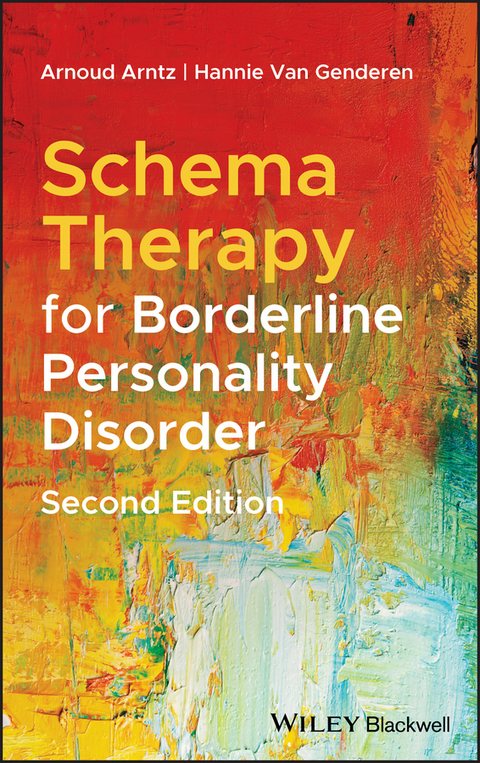
Schema Therapy for Borderline Personality Disorder (eBook)
John Wiley & Sons (Verlag)
978-1-119-10117-8 (ISBN)
Provides clear guidance on utilizing Schema Therapy to reduce BPD symptoms and bring about lasting changes in the patient's personality
People with Borderline Personality Disorder (BPD) struggle with a range of problems that negatively impact virtually every aspect of their lives, such as constantly changing moods, blurred personal identities, impulsive behaviors, interpersonal problems, and episodes of rage. BPD patients are at high risk of self-harm and substance abuse, with approximately 10% of BPD patients dying from suicide. BPD severely affects the education, employment, personal relationships, and physical and emotional wellbeing of those suffering from the disorder. Schema Therapy (ST), based on cognitive behavioral therapy and techniques derived from experiential therapies, has been shown to achieve substantial personality improvements in BPD patients.
Shema Therapy for Borderline Personality Disorder describes the pioneering BPD therapy based on insights from cognitive, behavioral, psychodynamic, humanistic, and developmental theories. Schema Therapy emphasizes the emotional processing of traumatic experiences and the use of the therapeutic relationship to bring about positive change. The text describes ST treatment for BPD in detail, covering the aims and phases of the therapy, treatment planning, cognitive and behavioral methods, specific techniques appropriate to each schema mode, behavioral pattern-breaking, termination of therapy, and more. This authoritative volume:
- Describes a treatment for patients with Borderline Personality Disorder (BPD) that yields substantial clinical improvement or recovery in most cases
- Explains the schema mode model of BPD that helps both patients and therapist understand the problems experienced by BPD patients, and that is central in ST for BPD.
- Explains Schema Therapy (ST) for BPD based on the schema mode model, discussing different treatment methods and techniques geared to specific schema modes
- Covers the latest developments in the field of ST, such as Group Schema Therapy and the application of ST for couples.
- Includes handouts to give to patients, including a biographical diary, forms for homework assignments and problem solving, and a positive self-statement log
Schema Therapy for Borderline Personality Disorder is essential reading for clinical psychologists, psychotherapists, psychopathologists, psychiatrists, mental health practitioners, and advanced undergraduate and graduate students in relevant fields.
Arnoud Arntz, PhD, is Professor of Clinical Psychology at the University of Amsterdam, the Netherlands. His research and clinical activities are directed at personality disorders and trauma-related mental health problems. He is well-known for his test of Schema Therapy as a treatment for Borderline and other Personality Disorders, and for his contributions to the development of the theory and the application of Schema Therapy.
Hannie van Genderen, MSc, is psychotherapist/clinical psychologist and supervisor and trainer in Schema Therapy. She was involved with the introduction of Schema Therapy for personality disorders in the Netherlands from the very beginning in 1996. She was involved with the foundation of the International Society of Schema Therapy and was member of the board as coordinator for Training and Certification from 2010-2012. From 2012-2016 she was chair of the Dutch Schema Therapy Association. Since 1990 she was involved as a senior consultant and clinical psychologist in the treatment and research of personality disorders in general and borderline personality disorder (BPS) in particular. In 2000 she became director of a Schema Therapy Institute, where so far about 4000 schema therapists were trained.
Provides clear guidance on utilizing Schema Therapy to reduce BPD symptoms and bring about lasting changes in the patient's personality People with Borderline Personality Disorder (BPD) struggle with a range of problems that negatively impact virtually every aspect of their lives, such as constantly changing moods, blurred personal identities, impulsive behaviors, interpersonal problems, and episodes of rage. BPD patients are at high risk of self-harm and substance abuse, with approximately 10% of BPD patients dying from suicide. BPD severely affects the education, employment, personal relationships, and physical and emotional wellbeing of those suffering from the disorder. Schema Therapy (ST), based on cognitive behavioral therapy and techniques derived from experiential therapies, has been shown to achieve substantial personality improvements in BPD patients. Shema Therapy for Borderline Personality Disorder describes the pioneering BPD therapy based on insights from cognitive, behavioral, psychodynamic, humanistic, and developmental theories. Schema Therapy emphasizes the emotional processing of traumatic experiences and the use of the therapeutic relationship to bring about positive change. The text describes ST treatment for BPD in detail, covering the aims and phases of the therapy, treatment planning, cognitive and behavioral methods, specific techniques appropriate to each schema mode, behavioral pattern-breaking, termination of therapy, and more. This authoritative volume: Describes a treatment for patients with Borderline Personality Disorder (BPD) that yields substantial clinical improvement or recovery in most cases Explains the schema mode model of BPD that helps both patients and therapist understand the problems experienced by BPD patients, and that is central in ST for BPD. Explains Schema Therapy (ST) for BPD based on the schema mode model, discussing different treatment methods and techniques geared to specific schema modes Covers the latest developments in the field of ST, such as Group Schema Therapy and the application of ST for couples. Includes handouts to give to patients, including a biographical diary, forms for homework assignments and problem solving, and a positive self-statement log Schema Therapy for Borderline Personality Disorder is essential reading for clinical psychologists, psychotherapists, psychopathologists, psychiatrists, mental health practitioners, and advanced undergraduate and graduate students in relevant fields.
Arnoud Arntz, PhD, is Professor of Clinical Psychology at the University of Amsterdam, the Netherlands. His research and clinical activities are directed at personality disorders and trauma-related mental health problems. He is well-known for his test of Schema Therapy as a treatment for Borderline and other Personality Disorders, and for his contributions to the development of the theory and the application of Schema Therapy. Hannie van Genderen, MSc, is psychotherapist/clinical psychologist and supervisor and trainer in Schema Therapy. She was involved with the introduction of Schema Therapy for personality disorders in the Netherlands from the very beginning in 1996. She was involved with the foundation of the International Society of Schema Therapy and was member of the board as coordinator for Training and Certification from 2010-2012. From 2012-2016 she was chair of the Dutch Schema Therapy Association. Since 1990 she was involved as a senior consultant and clinical psychologist in the treatment and research of personality disorders in general and borderline personality disorder (BPS) in particular. In 2000 she became director of a Schema Therapy Institute, where so far about 4000 schema therapists were trained.
About the Authors vii
Preface ix
Acknowledgments xi
Introduction 1
1 Borderline Personality Disorder 3
2 Schema Therapy for Borderline Personality Disorder 7
3 Treatment 31
4 The Therapeutic Relationship 49
5 Experiential Techniques 69
6 Cognitive Techniques 133
7 Behavioral Techniques 149
8 Specific Methods and Techniques 155
9 Methods per Mode 167
10 Schema Therapy in Other Settings and Modalities 201
11 Final Phase of Therapy 225
12 Conclusion 229
Appendix A: Brochure for Patients: Schema Therapy for People with Borderline Personality Disorder 233
Appendix B: Cognitive Diary for Modes 239
Appendix C: Positive Logbook 241
Appendix D: Historical Testing 243
Appendix E: Experiments 245
Appendix F: Homework Form 247
Appendix G: Problem Solving 249
Appendix H: Changing Behavioral Patterns 251
Appendix I: Eighteen Schemas 253
Appendix J: Coping Strategies 259
Appendix K: Form for the Historical Role Play 261
References 263
Index 271
2
Schema Therapy for Borderline Personality Disorder
The Development of Schema Therapy for Borderline Personality Disorder
Before the development of specialized psychotherapies for BPD, such as schema therapy (ST), BPD was treated primarily from a psychoanalytical perspective. This started to change in the late 1980s when cognitive behaviorists began to study the treatment of personality disorders with cognitive behavioral therapy, and psychodynamic therapists started to develop variants of psychodynamic therapy that were specifically adapted to BPD.
The most important early developments in specialized psychotherapies for BPD that emerged in this era were the formulation and empirical validation of Dialectical Behavior Therapy (DBT; Linehan, Armstrong, Suarez, Allmon, & Heard, 1991; Linehan, 1993), the development of Transference‐Focused Psychotherapy (TFP) (Kernberg, Selzer, Koenigsberg, Carr, & Applebaum, 1989), the development of Mentalization Based Treatment (MBT, Bateman & Fonagy, 2004), and the development of cognitive therapy for personality disorders. The use of cognitive therapy for treating personality disorders was first introduced by Aaron Beck, Arthur Freeman, and colleagues in their work Cognitive Therapy of Personality Disorders (1990). In that same year, Jeffrey Young introduced a new form of cognitive therapy, which he referred to as “Schema‐Focused Therapy,” later “Schema Therapy” (Young, 1990, 1994). He later expanded upon this therapeutic model with the introduction of schema modes (Young, Klosko, & Weishaar, 2003). His theory is based upon a combination of insights derived from cognitive, behavioral, psychodynamic, humanistic, and developmental (including attachment) theories. The actual treatment is mainly based on cognitive behavioral therapy and techniques derived from experiential therapies. There is a strong emphasis on the therapeutic relationship which is used as a means to bring about change, as well as on the emotional processing of traumatic experiences.
To date, ST appears to be a good method to achieve substantial personality improvements in BPD patients.
Research Results
Research on traditional psychoanalytical forms of treatment showed high dropout percentages (46–67%) and a relatively high percentage of suicide. Across four longitudinal studies, approximately 10% of the patients died during treatment or within 15 years following treatment due to suicide (Paris, 1993). This percentage is comparable to that of nonpsychotherapeutically treated BPD patients (8–9%: as reported by Adams, Bernat, & Luscher, 2001).
The first controlled study of cognitive behavioral treatment for BPD was realized by Linehan et al. (1991). The DBT they introduced had lower dropout rates, fewer hospitalizations, and a greater reduction in self‐injury and suicidal behavior in comparison with usual treatment. On other measurements of psychopathology, there were no significant differences when compared with usual treatment. Uncontrolled studies as to the effectiveness of Beck's cognitive therapy also showed a reduction in suicide risk and depressive symptoms, as well as a decrease in the number of BPD symptoms (Arntz, 1999; Beck, 2002; Brown, Newman, Charlesworth, Crits‐Christoph, & Beck, 2004). Moreover, the dropout rates during the first year were lower than normal (about 9%).
The first controlled study testing ST as developed by Young was conducted in the Netherlands, where ST was compared to TFP, a psychodynamic method from Kernberg and co‐workers (Giesen‐Bloo et al., 2006). This study started in 2000 and involved 3 years of treatment. ST showed more positive results than TFP in reduction of BPD symptoms, as well as other aspects of psychopathology and quality of life. In the follow‐up study, 4 years after the start of the treatment, 52% of the patients who started ST recovered from BPD, compared to 29% in TFP, while more than two‐thirds of ST participants showed clinically significant improvement in reducing BPD symptoms, compared to 52% in TFP. These percentages are impressive given that dropouts (even those due to somatic illness) were included in the study.
One of the most compelling results from this first randomized clinical trial (RCT) was that all BPD problems were reduced and not only conspicuous symptoms such as self‐harm. For instance, the patient's quality of life as a whole and her feeling of self‐esteem improved significantly. Thus, as a result of ST, all psychopathological characteristics of BPD, whether symptomatic or personality related, significantly improved. Similar results were found in a Norwegian series of case studies. When patients were measured post‐treatment, 50% no longer met the criteria for BPD and 80% appeared to have notably profited from the treatment (Nordahl & Nysæter, 2005).
Despite the high treatment costs, this first RCT on ST also demonstrated that ST is cost‐effective, as evidenced by a cost‐effectiveness analysis showing that ST is not only superior to TFP in effects, but also less costly. Moreover, compared with baseline, ST leads to a reduction of societal costs for BPD patients, so that the net effect was a reduction of costs, despite the costs involved in delivery of ST (van Asselt et al., 2008).
The question whether ST has similar effects when implemented in clinical practice was addressed in a study by Nadort et al. (2009). Results indicated that effectiveness and treatment retention were similar to those of the Giesen‐Bloo et al. (2006) trial. The study also addressed the issue whether therapists should provide a phone number that patients could use when in crisis outside office hours, as was originally prescribed by the protocol. As the results did not yield any evidence for a positive effect of this, providing such a phone contactability was deleted from the protocol. As will be seen, giving patients an email address that they can use to share experiences with their therapist outside office hours, without any obligation of therapists to respond immediately, has replaced the phone contactability.
There have been several studies completed now on ST for BPD (see Jacob & Arntz, 2013 and Sempertegui, Karreman, Arntz, & Bekker, 2013, for reviews), including studies on group‐ST (Farrell, Shaw, & Webber, 2009), the combination of individual and group‐ST (Dickhaut & Arntz, 2014; Fassbinder et al., 2016), and inpatient ST (Reiss, Lieb, Arntz, Shaw, & Farrell, 2014). Taken together, these studies indicate low dropout from treatment and high effectiveness of ST, that is not limited to BPD‐symptom reduction, but includes better social and societal functioning, better quality of life, and increased happiness. When dropout from ST for BPD is compared to other treatments, a multilevel survival meta‐analysis indicated that the dropout percentages reported so far in ST studies are remarkably smaller than those from other treatments (Arntz et al., 2020). The effectiveness of ST on measures of BPD‐severity and specific BPD‐traits is also high and the effect sizes tend to be significantly higher than in other treatments (Rameckers et al., 2020). However, so far only one larger RCT has been published that compared ST to another treatment (Giesen‐Bloo et al., 2006). It is necessary that more RCTs compare ST to other treatments, including treatment as usual and other specialized psychotherapies. One large international study comparing the combination of individual and group‐ST, group‐ST, and (optimal) treatment as usual for BPD was just completed when this book was finalized. The preliminary results indicated that ST was superior to treatment as usual in primary and secondary outcomes, and that especially the combined individual–group format was effective and associated with the highest treatment retention (Wetzelaer et al., 2014; Arntz et al., 2019). Another study that is currently underway is a German study comparing the combination of individual and group‐ST to DBT as treatments for BPD (Fassbinder et al., 2018). Both RCTs include not only focus on effectiveness, but also study cost‐effectiveness and experiences of patients.
What makes ST so acceptable for patients and what might explain its effectiveness? Qualitative studies into the views of patients and therapists have yielded some suggestions (de Klerk, Abma, Bamelis, & Arntz, 2017; Tan et al., 2018). First, the schema mode model is often mentioned as very helpful, offering both patients and therapists an easy to understand model of the patient's problems. This offers a meta‐cognitive understanding to patients and helps therapists to choose the right technique. Second, the therapeutic relationship, more specifically limited reparenting, is mentioned as particularly helpful. Third, experiential techniques are mentioned as particularly powerful. Fourth, on a more general level, the ST approach that focuses on deeper levels than symptoms and skills, linking developmental experiences and life‐long patterns to problems in the present, and addressing the historical roots of the patient's problems, is appreciated. Lastly, patients don't mention specific issues that are...
| Erscheint lt. Verlag | 24.11.2020 |
|---|---|
| Sprache | englisch |
| Themenwelt | Geisteswissenschaften ► Psychologie ► Klinische Psychologie |
| Schlagworte | Clinical psychology • Klinische Psychologie • Psychologie • Psychology • Psychotherapie • Psychotherapie u. Beratung • Psychotherapy & Counseling |
| ISBN-10 | 1-119-10117-4 / 1119101174 |
| ISBN-13 | 978-1-119-10117-8 / 9781119101178 |
| Informationen gemäß Produktsicherheitsverordnung (GPSR) | |
| Haben Sie eine Frage zum Produkt? |
 EPUB (Adobe DRM)
Kopierschutz: Adobe-DRM
Adobe-DRM ist ein Kopierschutz, der das eBook vor Mißbrauch schützen soll. Dabei wird das eBook bereits beim Download auf Ihre persönliche Adobe-ID autorisiert. Lesen können Sie das eBook dann nur auf den Geräten, welche ebenfalls auf Ihre Adobe-ID registriert sind.
Details zum Adobe-DRM
Dateiformat: EPUB (Electronic Publication)
EPUB ist ein offener Standard für eBooks und eignet sich besonders zur Darstellung von Belletristik und Sachbüchern. Der Fließtext wird dynamisch an die Display- und Schriftgröße angepasst. Auch für mobile Lesegeräte ist EPUB daher gut geeignet.
Systemvoraussetzungen:
PC/Mac: Mit einem PC oder Mac können Sie dieses eBook lesen. Sie benötigen eine
eReader: Dieses eBook kann mit (fast) allen eBook-Readern gelesen werden. Mit dem amazon-Kindle ist es aber nicht kompatibel.
Smartphone/Tablet: Egal ob Apple oder Android, dieses eBook können Sie lesen. Sie benötigen eine
Geräteliste und zusätzliche Hinweise
Buying eBooks from abroad
For tax law reasons we can sell eBooks just within Germany and Switzerland. Regrettably we cannot fulfill eBook-orders from other countries.
aus dem Bereich