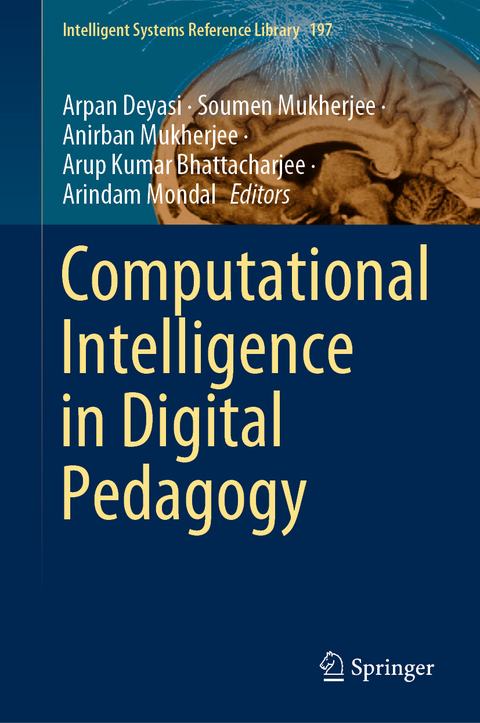
Computational Intelligence in Digital Pedagogy (eBook)
293 Seiten
Springer Singapore (Verlag)
978-981-15-8744-3 (ISBN)
This book is a useful guide for the teaching fraternity, administrators and education technology professionals to make good use of AI across outcome-based technical education (OBTE) ecosystem and infuse innovations and affordable digital technologies to traditional pedagogic processes to make teaching-learning more independent of human factor (teacher/student quality), time and place and at the same time more impactful and enjoyable for the learners. Providing access to the digital media and learning tools (even to the extent of mobile apps) to the students would allow them to keep pace with innovations in learning technologies, learn according to their own pace and improve their understanding level and have instantaneous feedback and evaluation. The book explores these new challenges and scope of using computational intelligence in educational technology. The book also addresses how based on the data collected from the outcome of conventional educational system, intelligent diagnosticand feedback system is developed which will change the teaching strategies and corresponding teaching-learning process. The book covers a wider framework of digital pedagogy and its intelligent applications on various sectors of education system.
| Erscheint lt. Verlag | 19.11.2020 |
|---|---|
| Reihe/Serie | Intelligent Systems Reference Library | Intelligent Systems Reference Library |
| Zusatzinfo | XXIV, 293 p. 95 illus., 57 illus. in color. |
| Sprache | englisch |
| Themenwelt | Schulbuch / Wörterbuch ► Unterrichtsvorbereitung ► Unterrichts-Handreichungen |
| Geisteswissenschaften ► Psychologie ► Pädagogische Psychologie | |
| Informatik ► Theorie / Studium ► Künstliche Intelligenz / Robotik | |
| Sozialwissenschaften ► Pädagogik | |
| Technik ► Bauwesen | |
| Schlagworte | Adaptive Learning • Computational Intelligence in Education Technology • Computer Based Technical Education • Digital pedagogy • hybrid learning • Intelligent Assessment Techniques • Intelligent Knowledge Representation • intelligent tutoring system • Learning and Instruction • Online Learning and MOOCs • Ubiquitous Learning Environment |
| ISBN-10 | 981-15-8744-2 / 9811587442 |
| ISBN-13 | 978-981-15-8744-3 / 9789811587443 |
| Informationen gemäß Produktsicherheitsverordnung (GPSR) | |
| Haben Sie eine Frage zum Produkt? |
 PDF (Wasserzeichen)
DRM: Digitales Wasserzeichen
Dieses eBook enthält ein digitales Wasserzeichen und ist damit für Sie personalisiert. Bei einer missbräuchlichen Weitergabe des eBooks an Dritte ist eine Rückverfolgung an die Quelle möglich.
Dateiformat: PDF (Portable Document Format)
Mit einem festen Seitenlayout eignet sich die PDF besonders für Fachbücher mit Spalten, Tabellen und Abbildungen. Eine PDF kann auf fast allen Geräten angezeigt werden, ist aber für kleine Displays (Smartphone, eReader) nur eingeschränkt geeignet.
Systemvoraussetzungen:
PC/Mac: Mit einem PC oder Mac können Sie dieses eBook lesen. Sie benötigen dafür einen PDF-Viewer - z.B. den Adobe Reader oder Adobe Digital Editions.
eReader: Dieses eBook kann mit (fast) allen eBook-Readern gelesen werden. Mit dem amazon-Kindle ist es aber nicht kompatibel.
Smartphone/Tablet: Egal ob Apple oder Android, dieses eBook können Sie lesen. Sie benötigen dafür einen PDF-Viewer - z.B. die kostenlose Adobe Digital Editions-App.
Buying eBooks from abroad
For tax law reasons we can sell eBooks just within Germany and Switzerland. Regrettably we cannot fulfill eBook-orders from other countries.
aus dem Bereich