


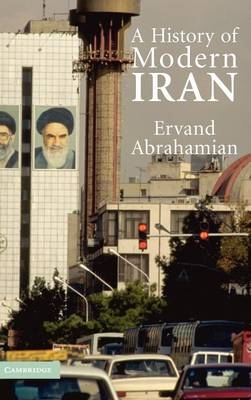
A History of Modern Iran
Seiten
2008
Cambridge University Press (Verlag)
978-0-521-82139-1 (ISBN)
Cambridge University Press (Verlag)
978-0-521-82139-1 (ISBN)
- Titel erscheint in neuer Auflage
- Artikel merken
Zu diesem Artikel existiert eine Nachauflage
In a radical reappraisal of Iran's modern history, Ervand Abrahamian traces its traumatic journey across the twentieth century. While he negotiates the twists and turns of the country's politics, at the heart of hisbook are the people of Iran who survived the impact of war and revolution.
In a reappraisal of Iran's modern history, Ervand Abrahamian traces its traumatic journey across the twentieth century, through the discovery of oil, imperial interventions, the rule of the Pahlavis and, in 1979, revolution and the birth of the Islamic Republic. In the intervening years, the country has experienced a bitter war with Iraq, the transformation of society under the clergy and, more recently, the expansion of the state and the struggle for power between the old elites, the intelligentsia and the commercial middle class. The author is a compassionate expositor. While he adroitly negotiates the twists and turns of the country's regional and international politics, at the heart of his book are the people of Iran. It is to them and their resilience that this book is dedicated, as Iran emerges at the beginning of the twenty-first century as one of the most powerful states in the Middle East.
In a reappraisal of Iran's modern history, Ervand Abrahamian traces its traumatic journey across the twentieth century, through the discovery of oil, imperial interventions, the rule of the Pahlavis and, in 1979, revolution and the birth of the Islamic Republic. In the intervening years, the country has experienced a bitter war with Iraq, the transformation of society under the clergy and, more recently, the expansion of the state and the struggle for power between the old elites, the intelligentsia and the commercial middle class. The author is a compassionate expositor. While he adroitly negotiates the twists and turns of the country's regional and international politics, at the heart of his book are the people of Iran. It is to them and their resilience that this book is dedicated, as Iran emerges at the beginning of the twenty-first century as one of the most powerful states in the Middle East.
Ervand Abrahamian is Distinguished Professor of History at Baruch College and Graduate Center, City University of New York. His previous publications include The Iranian Mojahedin (1989), Khomeinism (1993) and Tortured Confessions (1999).
Introduction; 1. 'Royal despots': state and society under the Qajars; 2. Reform, revolution, and the Great War; 3. The iron fist of Reza Shah; 4. The Nationalist interregnum (1941–53); 5. Muhammad Reza Shah's white revolution; 6. The Islamic Republic.
| Erscheint lt. Verlag | 10.7.2008 |
|---|---|
| Zusatzinfo | 13 Tables, unspecified; 2 Maps; 29 Halftones, unspecified |
| Verlagsort | Cambridge |
| Sprache | englisch |
| Maße | 155 x 234 mm |
| Gewicht | 540 g |
| Themenwelt | Geschichte ► Allgemeine Geschichte ► Neuzeit (bis 1918) |
| Geisteswissenschaften ► Geschichte ► Regional- / Ländergeschichte | |
| ISBN-10 | 0-521-82139-8 / 0521821398 |
| ISBN-13 | 978-0-521-82139-1 / 9780521821391 |
| Zustand | Neuware |
| Informationen gemäß Produktsicherheitsverordnung (GPSR) | |
| Haben Sie eine Frage zum Produkt? |
Mehr entdecken
aus dem Bereich


aus dem Bereich
Geschichte einer wilden Handlung
Buch | Hardcover (2024)
C.H.Beck (Verlag)
CHF 47,60


