


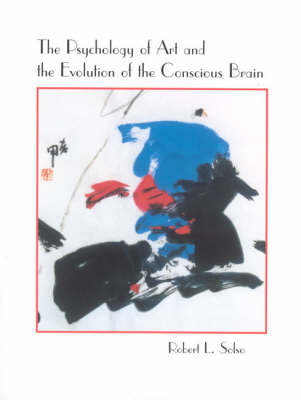
The Psychology of Art and the Evolution of the Conscious Brain
Seiten
2003
Bradford Books (Verlag)
978-0-262-19484-6 (ISBN)
Bradford Books (Verlag)
978-0-262-19484-6 (ISBN)
- Titel ist leider vergriffen;
keine Neuauflage - Artikel merken
How human consciousness evolved to perceive and create art.
How did the human brain evolve so that consciousness of art could develop? In The Psychology of Art and the Evolution of the Conscious Brain, Robert Solso describes how a consciousness that evolved for other purposes perceives and creates art. Drawing on his earlier book Cognition and the Visual Arts and ten years of new findings in cognitive research (as well as new ideas in anthropology and art history), Solso shows that consciousness developed gradually, with distinct components that evolved over time. One of these components is an adaptive consciousness that includes the ability to imagine objects that are not present-an ability that allows us to create (and perceive) visual art. Solso describes the neurological, perceptual, and cognitive sequence that occurs when we view art, and the often inexpressible effect that a work of art has on us. He shows that there are two aspects to viewing art: nativistic perception-the synchronicity of eye and brain that transforms electromagnetic energy into neuro-chemical codes-which is "hard-wired" into the sensory-cognitive system; and directed perception, which incorporates personal history and knowledge-the entire set of our expectations and past experiences. Both forms of perception are part of the appreciation of art, and both are products of the evolution of the conscious brain over hundreds of thousands of years.
Solso also investigates the related issues of neurological and artistic perception of the human face, the effects of visual illusions, and the use of perspective. The many works of art used as examples are drawn from a wide range of artistic traditions, from ancient Egypt to Africa and India and the European Renaissance.
How did the human brain evolve so that consciousness of art could develop? In The Psychology of Art and the Evolution of the Conscious Brain, Robert Solso describes how a consciousness that evolved for other purposes perceives and creates art. Drawing on his earlier book Cognition and the Visual Arts and ten years of new findings in cognitive research (as well as new ideas in anthropology and art history), Solso shows that consciousness developed gradually, with distinct components that evolved over time. One of these components is an adaptive consciousness that includes the ability to imagine objects that are not present-an ability that allows us to create (and perceive) visual art. Solso describes the neurological, perceptual, and cognitive sequence that occurs when we view art, and the often inexpressible effect that a work of art has on us. He shows that there are two aspects to viewing art: nativistic perception-the synchronicity of eye and brain that transforms electromagnetic energy into neuro-chemical codes-which is "hard-wired" into the sensory-cognitive system; and directed perception, which incorporates personal history and knowledge-the entire set of our expectations and past experiences. Both forms of perception are part of the appreciation of art, and both are products of the evolution of the conscious brain over hundreds of thousands of years.
Solso also investigates the related issues of neurological and artistic perception of the human face, the effects of visual illusions, and the use of perspective. The many works of art used as examples are drawn from a wide range of artistic traditions, from ancient Egypt to Africa and India and the European Renaissance.
Robert L. Solso is Professor and Head of the Cognitive Laboratory at the University of Nevada, Reno.
| Reihe/Serie | A Bradford Book |
|---|---|
| Zusatzinfo | 138 illus., 24 color; 162 Illustrations |
| Verlagsort | Massachusetts |
| Sprache | englisch |
| Maße | 178 x 229 mm |
| Gewicht | 658 g |
| Themenwelt | Kunst / Musik / Theater ► Allgemeines / Lexika |
| Geisteswissenschaften ► Psychologie ► Allgemeine Psychologie | |
| ISBN-10 | 0-262-19484-8 / 0262194848 |
| ISBN-13 | 978-0-262-19484-6 / 9780262194846 |
| Zustand | Neuware |
| Informationen gemäß Produktsicherheitsverordnung (GPSR) | |
| Haben Sie eine Frage zum Produkt? |
Mehr entdecken
aus dem Bereich


aus dem Bereich
Paket bestehend aus »Das Patienten-Manual« und »Das Trainer-Manual«
Buch | Softcover (2025)
Schattauer (Verlag)
CHF 125,95


