


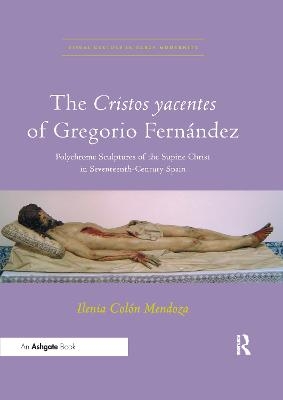
The Cristos yacentes of Gregorio Fernández
Polychrome Sculptures of the Supine Christ in Seventeenth-Century Spain
Seiten
2020
Routledge (Verlag)
978-0-367-66884-6 (ISBN)
Routledge (Verlag)
978-0-367-66884-6 (ISBN)
Analyzing seventeenth-century images of the dead Christ produced by Gregorio Fernández, author Ilenia Colón Mendoza reveals hitherto unnoticed connections between the sculptures and contemporary liturgical sources. She investigates how and why Fernández and his patrons manipulated these images in connection with the religious literature of the t
Analyzing seventeenth-century images of the dead Christ produced by Gregorio Fernández, author Ilenia Colón Mendoza investigates how and why the artist and his patrons manipulated these images in connection with the religious literature of the time to produce striking images that moved the faithful to devotion. In so doing, she contributes new findings to the topic of Spanish sacred sculpture. The author re-examines these sculptures not only in the context of a larger sculptural group but also as independent sculptures that were intended as powerful aids to contemplation and devotion as was prescribed by the writings of San Juan de la Cruz and Luis de Granada. Combining study of the sculptural works with that of liturgical sources, she reveals the connection between the written word and the sculpted work of art. Through this interdisciplinary approach, the author links Fernández's sculptural program with the strategic objectives of major patrons of the period, such as the Duke of Lerma and King Philip III of Spain, both fervent defenders of the Catholic faith.
Analyzing seventeenth-century images of the dead Christ produced by Gregorio Fernández, author Ilenia Colón Mendoza investigates how and why the artist and his patrons manipulated these images in connection with the religious literature of the time to produce striking images that moved the faithful to devotion. In so doing, she contributes new findings to the topic of Spanish sacred sculpture. The author re-examines these sculptures not only in the context of a larger sculptural group but also as independent sculptures that were intended as powerful aids to contemplation and devotion as was prescribed by the writings of San Juan de la Cruz and Luis de Granada. Combining study of the sculptural works with that of liturgical sources, she reveals the connection between the written word and the sculpted work of art. Through this interdisciplinary approach, the author links Fernández's sculptural program with the strategic objectives of major patrons of the period, such as the Duke of Lerma and King Philip III of Spain, both fervent defenders of the Catholic faith.
Ilenia Colón Mendoza is Assistant Professor of Art History at the School of Visual Arts and Design of the University of Central Florida, USA.
Contents: Introduction; The iconography of the Cristo yacente as Eucharistic symbol; Juni, Becerra, and Rincón: sculptural precedents for the Cristo yacente; Gregorio Fernández: patronage, style, technique, and the production of Cristos yacentes; Teatro Sacro: religious thought, ceremony, and procession in Counter-Reformation Spain; Appendices; Bibliography; Index.
| Erscheinungsdatum | 01.10.2020 |
|---|---|
| Reihe/Serie | Visual Culture in Early Modernity |
| Verlagsort | London |
| Sprache | englisch |
| Maße | 174 x 246 mm |
| Gewicht | 410 g |
| Themenwelt | Kunst / Musik / Theater ► Kunstgeschichte / Kunststile |
| Kunst / Musik / Theater ► Malerei / Plastik | |
| Geschichte ► Allgemeine Geschichte ► Neuzeit (bis 1918) | |
| ISBN-10 | 0-367-66884-X / 036766884X |
| ISBN-13 | 978-0-367-66884-6 / 9780367668846 |
| Zustand | Neuware |
| Informationen gemäß Produktsicherheitsverordnung (GPSR) | |
| Haben Sie eine Frage zum Produkt? |
Mehr entdecken
aus dem Bereich
aus dem Bereich
Geschichte einer wilden Handlung
Buch | Hardcover (2024)
C.H.Beck (Verlag)
CHF 47,60


