


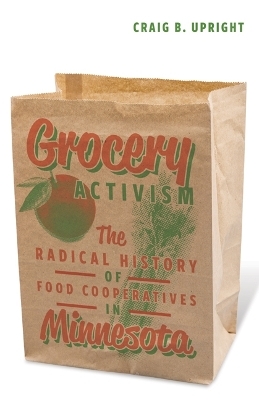
Grocery Activism
The Radical History of Food Cooperatives in Minnesota
Seiten
2020
University of Minnesota Press (Verlag)
978-1-5179-0073-1 (ISBN)
University of Minnesota Press (Verlag)
978-1-5179-0073-1 (ISBN)
"Grocery Activism looks back to the 1970s, when the mission of cooperative grocery stores shifted from political activism to the promotion of natural and organic foods"--
A key period in the history of food cooperatives that continues to influence how we purchase organic food today
Our notions of food co-ops generally don’t include images of baseball bat–wielding activists in the aisles. But in May 1975, this was the scene as a Marxist group known as the Co-op Organization took over the People’s Warehouse, a distribution center for more than a dozen small cooperative grocery stores in the Minneapolis area. The activist group’s goal: to curtail the sale of organic food. The People’s Warehouse quickly became one of the principal fronts in the political and social battle that Craig Upright explores in Grocery Activism. The story of the fraught relationship of new-wave cooperative grocery stores to the organic food industry, this book is an instructive case study in the history of activists intervening in capitalist markets to promote social change.
Focusing on Minnesota, a state with both a long history of cooperative enterprise and the largest number of surviving independent cooperative stores, Grocery Activism looks back to the 1970s, when the mission of these organizations shifted from political activism to the promotion of natural and organic foods. Why, Upright asks, did two movements-promoting cooperative enterprise and sustainable agriculture-come together at this juncture? He analyzes the nexus of social movements and economic sociology, examining how new-wave cooperatives have pursued social change by imbuing products they sell with social values. Rather than trying to explain the success or failure of any individual cooperative, his work shows how members of this fraternity of organizations supported one another in their mutual quest to maintain fiscal solvency, promote better food-purchasing habits, support sustainable agricultural practices, and extol the virtues of cooperative organizing. A foundational chapter in the history of organic food, Grocery Activism clarifies the critical importance of this period in transforming the politics and economics of the grocery store in America.
A key period in the history of food cooperatives that continues to influence how we purchase organic food today
Our notions of food co-ops generally don’t include images of baseball bat–wielding activists in the aisles. But in May 1975, this was the scene as a Marxist group known as the Co-op Organization took over the People’s Warehouse, a distribution center for more than a dozen small cooperative grocery stores in the Minneapolis area. The activist group’s goal: to curtail the sale of organic food. The People’s Warehouse quickly became one of the principal fronts in the political and social battle that Craig Upright explores in Grocery Activism. The story of the fraught relationship of new-wave cooperative grocery stores to the organic food industry, this book is an instructive case study in the history of activists intervening in capitalist markets to promote social change.
Focusing on Minnesota, a state with both a long history of cooperative enterprise and the largest number of surviving independent cooperative stores, Grocery Activism looks back to the 1970s, when the mission of these organizations shifted from political activism to the promotion of natural and organic foods. Why, Upright asks, did two movements-promoting cooperative enterprise and sustainable agriculture-come together at this juncture? He analyzes the nexus of social movements and economic sociology, examining how new-wave cooperatives have pursued social change by imbuing products they sell with social values. Rather than trying to explain the success or failure of any individual cooperative, his work shows how members of this fraternity of organizations supported one another in their mutual quest to maintain fiscal solvency, promote better food-purchasing habits, support sustainable agricultural practices, and extol the virtues of cooperative organizing. A foundational chapter in the history of organic food, Grocery Activism clarifies the critical importance of this period in transforming the politics and economics of the grocery store in America.
Craig Upright is associate professor of sociology at Winona State University. Before earning his PhD from Princeton University, he spent more than a decade working in the restaurant industry, including four years as the owner of a small coffee shop in St. Paul.
Contents
Introduction: From Niche Markets to Mainstream Meals
1. The Cause of Organic Food
2. Twentieth-Century Cooperatives
3. Resistance and Persistence
4. Dissent among the Dissenters: The 1975–76 Co-op Wars
5. Developing Organic Market Infrastructures
Conclusion: Contemporary Legacies
Acknowledgments
Appendix
Notes
Bibliography
Index
| Erscheinungsdatum | 27.03.2020 |
|---|---|
| Zusatzinfo | 37 |
| Verlagsort | Minnesota |
| Sprache | englisch |
| Maße | 140 x 216 mm |
| Themenwelt | Geisteswissenschaften ► Geschichte ► Regional- / Ländergeschichte |
| Geschichte ► Teilgebiete der Geschichte ► Kulturgeschichte | |
| Sozialwissenschaften | |
| ISBN-10 | 1-5179-0073-5 / 1517900735 |
| ISBN-13 | 978-1-5179-0073-1 / 9781517900731 |
| Zustand | Neuware |
| Informationen gemäß Produktsicherheitsverordnung (GPSR) | |
| Haben Sie eine Frage zum Produkt? |
Mehr entdecken
aus dem Bereich



aus dem Bereich
Die Revolution des Gemeinen Mannes
Buch | Softcover (2024)
C.H.Beck (Verlag)
CHF 16,80
Eine Geschichte des Geschmacks
Buch | Hardcover (2025)
C.H.Beck (Verlag)
CHF 49,95
vom Mittelalter bis zur Gegenwart
Buch | Softcover (2024)
C.H.Beck (Verlag)
CHF 16,80


