


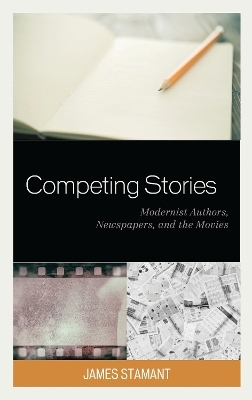
Competing Stories
Modernist Authors, Newspapers, and the Movies
Seiten
2019
Lexington Books (Verlag)
978-1-4985-9344-1 (ISBN)
Lexington Books (Verlag)
978-1-4985-9344-1 (ISBN)
Competing Stories: Modernist Authors, Newspapers, and the Movies examines the relationship between modernist authors, newspapers, and movies, and explores the disconnect between the positive benefits and potential authors found in media and the negative portrayals of those same media in these authors' fiction.
Major changes in media in the late 19th and early 20th centuries challenged traditional ideas about artistic representation and opened new avenues for authors working in the modernist period. Modernist authors’ reactions to this changing media landscape were often fraught with complications and shed light on the difficulty of negotiating, understanding, and depicting media. The author of Competing Stories: Modernist Authors, Newspapers, and the Movies argues that negative depictions of newspapers and movies, in modernist fiction, largely stem from worries about the competition for modern audiences and the desire for control over storytelling and reflections of the modern world. This book looks at a moment of major change in media, the dominance of mass media that began with the primarily visual media of newspapers and movies, and the ways that authors like Ernest Hemingway, Zora Neale Hurston, James Joyce, Djuna Barnes, and others responded. The author contends that an examination of this moment may facilitate a better understanding of the relationship between media and authorship in our constantly shifting media landscape.
Major changes in media in the late 19th and early 20th centuries challenged traditional ideas about artistic representation and opened new avenues for authors working in the modernist period. Modernist authors’ reactions to this changing media landscape were often fraught with complications and shed light on the difficulty of negotiating, understanding, and depicting media. The author of Competing Stories: Modernist Authors, Newspapers, and the Movies argues that negative depictions of newspapers and movies, in modernist fiction, largely stem from worries about the competition for modern audiences and the desire for control over storytelling and reflections of the modern world. This book looks at a moment of major change in media, the dominance of mass media that began with the primarily visual media of newspapers and movies, and the ways that authors like Ernest Hemingway, Zora Neale Hurston, James Joyce, Djuna Barnes, and others responded. The author contends that an examination of this moment may facilitate a better understanding of the relationship between media and authorship in our constantly shifting media landscape.
James Stamant is visiting assistant professor of English at Agnes Scott College.
I. Introduction: Authorial Anxiety in a Mass Media World
II. Sherwood Anderson and the Truth that Lies Beneath
III. James Joyce and What is Hidden in the Dublin Newspaper
IV. F. Scott Fitzgerald and Collaborative Movie Writing
V. Ernest Hemingway and Unfulfilled Possibilities in the Movies
VI. Djuna Barnes, Sui Sin Far, Zora Neale Hurston, and Virginia Woolf: Concerns and Opportunities
VII. Conclusion: The Future of Storytelling
| Erscheinungsdatum | 10.05.2021 |
|---|---|
| Sprache | englisch |
| Maße | 159 x 230 mm |
| Gewicht | 494 g |
| Themenwelt | Geisteswissenschaften ► Sprach- / Literaturwissenschaft ► Anglistik / Amerikanistik |
| Geisteswissenschaften ► Sprach- / Literaturwissenschaft ► Literaturwissenschaft | |
| ISBN-10 | 1-4985-9344-5 / 1498593445 |
| ISBN-13 | 978-1-4985-9344-1 / 9781498593441 |
| Zustand | Neuware |
| Informationen gemäß Produktsicherheitsverordnung (GPSR) | |
| Haben Sie eine Frage zum Produkt? |
Mehr entdecken
aus dem Bereich


aus dem Bereich
Poetik eines sozialen Urteils
Buch | Hardcover (2023)
De Gruyter (Verlag)
CHF 83,90


