


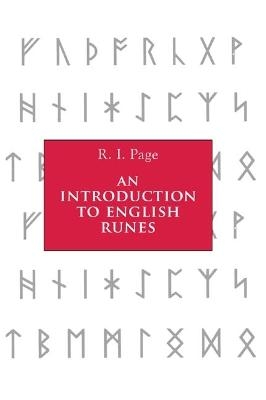
An Introduction to English Runes
Seiten
2006
The Boydell Press (Verlag)
978-0-85115-946-1 (ISBN)
The Boydell Press (Verlag)
978-0-85115-946-1 (ISBN)
Introduction to the use of runes as a practical script for a variety of purposes in Anglo-Saxon England.
Runes are quite frequently mentioned in modern writings, usually imprecisely as a source of mystic knowledge, power or insight. This book sets the record straight. It shows runes working as a practical script for a variety of purposes in early English times, among both indigenous Anglo-Saxons and incoming Vikings. In a scholarly yet readable way it examines the introduction of the runic alphabet (the futhorc) to England in the fifth and sixth centuries, the forms and values of its letters, and the ways in which it developed, up until its decline at the end of the Anglo-Saxon period. It discusses how runes were used for informal and day-to-day purposes, on formal monuments, as decorative letters in prestigious manuscripts, for owners' or makers' names on everyday objects, perhaps even in private letters.
For the first time, the book presents, together with earlier finds, the many runic objects discovered over the last twenty years, with a range of inscriptions on bone, metal and stone, even including tourists' scratched signatures found on the pilgrimage routes through Italy. It gives an idea of the immense range of informationon language and social history contained in these unique documents.
The late R.I. PAGE was former Professor of Anglo-Saxon in the University of Cambridge.
Runes are quite frequently mentioned in modern writings, usually imprecisely as a source of mystic knowledge, power or insight. This book sets the record straight. It shows runes working as a practical script for a variety of purposes in early English times, among both indigenous Anglo-Saxons and incoming Vikings. In a scholarly yet readable way it examines the introduction of the runic alphabet (the futhorc) to England in the fifth and sixth centuries, the forms and values of its letters, and the ways in which it developed, up until its decline at the end of the Anglo-Saxon period. It discusses how runes were used for informal and day-to-day purposes, on formal monuments, as decorative letters in prestigious manuscripts, for owners' or makers' names on everyday objects, perhaps even in private letters.
For the first time, the book presents, together with earlier finds, the many runic objects discovered over the last twenty years, with a range of inscriptions on bone, metal and stone, even including tourists' scratched signatures found on the pilgrimage routes through Italy. It gives an idea of the immense range of informationon language and social history contained in these unique documents.
The late R.I. PAGE was former Professor of Anglo-Saxon in the University of Cambridge.
Professor R.I. PAGE is former Elrington and Bosworth Professor of Anglo-Saxon in the University of Cambridge, and Librarian of Corpus Christi College, Cambridge.
| Erscheint lt. Verlag | 18.5.2006 |
|---|---|
| Zusatzinfo | 23 b/w, 54 line illus. |
| Verlagsort | Woodbridge |
| Sprache | englisch |
| Maße | 156 x 234 mm |
| Gewicht | 418 g |
| Themenwelt | Sachbuch/Ratgeber ► Freizeit / Hobby ► Kreatives Gestalten |
| Geisteswissenschaften ► Archäologie | |
| Geschichte ► Hilfswissenschaften ► Paläografie | |
| Geisteswissenschaften ► Sprach- / Literaturwissenschaft ► Anglistik / Amerikanistik | |
| Geisteswissenschaften ► Sprach- / Literaturwissenschaft ► Sprachwissenschaft | |
| ISBN-10 | 0-85115-946-X / 085115946X |
| ISBN-13 | 978-0-85115-946-1 / 9780851159461 |
| Zustand | Neuware |
| Informationen gemäß Produktsicherheitsverordnung (GPSR) | |
| Haben Sie eine Frage zum Produkt? |
Mehr entdecken
aus dem Bereich

aus dem Bereich
Schnelle Hilfe bei häufigen Fehlern
Buch | Softcover (2021)
UTB (Verlag)
CHF 25,20
Philology, Fiction, and Folklore
Buch | Hardcover (2024)
Oxford University Press (Verlag)
CHF 78,55


