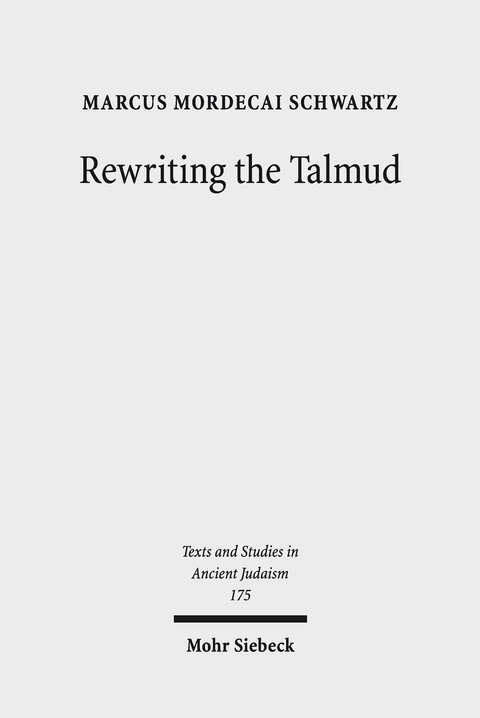
Rewriting the Talmud (eBook)
162 Seiten
Mohr Siebeck (Verlag)
978-3-16-157601-0 (ISBN)
Born 1971; BA from the University of Nebraska; Rabbi, MA, MPhil, PhD, from The Jewish Theological Seminary; currently serves as director of the Beit Midrash, head of the the Nishma summer program, and assistant professor of Talmud and Rabbinics at The Jewish Theological Seminary of America.
Cover 1
Titel 4
Acknowledgements?????????????????????????????????????????????? 8
Table of Contents 10
Introduction?????????????????????????????????????? 14
1. Initial Influences and Hypothesis?????????????????????????????????????????????????????????????????????????????????????? 16
2. Additional Scholarly Influences?????????????????????????????????????????????????????????????????????????????????? 21
a) The Role of the Early Amoraim?????????????????????????????????????????????????????????????????????????????? 21
b) The Role of Middle-Generation Babylonian Amoraim???????????????????????????????????????????????????????????????????????????????????????????????????????????????????? 28
3. Methodology and Application?????????????????????????????????????????????????????????????????????????? 29
Part I: Rav Hisda???????????????????????????????????????????????? 36
Chapter One: Hisda Dicta and Materials in the Yerushalmi?????????????????????????????????????????????????????????????????????????????????????????????????????????????????????????????? 38
1. This Law???????????????????????????????????? 39
2. Documents?????????????????????????????????????? 44
3. The New Year for Kings???????????????????????????????????????????????????????????????? 47
Chapter Two: The Core-sugya???????????????????????????????????????????????????????????????????? 53
1. The First Stammaitic Interlude: 2a:15, 2b:5?????????????????????????????????????????????????????????????????????????????????????????????????????????? 53
2. Toseftan baraita: 2b:5–10?????????????????????????????????????????????????????????????????????? 54
3. The Second Stammaitic Interlude: 2b:10–21?????????????????????????????????????????????????????????????????????????????????????????????????????? 54
4. Rabbi Yohanan’s Dictum: 2b:21–28???????????????????????????????????????????????????????????????????????????????????? 55
5. Stammaitic Challenges: 2b:28, 3a:23?????????????????????????????????????????????????????????????????????????????????????????? 57
6. Rabbi Elazar’s Dictum, 3a:23–26?????????????????????????????????????????????????????????????????????????????????? 65
7. Ravina and Rav Ashi, 3a:26–32?????????????????????????????????????????????????????????????????????????????? 65
8. Baraita in support of Rabbi Yohanan, 3a:32–42?????????????????????????????????????????????????????????????????????????????????????????????????????????????? 68
Chapter Three: Summary and Conclusions?????????????????????????????????????????????????????????????????????????????????????????? 72
Part II: Rava???????????????????????????????????????? 76
Chapter One: Concerning Rava and Rabbah???????????????????????????????????????????????????????????????????????????????????????????? 78
Chapter Two: Structures and Themes?????????????????????????????????????????????????????????????????????????????????? 80
1. The Bavli Passage?????????????????????????????????????????????????????? 80
2. The Yerushalmi Passage???????????????????????????????????????????????????????????????? 87
Chapter Three: Analysis of B. Rosh Hashanah 29b:24–30a:34???????????????????????????????????????????????????????????????????????????????????????????????????????????????????????????????? 93
1. Section One: Units 1–4???????????????????????????????????????????????????????????????? 94
a) Conclusion One: Rava appears as the main voice at unit 2, not Rabbah???????????????????????????????????????????????????????????????????????????????????????????????????????????????????????????????????????????????????????????? 94
b) Conclusion Two: Rava drew on Palestinian material?????????????????????????????????????????????????????????????????????????????????????????????????????????????????????? 95
c) Conclusion Three: Rava may have adapted Babylonian material from other redacted Babylonian contexts and incorporated them in a new sugya???????????????????????????????????????????????????????????????????????????????????????????????????????????????????????????????????????????????????????????????????????????????????????????????????????????????????????????????????????????????????????????????????????????????????????????????????? 97
d) Conclusion Four: Section one of our passage was originally a separate sugya from sections two and three?????????????????????????????????????????????????????????????????????????????????????????????????????????????????????????????????????????????????????????????????????????????????????????????????????????????????????????????????? 98
2. The Baraita of the House of Shemuel?????????????????????????????????????????????????????????????????????????????????????????? 101
3. Rabbah???????????????????????????????? 106
4. Sections Two and Three: Units 5–8?????????????????????????????????????????????????????????????????????????????????????? 110
a) Rabbi Hiyya b. Gamda’s Statement???????????????????????????????????????????????????????????????????????????????????? 112
b) The Editorial Frame?????????????????????????????????????????????????????????? 113
c) Recapitulation of the Structure of the Yerushalmi?????????????????????????????????????????????????????????????????????????????????????????????????????????????????????? 115
Chapter Four: Summary and Conclusions???????????????????????????????????????????????????????????????????????????????????????? 119
Conclusion?????????????????????????????????? 120
1. Corroborating Assumptions?????????????????????????????????????????????????????????????????????? 120
2. The Content of This Study?????????????????????????????????????????????????????????????????????? 123
3. Rav Hisda?????????????????????????????????????? 124
4. Rava???????????????????????????? 126
5. The Relevance of This Study?????????????????????????????????????????????????????????????????????????? 131
Appendices to Part I?????????????????????????????????????????????????????? 134
1. Hebrew text: JTS 108 EMC 319 B. Rosh Hashanah 2a:10–3a:41?????????????????????????????????????????????????????????????????????????????????????????????????????????????????????????????????????? 134
2. An Aggadic Example???????????????????????????????????????????????????????? 136
3. Hisda Citations in B. Rosh Hashanah?????????????????????????????????????????????????????????????????????????????????????????? 139
a) References 6 and 12 (8a:38, 8b:10)???????????????????????????????????????????????????????????????????????????????????????? 140
b) Reference 18 (17a:43)?????????????????????????????????????????????????????????????? 140
c) Reference 20???????????????????????????????????????????? 140
Appendices to Part II???????????????????????????????????????????????????????? 142
1. Hebrew Text: JTS 108 EMC 319 B. Rosh Hashanah 29b:24–30a:34?????????????????????????????????????????????????????????????????????????????????????????????????????????????????????????????????????????? 142
2. Midrashic Synopsis???????????????????????????????????????????????????????? 143
3. Rava Citations with Yerushalmi Parallels???????????????????????????????????????????????????????????????????????????????????????????????????? 144
Bibliography?????????????????????????????????????? 146
Index of Sources?????????????????????????????????????????????? 156
Index of Subjects and Names???????????????????????????????????????????????????????????????????? 159
| Erscheint lt. Verlag | 1.7.2019 |
|---|---|
| Sprache | englisch |
| Themenwelt | Geisteswissenschaften ► Religion / Theologie ► Judentum |
| ISBN-10 | 3-16-157601-2 / 3161576012 |
| ISBN-13 | 978-3-16-157601-0 / 9783161576010 |
| Informationen gemäß Produktsicherheitsverordnung (GPSR) | |
| Haben Sie eine Frage zum Produkt? |
 PDF (Adobe DRM)
Größe: 3,2 MB
Kopierschutz: Adobe-DRM
Adobe-DRM ist ein Kopierschutz, der das eBook vor Mißbrauch schützen soll. Dabei wird das eBook bereits beim Download auf Ihre persönliche Adobe-ID autorisiert. Lesen können Sie das eBook dann nur auf den Geräten, welche ebenfalls auf Ihre Adobe-ID registriert sind.
Details zum Adobe-DRM
Dateiformat: PDF (Portable Document Format)
Mit einem festen Seitenlayout eignet sich die PDF besonders für Fachbücher mit Spalten, Tabellen und Abbildungen. Eine PDF kann auf fast allen Geräten angezeigt werden, ist aber für kleine Displays (Smartphone, eReader) nur eingeschränkt geeignet.
Systemvoraussetzungen:
PC/Mac: Mit einem PC oder Mac können Sie dieses eBook lesen. Sie benötigen eine
eReader: Dieses eBook kann mit (fast) allen eBook-Readern gelesen werden. Mit dem amazon-Kindle ist es aber nicht kompatibel.
Smartphone/Tablet: Egal ob Apple oder Android, dieses eBook können Sie lesen. Sie benötigen eine
Geräteliste und zusätzliche Hinweise
Zusätzliches Feature: Online Lesen
Dieses eBook können Sie zusätzlich zum Download auch online im Webbrowser lesen.
Buying eBooks from abroad
For tax law reasons we can sell eBooks just within Germany and Switzerland. Regrettably we cannot fulfill eBook-orders from other countries.
aus dem Bereich