


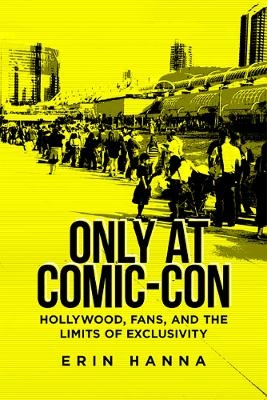
Only at Comic-Con
Hollywood, Fans, and the Limits of Exclusivity
Seiten
2019
Rutgers University Press (Verlag)
978-0-8135-9471-2 (ISBN)
Rutgers University Press (Verlag)
978-0-8135-9471-2 (ISBN)
What made the San Diego Comic-Con a Hollywood destination? How does the industry's presence at Comic-Con shape our ideas about what it means to be a fan? And what can this single event tell us about the relationship between media industries and their fans, past and present? Only at Comic-Con answers these questions and more.
When the San Diego Comic-Con was founded in 1970, it provided an exclusive space where fans, dealers, collectors, and industry professionals could come together to celebrate their love of comics and popular culture. In the decades since, Comic-Con has grown in size and scope, attracting hundreds of thousands of fans each summer and increased attention from the media industries, especially Hollywood, which uses the convention's exclusivity to spread promotional hype far and wide. What made the San Diego Comic-Con a Hollywood destination? How does the industry's presence at Comic-Con shape our ideas about what it means to be a fan? And what can this single event tell us about the relationship between media industries and their fans, past and present? Only at Comic-Con answers these questions and more as it examines the connection between exclusivity and the proliferation of media industry promotion at the longest-running comic convention in North America.
When the San Diego Comic-Con was founded in 1970, it provided an exclusive space where fans, dealers, collectors, and industry professionals could come together to celebrate their love of comics and popular culture. In the decades since, Comic-Con has grown in size and scope, attracting hundreds of thousands of fans each summer and increased attention from the media industries, especially Hollywood, which uses the convention's exclusivity to spread promotional hype far and wide. What made the San Diego Comic-Con a Hollywood destination? How does the industry's presence at Comic-Con shape our ideas about what it means to be a fan? And what can this single event tell us about the relationship between media industries and their fans, past and present? Only at Comic-Con answers these questions and more as it examines the connection between exclusivity and the proliferation of media industry promotion at the longest-running comic convention in North America.
ERIN HANNA is an assistant professor of cinema studies at the University of Oregon in Eugene.
Contents
Introduction: The San Diego Comic-Con and the Limits of Exclusivity
1 Origin Stories: Comic-Con and the Future of All Media
2 The Liminality of the Line and the Place of Fans at Comic-Con
3 Manufacturing "Hall H Hysteria:" Hollywood and Comic-Con
4 Ret(ail)con: From Dealers' Room to Exhibit Hall
Conclusion: From Franchise Wars to Fry Fans: Comic-Con Anywhere
Acknowledgments
Notes
Bibliography
Index
| Erscheinungsdatum | 31.12.2019 |
|---|---|
| Zusatzinfo | 30 b&w images |
| Verlagsort | New Brunswick NJ |
| Sprache | englisch |
| Maße | 152 x 229 mm |
| Gewicht | 472 g |
| Themenwelt | Geisteswissenschaften ► Sprach- / Literaturwissenschaft ► Anglistik / Amerikanistik |
| Geisteswissenschaften ► Sprach- / Literaturwissenschaft ► Literaturwissenschaft | |
| Sozialwissenschaften ► Kommunikation / Medien ► Medienwissenschaft | |
| ISBN-10 | 0-8135-9471-5 / 0813594715 |
| ISBN-13 | 978-0-8135-9471-2 / 9780813594712 |
| Zustand | Neuware |
| Informationen gemäß Produktsicherheitsverordnung (GPSR) | |
| Haben Sie eine Frage zum Produkt? |
Mehr entdecken
aus dem Bereich



aus dem Bereich
Poetik eines sozialen Urteils
Buch | Hardcover (2023)
De Gruyter (Verlag)
CHF 83,90


