


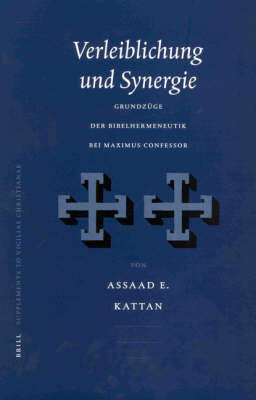
Verleiblichung und Synergie
Grundzüge der Bibelhermeneutik bei Maximus Confessor
Seiten
2002
Brill (Verlag)
978-90-04-12669-5 (ISBN)
Brill (Verlag)
978-90-04-12669-5 (ISBN)
This study on Maximus the Confessor's biblical hermeneutics provides a thorough analysis of how Maximus approached the Holy Scripture in theory and praxis. It attempts to simultaneously shed light on the sources used by the Confessor and to show the originality and consistency of his hermeneutical intuitions.
This volume examines the biblical hermeneutics of Maximus the Confessor (579/580-662). Although some aspects of the Confessor's hermeneutical approach had already been tackled, a comprehensive analysis was still missing. Accordingly, this book fills a gap in Patristic studies.
The study consists of three chapters. The first one deals with the logoi theory of Maximus being the ontological nucleus around which his whole theological thinking is organized. The second chapter examines Maximus' understanding of mystical ascension. Equipped with the "ontological" and "mystical" foundation, the third chapter analyzes thoroughly the hermeneutics of Maximus as such, attempting to show its coherence and rootedness in the general christological perspective of the Confessor.
This book will be of benefit not only for byzantinists and patrologists, but also for biblical scholars interested in the history of hermeneutics and exegesis as well as for historians of philosophy and medieval ideas.
This volume examines the biblical hermeneutics of Maximus the Confessor (579/580-662). Although some aspects of the Confessor's hermeneutical approach had already been tackled, a comprehensive analysis was still missing. Accordingly, this book fills a gap in Patristic studies.
The study consists of three chapters. The first one deals with the logoi theory of Maximus being the ontological nucleus around which his whole theological thinking is organized. The second chapter examines Maximus' understanding of mystical ascension. Equipped with the "ontological" and "mystical" foundation, the third chapter analyzes thoroughly the hermeneutics of Maximus as such, attempting to show its coherence and rootedness in the general christological perspective of the Confessor.
This book will be of benefit not only for byzantinists and patrologists, but also for biblical scholars interested in the history of hermeneutics and exegesis as well as for historians of philosophy and medieval ideas.
Assaad E. Kattan, Th.D. (2001) in Theology, University of Marburg, is Assistant Professor at the Institute of History, Archeology and Near Eastern Heritage at the University of Balamand (UOB) in Lebanon. He published various articles in Church History, Ecumenism and Text Analysis.
| Erscheint lt. Verlag | 31.10.2002 |
|---|---|
| Reihe/Serie | Vigiliae Christianae, Supplements ; 63 |
| Verlagsort | Leiden |
| Sprache | deutsch |
| Maße | 155 x 235 mm |
| Gewicht | 840 g |
| Themenwelt | Geschichte ► Teilgebiete der Geschichte ► Religionsgeschichte |
| Religion / Theologie ► Christentum ► Kirchengeschichte | |
| ISBN-10 | 90-04-12669-4 / 9004126694 |
| ISBN-13 | 978-90-04-12669-5 / 9789004126695 |
| Zustand | Neuware |
| Informationen gemäß Produktsicherheitsverordnung (GPSR) | |
| Haben Sie eine Frage zum Produkt? |
Mehr entdecken
aus dem Bereich


aus dem Bereich
von der Antike bis zur Gegenwart
Buch | Softcover (2025)
C.H.Beck (Verlag)
CHF 16,80


