


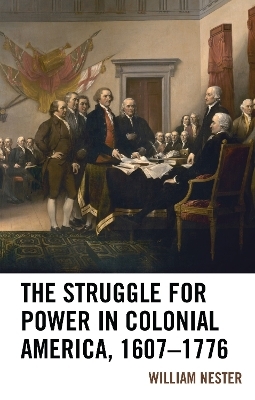
The Struggle for Power in Colonial America, 1607–1776
Seiten
2019
Lexington Books (Verlag)
978-1-4985-6597-4 (ISBN)
Lexington Books (Verlag)
978-1-4985-6597-4 (ISBN)
This study provides a broad examination of the overlapping conflicts and power struggles among the indigenous population, colonists, and other European peoples that shaped the American colonies. The author analyzes the origins, development, and outcomes of such conflicts and their various cultural and political impacts.
America’s colonial era began and ended dramatically, with the founding of the first enduring settlement at Jamestown on May 14, 1607 and the Declaration of Independence in Philadelphia on July 4, 1776. During those 169 years, conflicts were endemic and often overlapping among the colonists, between the colonists and the original inhabitants, between the colonists and other imperial European peoples, and between the colonists and the mother country. As conflicts were endemic, so too were struggles for power.
This study reveals the reasons for, stages, and results of these conflicts. The dynamic driving this history are two inseparable transformations as English subjects morphed into American citizens, and the core American cultural values morphed from communitarianism and theocracy into individualism and humanism. These developments in turn were shaped by the changing ways that the colonists governed, made money, waged war, worshipped, thought, wrote, and loved. Extraordinary individuals led that metamorphosis, explorers like John Smith and Daniel Boone, visionaries like John Winthrop and Thomas Jefferson, entrepreneurs like William Phips and John Hancock, dissidents like Rogers Williams and Anne Hutchinson, warriors like Miles Standish and Benjamin Church, free spirits like Thomas Morton and William Byrd, and creative writers like Anne Bradstreet and Robert Rogers. Then there was that quintessential man of America’s Enlightenment, Benjamin Franklin. And finally, George Washington who, more than anyone, was responsible for winning American independence when and how it happened.
America’s colonial era began and ended dramatically, with the founding of the first enduring settlement at Jamestown on May 14, 1607 and the Declaration of Independence in Philadelphia on July 4, 1776. During those 169 years, conflicts were endemic and often overlapping among the colonists, between the colonists and the original inhabitants, between the colonists and other imperial European peoples, and between the colonists and the mother country. As conflicts were endemic, so too were struggles for power.
This study reveals the reasons for, stages, and results of these conflicts. The dynamic driving this history are two inseparable transformations as English subjects morphed into American citizens, and the core American cultural values morphed from communitarianism and theocracy into individualism and humanism. These developments in turn were shaped by the changing ways that the colonists governed, made money, waged war, worshipped, thought, wrote, and loved. Extraordinary individuals led that metamorphosis, explorers like John Smith and Daniel Boone, visionaries like John Winthrop and Thomas Jefferson, entrepreneurs like William Phips and John Hancock, dissidents like Rogers Williams and Anne Hutchinson, warriors like Miles Standish and Benjamin Church, free spirits like Thomas Morton and William Byrd, and creative writers like Anne Bradstreet and Robert Rogers. Then there was that quintessential man of America’s Enlightenment, Benjamin Franklin. And finally, George Washington who, more than anyone, was responsible for winning American independence when and how it happened.
Dr. William Nester is a professor at St. John's University in New York. He is the award winning author of thirty-six books on international relations, military history, and the nature of power.
Introduction
Part I: Ends and Origins
Chapter 1: Power
Chapter 2: Imperialism
Chapter 3: Jamestown
Chapter 4: Plymouth
Part II: Seventeenth Century
Chapter 5: Developments
Chapter 6: Wars
Part III: Eighteenth Century
Chapter 7: Developments
Chapter 8: Wars
Part IV: Turning Points
Chapter 9: Conquests
Chapter 10: Resistance
Chapter 11: Liberty
| Erscheinungsdatum | 08.06.2019 |
|---|---|
| Zusatzinfo | 2 Tables |
| Sprache | englisch |
| Maße | 150 x 221 mm |
| Gewicht | 531 g |
| Themenwelt | Geschichte ► Allgemeine Geschichte ► Neuzeit (bis 1918) |
| Geisteswissenschaften ► Geschichte ► Regional- / Ländergeschichte | |
| ISBN-10 | 1-4985-6597-2 / 1498565972 |
| ISBN-13 | 978-1-4985-6597-4 / 9781498565974 |
| Zustand | Neuware |
| Informationen gemäß Produktsicherheitsverordnung (GPSR) | |
| Haben Sie eine Frage zum Produkt? |
Mehr entdecken
aus dem Bereich


aus dem Bereich
Geschichte einer wilden Handlung
Buch | Hardcover (2024)
C.H.Beck (Verlag)
CHF 47,60


