



Neptune’s Laboratory
Fantasy, Fear, and Science at Sea
Seiten
2019
Harvard University Press (Verlag)
978-0-674-97201-8 (ISBN)
Harvard University Press (Verlag)
978-0-674-97201-8 (ISBN)
We have long been fascinated with the oceans and sought “to pierce the profundity” of their depths. But the history of marine science also tells us a lot about ourselves. Antony Adler explores the ways in which scientists, politicians, and the public have invoked ocean environments in imagining the fate of humanity and of the planet.
An eyewitness to profound change affecting marine environments on the Newfoundland coast, Antony Adler argues that the history of our relationship with the ocean lies as much in what we imagine as in what we discover.
We have long been fascinated with the oceans, seeking “to pierce the profundity” of their depths. In studying the history of marine science, we also learn about ourselves. Neptune’s Laboratory explores the ways in which scientists, politicians, and the public have invoked ocean environments in imagining the fate of humanity and of the planet—conjuring ideal-world fantasies alongside fears of our species’ weakness and ultimate demise.
Oceans gained new prominence in the public imagination in the early nineteenth century as scientists plumbed the depths and marine fisheries were industrialized. Concerns that fish stocks could be exhausted soon emerged. In Europe these fears gave rise to internationalist aspirations, as scientists sought to conduct research on an oceanwide scale and nations worked together to protect their fisheries. The internationalist program for marine research waned during World War I, only to be revived in the interwar period and again in the 1960s. During the Cold War, oceans were variously recast as battlefields, post-apocalyptic living spaces, and utopian frontiers.
The ocean today has become a site of continuous observation and experiment, as probes ride the ocean currents and autonomous and remotely operated vehicles peer into the abyss. Embracing our fears, fantasies, and scientific investigations, Antony Adler tells the story of our relationship with the seas.
An eyewitness to profound change affecting marine environments on the Newfoundland coast, Antony Adler argues that the history of our relationship with the ocean lies as much in what we imagine as in what we discover.
We have long been fascinated with the oceans, seeking “to pierce the profundity” of their depths. In studying the history of marine science, we also learn about ourselves. Neptune’s Laboratory explores the ways in which scientists, politicians, and the public have invoked ocean environments in imagining the fate of humanity and of the planet—conjuring ideal-world fantasies alongside fears of our species’ weakness and ultimate demise.
Oceans gained new prominence in the public imagination in the early nineteenth century as scientists plumbed the depths and marine fisheries were industrialized. Concerns that fish stocks could be exhausted soon emerged. In Europe these fears gave rise to internationalist aspirations, as scientists sought to conduct research on an oceanwide scale and nations worked together to protect their fisheries. The internationalist program for marine research waned during World War I, only to be revived in the interwar period and again in the 1960s. During the Cold War, oceans were variously recast as battlefields, post-apocalyptic living spaces, and utopian frontiers.
The ocean today has become a site of continuous observation and experiment, as probes ride the ocean currents and autonomous and remotely operated vehicles peer into the abyss. Embracing our fears, fantasies, and scientific investigations, Antony Adler tells the story of our relationship with the seas.
Antony Adler is Research Associate in the History Department at Carleton College. His work centers on the history of marine science and technology and ocean exploration. He holds a Ph.D. in History from the University of Washington and has been a postdoctoral instructor at the University of Washington and a postdoctoral fellow with the Program on Science, Technology & Society at the Harvard Kennedy School of Government.
| Erscheinungsdatum | 20.11.2019 |
|---|---|
| Zusatzinfo | 15 photos |
| Verlagsort | Cambridge, Mass |
| Sprache | englisch |
| Maße | 156 x 235 mm |
| Themenwelt | Geisteswissenschaften ► Geschichte ► Teilgebiete der Geschichte |
| Naturwissenschaften ► Geowissenschaften ► Hydrologie / Ozeanografie | |
| ISBN-10 | 0-674-97201-5 / 0674972015 |
| ISBN-13 | 978-0-674-97201-8 / 9780674972018 |
| Zustand | Neuware |
| Informationen gemäß Produktsicherheitsverordnung (GPSR) | |
| Haben Sie eine Frage zum Produkt? |
Mehr entdecken
aus dem Bereich


aus dem Bereich
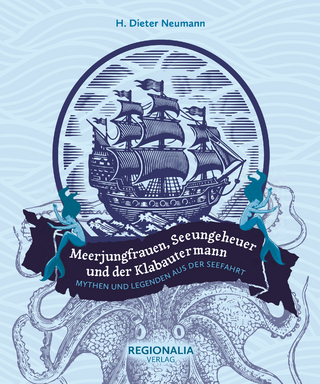
Mythen und Legenden aus der Seefahrt
Buch | Hardcover (2025)
Regionalia Verlag
CHF 13,90
das bewegte Leben des Aimé Felix Tschiffely
Buch | Hardcover (2025)
Weber Verlag
CHF 49,00


