The Wiley International Handbook of Correctional Psychology (eBook)
John Wiley & Sons (Verlag)
978-1-119-13997-3 (ISBN)
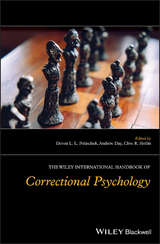
A two-volume handbook that explores the theories and practice of correctional psychology
With contributions from an international panel of experts in the field, The Wiley International Handbook of Correctional Psychology offers a comprehensive and up-to-date review of the most relevant topics concerning the practice of psychology in correctional systems. The contributors explore the theoretical, professional and practical issues that are pertinent to correctional psychologists and other professionals in relevant fields.
The Handbook explores the foundations of correctional psychology and contains information on the history of the profession, the roles of psychology in a correctional setting and examines the implementation and evaluation of various interventions. It also covers a range of topics including psychological assessment in prisons, specific treatments and modalities as well as community interventions. This important handbook:
- Offers the most comprehensive coverage on the topic of correctional psychology
- Contains contributions from leading experts from New Zealand, Australia, Europe, and North America
- Includes information on interventions and assessments in both community and imprisonment settings
- Presents chapters that explore contemporary issues and recent developments in the field
Written for correctional psychologists, academics and students in correctional psychology and members of allied professional disciplines, The Wiley International Handbook of Correctional Psychology provides in-depth coverage of the most important elements of the field.
Devon L. L. Polaschek is Professor of Criminal Justice Psychology in the School of Psychology and the Joint Director of the New Zealand Institute of Security and Crime Science, University of Waikato, New Zealand.
Andrew Day is Professor in the School of Social and Political Sciences at the University of Melbourne, Australia and Adjunct Professor in the Indigenous Education and Research Centre at James Cook University, Australia.
Clive R. Hollin is Emeritus Professor of Criminological Psychology at The University of Leicester, UK.
A two-volume handbook that explores the theories and practice of correctional psychology With contributions from an international panel of experts in the field, The Wiley International Handbook of Correctional Psychology offers a comprehensive and up-to-date review of the most relevant topics concerning the practice of psychology in correctional systems. The contributors explore the theoretical, professional and practical issues that are pertinent to correctional psychologists and other professionals in relevant fields. The Handbook explores the foundations of correctional psychology and contains information on the history of the profession, the roles of psychology in a correctional setting and examines the implementation and evaluation of various interventions. It also covers a range of topics including psychological assessment in prisons, specific treatments and modalities as well as community interventions. This important handbook: Offers the most comprehensive coverage on the topic of correctional psychology Contains contributions from leading experts from New Zealand, Australia, Europe, and North America Includes information on interventions and assessments in both community and imprisonment settings Presents chapters that explore contemporary issues and recent developments in the field Written for correctional psychologists, academics and students in correctional psychology and members of allied professional disciplines, The Wiley International Handbook of Correctional Psychology provides in-depth coverage of the most important elements of the field.
Devon L. L. Polaschek is Professor of Criminal Justice Psychology in the School of Psychology and the Joint Director of the New Zealand Institute of Security and Crime Science, University of Waikato, New Zealand. Andrew Day is Professor in the School of Social and Political Sciences at the University of Melbourne, Australia and Adjunct Professor in the Indigenous Education and Research Centre at James Cook University, Australia. Clive R. Hollin is Emeritus Professor of Criminological Psychology at The University of Leicester, UK.
Notes on the Contributors
Ronald H. Aday, PhD is a Professor of Sociology and Director of the Graduate Program in Gerontology at Middle Tennessee State University. An international scholar on the topic of aging and health issues in the field of correction, Aday has contributed significantly to the public policy debate on older offenders. His research on older prisoners has spanned more than 4 decades, resulting in more than 65 refereed articles and book chapters. He is the author of Aging Prisoners: Crisis in American Corrections (2003) and co‐author of Women Aging in Prison. He is also the co‐author of a forthcoming book near completion on the Life of Women Lifers.
Geraldine Akerman is a chartered and HCPC (Health and Care Professions Council) Registered Forensic Psychologist, EuroPsych, and Associate Fellow of the British Psychological Society. She sits on the British Psychological Society's Division of Forensic Psychology Executive Committee and the National Organisation for the Treatment of Abusers Research Committee. She is a Trustee for the Safer Living Foundation. Geraldine has academic publications on offense‐paralleling behavior, managing deviant sexual fantasies and offending, and ex‐service personnel in prison and edited a book on enabling environments. Geraldine currently works as a therapy manager at HMP Grendon in the UK.
Alfred Allan qualified in law and psychology and is registered with clinical and forensic endorsements in Australia. Professor Allan has taught law, psychology, and professional ethics in South Africa and Australia. He is a member of the inaugural Psychologists Board of Australia, a director and the Chair of the Standing Committee on Ethics of the International Association for Applied Psychology (IAAP), and a Fellow of the Australian Psychological Society (APS). He is on the editorial committee of Psychiatry, Psychology and Law and the editorial board of Philosophy, Ethics, and Humanities in Medicine, and Ethics & Behavior.
Danyal Ansari, BA (Hons), is currently undertaking training as a Clinical Associate in Applied Psychology and is employed with NHS Greater Glasgow & Clyde. His work focuses on providing cognitive behavioral therapy for individuals experiencing common mental health problems. He has previously worked with individuals with intellectual and developmental disability, and with autism, where he provided clinical and forensic input to the service.
Rebecca L. Bauer is a licensed Psychologist who received her PhD in counseling psychology from Texas Tech University. She previously worked as a staff psychologist for the Federal Bureau of Prisons. Currently, she is in private practice conducting forensic evaluations. Her research interests include correctional mental health.
David P. Bernstein is an endowed Chair of Forensic Psychotherapy (Section Forensic Psychology) in the Faculty of Psychology and Neuroscience at Maastricht University, the Netherlands. He has served as President of the Association for Research on Personality Disorders, Vice President of the International Society for the Study of Personality Disorders, and Vice President of the International Society for Schema Therapy.
Astrid Birgden is a Consultant Forensic Psychologist and Adjunct Clinical Associate Professor at Deakin University, Australia. Dr. Birgden has developed policy and service delivery to correctional services (sex offenders and drug‐related offenders), disability services (forensic disability clients), and in problem‐solving courts (family violence court and drug court). Dr. Birgden's international work includes designing a practical intervention in a torture prevention project for police and military personnel in Sri Lanka and Nepal (EU funding), and training correctional officers regarding sexual and drug‐related offenders in the Caribbean (EU funding). She has published on offender rehabilitation, therapeutic jurisprudence, and human rights.
Erica Bowen is Professor of Violence Prevention Research at the University of Worcester, UK. Erica is a Registered Forensic Psychologist (Health and Care Professions Council) and a Chartered Psychologist and Associate Fellow of the British Psychological Society. Her research for the past two decades has focused on understanding and preventing intimate partner violence in adult and adolescent relationships. Erica has developed innovative interventions including a serious‐game‐based primary intervention to combat adolescent dating violence, and a brief intervention for preventing domestic violence in adult relationships used primarily for non‐court mandated clients.
Sarah Brown is a Professor of Forensic Psychology in the Centre for Advances in Behaviour Science at Coventry University, UK. She has been conducting research related to sexual aggression for over 20 years and has been working at Coventry University since 1999. Sarah is the Chair‐Elect of NOTA, the National Organisation for the Treatment of Abusers. She is an Associate Editor of Child Abuse and Neglect and a member of the editorial board of Sexual Abuse and the Journal of Sexual Aggression, having been the Editor of the latter journal from 2008 to 2014. Sarah is a member of the Advisory Board of the new Centre for Expertise on Child Sexual Abuse that is funded by the UK Home Office and was launched in 2017.
Shelley L. Brown is an Associate Professor of Forensic Psychology in the Department of Psychology at Carleton University in Canada, which she joined in 2006, after a 10‐year research career with Correctional Service of Canada. She completed a PhD in 2002 at Queens University on dynamic risk assessment among adult male offenders. Since then her main research focus has been improving gender responsive services for girls and women in the criminal justice system using a mix of quantitative and qualitative approaches. The Criminal Justice Section of the Canadian Psychological Association awarded Shelley (jointly with Kelley Blanchette) a significant contribution award for their work on female criminal conduct.
Sharon Casey, PhD, holds a conjoint appointment at Deakin University, Australia, in the School of Psychology. She is widely published in many areas of forensic psychology and has a particular interest in offender rehabilitation. Her research interests include substance use, juvenile offending, and scale development and validation. She has worked extensively with correctional agencies both in Australia and overseas in the development, provision, and evaluation of offender rehabilitation programs and the provision of staff training.
Nick Chadwick, MA, is a PhD candidate in forensic psychology at Carleton University, Ottawa, Canada. He has conducted research projects on the use and implementation of evidence‐based practices in community supervision as well as the utility of dynamic risk assessment and incorporating offender change in the prediction of recidivism.
Maartje Clercx studied psychology at Maastricht University, the Netherlands. She then obtained her master's degree in forensic psychology from Maastricht University as well. She is mainly interested in juvenile and adult psychopathy, and has worked for Dr. Lieke Nentjes and conducted research on the comprehensive assessment of psychopathic personality in collaboration with Professor David Cooke. Currently she is working as a junior researcher at Maastricht University, where she mainly concentrates on the randomized controlled trial of Professor David Bernstein. Maartje is currently working toward finding a suitable PhD position, preferably on the topic of psychopathy.
David J. Cooke is a Consultant Forensic Clinical Psychologist and former Head of the Forensic Clinical Psychology service in Glasgow, UK. He is a Visiting Professor in the Faculty of Psychology at the University of Bergen in Norway and an Adjunct Professor in the Faculty of Law at La Trobe University, Melbourne, Australia. He undertakes research on psychopathic disorder, the risk management of violent offenders, and the impact of institutional settings on violent and disturbed behavior. He has published widely in the field and he serves on a number of editorial boards and expert groups.
Raymond R. Corrado is a Professor in the School of Criminology at Simon Fraser University, Canada, a visiting Fellow at Clare Hall College and the Institute of Criminology, University of Cambridge, UK, and founding member of the Mental Health, Law, and Policy Institute at Simon Fraser University. He is on the editorial boards of six major criminology and forensic mental health journals, has co‐edited nine books, and published over 150 articles, book chapters, and reports on youth/juvenile justice, violent young offenders, mental health, adolescent psychopathy, Aboriginal victimization, child/adolescent case management strategies, and terrorism. He received his PhD from Northwestern in Chicago.
Michael Daffern is Professor of Clinical Forensic Psychology with the Centre for Forensic Behavioural Science, Swinburne University of Technology, and Consultant Principal Psychologist with the Victorian Institute of Forensic Mental Health (Forensicare), Australia. He divides his time between teaching, clinical practice, and research, the focus of which is the assessment and treatment of violent offenders.
Jason Davies is Professor of Forensic and Clinical Psychology in the Department of Psychology, Swansea University & ABMU Health Board, South Wales, and a Consultant Forensic and Clinical...
| Erscheint lt. Verlag | 8.2.2019 |
|---|---|
| Sprache | englisch |
| Themenwelt | Geisteswissenschaften ► Psychologie |
| Schlagworte | criminal justice and prisons • effects of imprisonment • ethics of correctional psychology • Female offenders • Forensic Psychology • Forensische Psychologie • Guide to Correctional Psychology • Haftpsychologie • handbook of correctional psychology • history of correctional psychology • indigenous offenders • managing aging prisoners • managing disruptive prisoners • managing prisoners with intellectual disabilities • offender rehabilitation • preventing violence in prison • Prisoner re-entry • Probation Practice • psychological intervention with offenders • Psychologie • Psychology • Psychology of Crime • psychology of desistance • psychology of sexual offenders • psychology of violent offenders • psychology of violent young offenders • rehabilitation theories • resource to correctional psychology • role of psychology in prisons • solitary confinement and prisoners • suicide and prisoners • treating personality disorders in offenders • treatment of offenders • understanding correctional psychology • visits in prison |
| ISBN-10 | 1-119-13997-X / 111913997X |
| ISBN-13 | 978-1-119-13997-3 / 9781119139973 |
| Informationen gemäß Produktsicherheitsverordnung (GPSR) | |
| Haben Sie eine Frage zum Produkt? |
 EPUB (Adobe DRM)
Kopierschutz: Adobe-DRM
Adobe-DRM ist ein Kopierschutz, der das eBook vor Mißbrauch schützen soll. Dabei wird das eBook bereits beim Download auf Ihre persönliche Adobe-ID autorisiert. Lesen können Sie das eBook dann nur auf den Geräten, welche ebenfalls auf Ihre Adobe-ID registriert sind.
Details zum Adobe-DRM
Dateiformat: EPUB (Electronic Publication)
EPUB ist ein offener Standard für eBooks und eignet sich besonders zur Darstellung von Belletristik und Sachbüchern. Der Fließtext wird dynamisch an die Display- und Schriftgröße angepasst. Auch für mobile Lesegeräte ist EPUB daher gut geeignet.
Systemvoraussetzungen:
PC/Mac: Mit einem PC oder Mac können Sie dieses eBook lesen. Sie benötigen eine
eReader: Dieses eBook kann mit (fast) allen eBook-Readern gelesen werden. Mit dem amazon-Kindle ist es aber nicht kompatibel.
Smartphone/Tablet: Egal ob Apple oder Android, dieses eBook können Sie lesen. Sie benötigen eine
Geräteliste und zusätzliche Hinweise
Buying eBooks from abroad
For tax law reasons we can sell eBooks just within Germany and Switzerland. Regrettably we cannot fulfill eBook-orders from other countries.
aus dem Bereich