


Border Communities at the Edge of the Roman Empire
Processes of Change in the Civitas Cananefatium
Seiten
2019
Amsterdam University Press (Verlag)
978-94-6372-810-2 (ISBN)
Amsterdam University Press (Verlag)
978-94-6372-810-2 (ISBN)
This study is the first synthesis of the community of the Cananefates, who lived in the most northwestern frontier zone of the Roman Empire at the continent. It provides an up-to-date insight in the interaction between the civilian population and the military community in this area, based on historical, epigraphical and archaeological sources.
In Roman times, the area between the Lower Rhine and the Meuse in the present day province of South Holland in the Netherlands, was known as the administrative district of the community of the Cananefates (the civitas Cananefatium). The formation of this community, as well as the changes that took place within this group, were researched by means of a systematic analysis of the archaeological remains. In order to understand the role of the Roman state in these processes, the urban and military communities were also studied. In this way an overview was created of an administrative region in which aspects such as the interaction between the different groups, the character of the rural community and the differences with other rural groups along the borders of the Roman Empire could be studied.
In Roman times, the area between the Lower Rhine and the Meuse in the present day province of South Holland in the Netherlands, was known as the administrative district of the community of the Cananefates (the civitas Cananefatium). The formation of this community, as well as the changes that took place within this group, were researched by means of a systematic analysis of the archaeological remains. In order to understand the role of the Roman state in these processes, the urban and military communities were also studied. In this way an overview was created of an administrative region in which aspects such as the interaction between the different groups, the character of the rural community and the differences with other rural groups along the borders of the Roman Empire could be studied.
Dr. Jasper de Bruin (1976) graduated in Archaeology of the Roman period at the University of Amsterdam and started working as a lecturer at Leiden University in 2006, where he completed his Ph.D. thesis in 2017. Currently, he is employed as assistant professor at Leiden University, where he teaches about and researches the Roman period in Northwestern Europe.
Acknowledgements 1. Introduction, 2. Landscape and habitation, 3. The Roman military community, 4. The urban community, 5. The rural community, 6. Synthesis, 7. Conclusions, Bibliography, Abbreviations, References, Classical sources, Modern sources, Appendix, Maps
| Erscheinungsdatum | 09.03.2019 |
|---|---|
| Reihe/Serie | Amsterdam Archaeological Studies |
| Sprache | englisch |
| Maße | 210 x 297 mm |
| Gewicht | 1360 g |
| Themenwelt | Geisteswissenschaften ► Archäologie |
| Geschichte ► Allgemeine Geschichte ► Altertum / Antike | |
| ISBN-10 | 94-6372-810-4 / 9463728104 |
| ISBN-13 | 978-94-6372-810-2 / 9789463728102 |
| Zustand | Neuware |
| Informationen gemäß Produktsicherheitsverordnung (GPSR) | |
| Haben Sie eine Frage zum Produkt? |
Mehr entdecken
aus dem Bereich

aus dem Bereich
ohne den ganzen langweiligen Kram
Buch | Hardcover (2025)
C.H.Beck (Verlag)
CHF 36,40
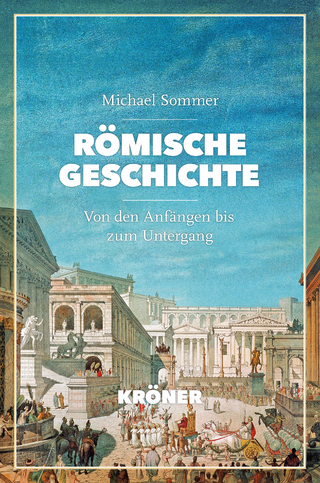
von den Anfängen bis zum Untergang
Buch | Hardcover (2025)
Alfred Kröner Verlag
CHF 48,95
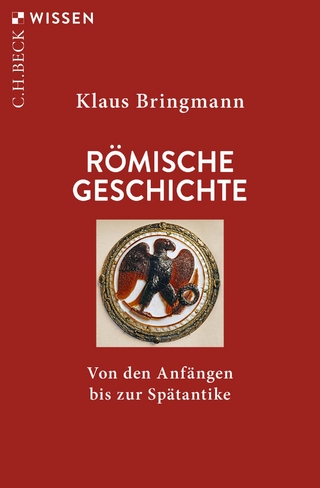
von den Anfängen bis zur Spätantike
Buch | Softcover (2024)
C.H.Beck (Verlag)
CHF 16,80


